Property for Sale in Croatia
Nothing in Croatia matches these filters today. Show every listing, or set an alert below for the week one is published.
Weekly alert
New Croatia listings, once a week
Pick a budget and we email the week's new listings in Croatia every Tuesday. One email, six at most, nothing when nothing is new.
Croatia
Property for sale in Croatia: new developments and resale homes, listed by the developers and agents selling them, with prices and a buying guide.
By place
- Homes in Grožnjan
- Homes in Nin
- Homes in Buje
- Homes in Kastel Novi
- Homes in Krk
- Homes in Medulin
- Homes in Milna
- Homes in Moscenicka Draga
By property type
- Apartments for sale in Croatia
- Villas for sale in Croatia
- Land for sale in Croatia
- Off-plan property in Croatia
- Completed homes in Croatia
By goal
- Family-friendly property in Croatia
- Property that suits retirement in Croatia
- Property for remote working in Croatia
- Property with a sea or water view in Croatia
- Property near the beach in Croatia
- Off-plan property in Croatia
- High rental yield property in Croatia
- Property with a private pool in Croatia
Also in the region: Property for sale in Portugal, Property for sale in Spain, Property for sale in France, Property for sale in Italy, Property for sale in Germany, Property for sale in the UK, Property for sale in Greece, Property for sale in Cyprus, Property for sale in Montenegro, Property for sale in Albania, Property for sale in Switzerland, Property for sale in Poland, Property for sale in Czechia, Property for sale in Romania, Property for sale in Bulgaria
Property for sale in Croatia: questions buyers ask
How much does property in Croatia cost?from today's listings
Property in Croatia on INTRIC runs from EUR 200.0K to EUR 10.00M, in Zadar, Privlaka, Nin, Novi Vinodolski, Split, Savudrija, Poreč, Dubrovnik, Novigrad, Sveti Filip i Jakov, Šibenik, Supetar, Medulin, Makarska, Milna, Zagreb, Krk, Buje, Novalja, Motovun and Starigrad. Prices are the sellers' own, in the listing's currency, and change as listings are added.
Can foreigners buy property in Croatia?
EU, EEA and Swiss citizens buy on the same terms as Croatians. Non-EU buyers need reciprocity between Croatia and their country plus written consent from the Ministry of Justice, which takes about 2 to 6 months. Reciprocity is established for the US, UK and Australia, among others. Check your nationality before signing.
What tax does an overseas buyer pay in Croatia?
Resale property carries a 3% transfer tax paid by the buyer, on the higher of the price or assessed value. New builds from a VAT-registered developer carry 25% VAT instead, normally included in the advertised price; the two are never charged together. Notary, registry and legal fees are extra.
Buying a new build or a resale in Croatia: what is the difference?
A new build from a developer pays 25% VAT and no transfer tax. A resale pays the 3% transfer tax and no VAT. Developers commonly ask about 10% on reservation, 30% to 40% during construction and the balance on handover. Foreign buyers can use either, but the Ministry consent applies to non-EU buyers in both cases.
Can a non-resident get a Croatian mortgage?
Yes. Banks lend to foreigners at about 3% to 4.5% in euros in early 2026, with 60% to 70% loan-to-value for EU citizens and 50% to 60% for non-EU non-residents. Most want a Croatian tax ID (OIB), a Croatian current account and 6 to 12 months of income proof. Terms run 10 to 25 years.
Is Croatian property a good investment in 2026?
Zagreb grew 5% to 8% in 2025, Split about 14% and Dubrovnik 8% to 12%. Gross yields average 4.4% nationally, and Istria short-term lets reach 5% to 6% or more. Forecast growth is 5% to 8% on the coast and 3% to 5% inland, with yields expected to compress. Capital at risk.
Does buying property in Croatia give residency?
No. Croatia has no Golden Visa and ownership gives no immigration right. Non-EU buyers who work remotely can apply for the Digital Nomad permit: up to 18 months, no investment, income proof of about €3,600 a month, and foreign income exempt from Croatian income tax. EU citizens may live in Croatia freely.
Guides and insights
Buying in Croatia
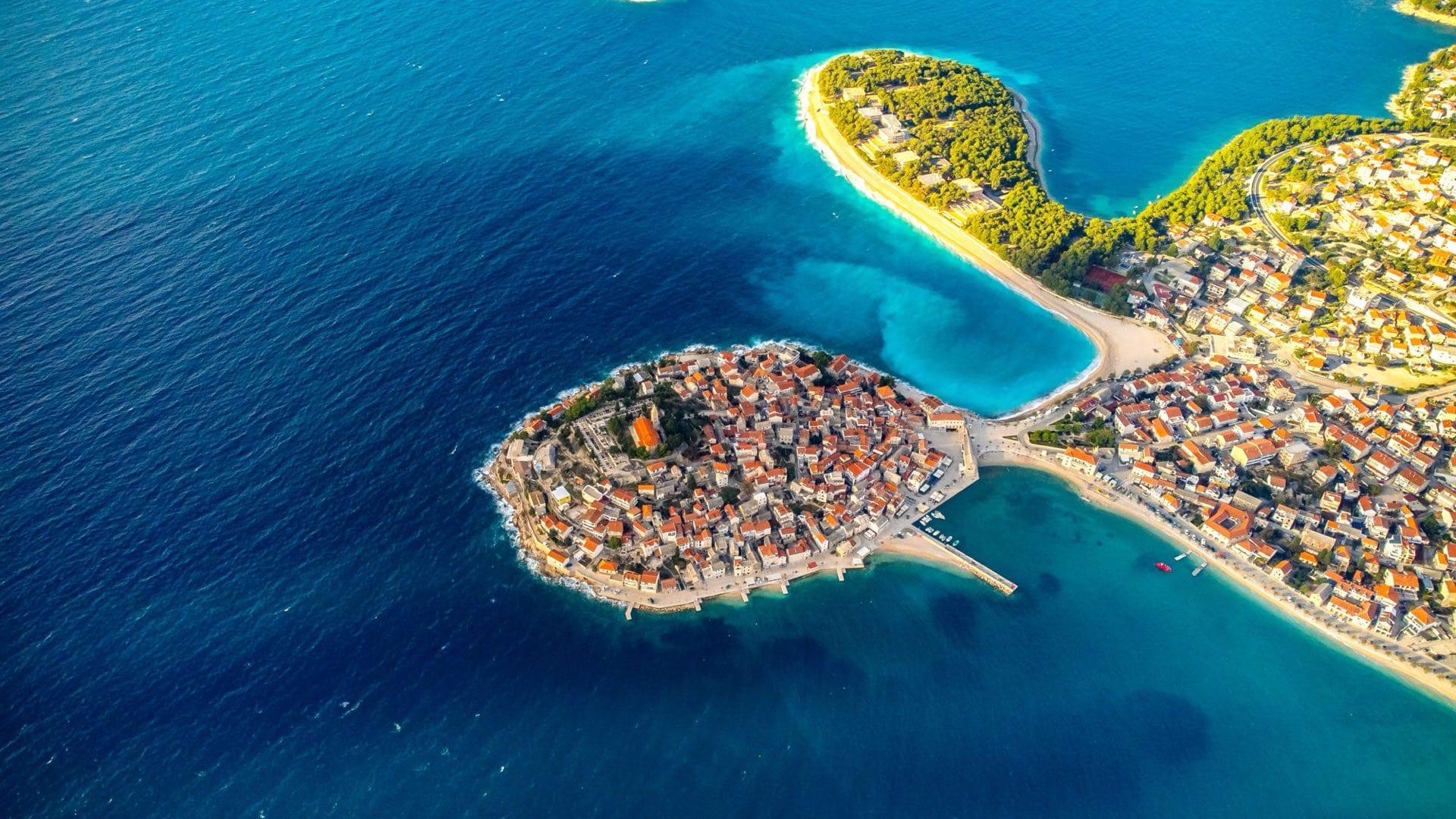 Country guide · 22 minCroatia Investor GuideEU member and eurozone economy with 110M+ tourist nights, 4.4% rental yields, and full open access for EU buyers — plus reciprocity-based access for citizens of the US, UK, Australia, and most Western markets, verified case by case against the Ministry of Justice listEU MemberEurozoneTourism-DrivenRead the guide
Cities35 guides
All Croatia city guides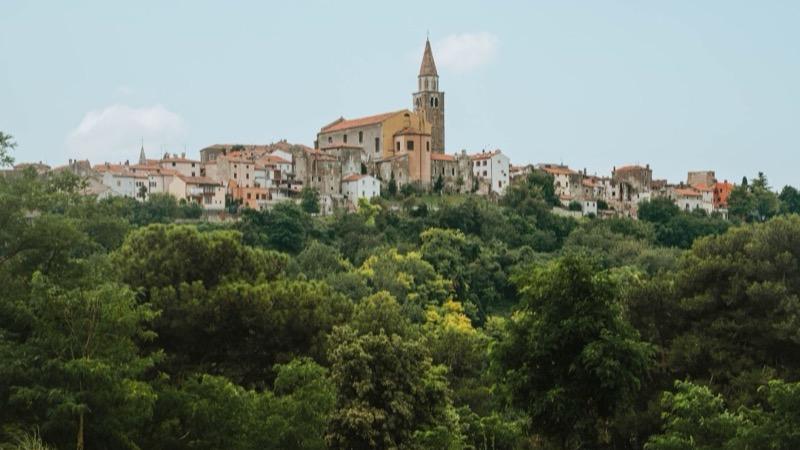 City guide · 7 minGrožnjanGrožnjan, Grisignana in Italian, is a walled hilltop town in north-west Istria above the Mirna valley and the seat of a municipality of 656 people across ten settlements (2021 census). The town itself has 142 permanent residents. Artists began moving into its empty stone houses in 1965, about thirty of them became galleries and studios, and since 1969 the International Cultural Centre of Jeunesses Musicales Croatia has brought more than 20,000 young musicians here for summer courses. Italian is co-official: 35.8 percent of residents declared Italian ethnicity in 2021, and in 2001 Grožnjan was the only Croatian municipality with an Italian majority. Asking prices averaged 3,817 euros per square metre in September 2026, down 8.8 percent year on year and just under the Istria County average of 3,878, across only 95 properties for sale. Buyers find stone houses in the old town and its hamlets, rural houses with land, and building plots at around 100 euros per square metre, with the Parenzana cycling trail running through the municipality.
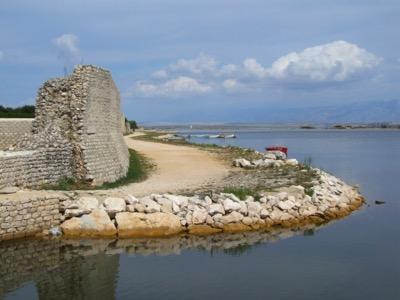 City guide · 7 minNinNin is a small town on the northern Dalmatian sand coast whose historic core sits on a 500-metre islet in a shallow lagoon, joined to the mainland by two sixteenth-century stone bridges. It was Roman Aenona and later Croatia's first royal town, and it remains the heritage and amenity anchor of the coast between Zadar and Vir. The town proper counts 2,705 residents across six settlements, of which the historic core holds only 1,101; Zaton, its neighbour within the same municipality, carries most of the tourism capacity, so listings advertised as Nin are frequently in Zaton. Buyers pay a premium over neighbouring Privlaka, Vir and Vrsi for the old town, the saltworks and Queen's Beach, and the official transaction average of 2,656 euros per square metre reflects that. The buyer base is the same Slovenian, German, Austrian and Czech drive-in second-home market as the rest of the sand coast, with an additional draw from the lagoon's therapeutic peloid mud.
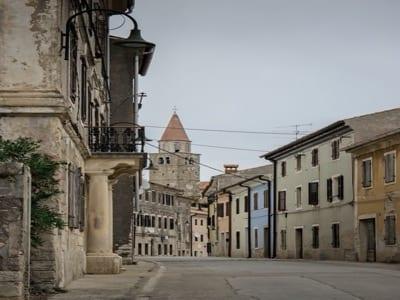 City guide · 7 minBujeBuje, known historically as Buie, is an inland hilltop town roughly ten kilometres from the Istrian coast, called the sentinel of Istria for its position. It sits at the centre of Istria's most celebrated wine district, home to Momjan Muscat, a variety that won gold at the Brussels exhibition of 1935 and was served at the Habsburg and Italian royal courts. The buyer is typically Austrian, German or Slovenian, wanting a restored stone house, olive grove or vineyard and a view, ten minutes from the sea, at around 78 percent of the Umag coastal price, with strong Italian-language continuity also drawing buyers from Trieste and the Veneto. Asking prices are the cheapest in this northwest Istrian set at 3,454 euros per square metre. Two things buyers should weigh before committing: much of the attractive land around the hill town is classified agricultural, which non-EU buyers cannot acquire directly, and old stone houses commonly carry unresolved title spread across many heirs.
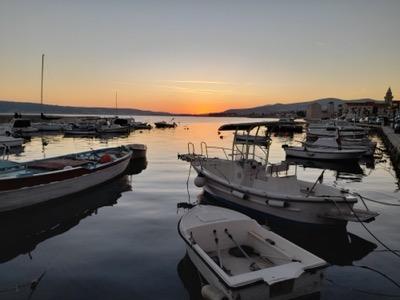 City guide · 7 minKastel NoviKastel Novi is one of seven historic settlements collectively called Kastela, strung along seventeen kilometres of Kastela Bay between Trogir and Split, and it sits second from the Trogir end, immediately next to Split Airport. That adjacency, roughly five to ten minutes by road, is the entire investment thesis: almost no other Adriatic second-home location sits minutes from an international airport, and it turns two and three night stays into a viable let where a village an hour away cannot compete. The official transaction average for the town of Kastela overall is 2,610 euros per square metre, well below Split city's 3,738 and Trogir's 2,575, though that figure spans all seven settlements from an industrial edge near Split to a beachfront edge near the airport, so it is a reasonable but not exact read on Kastel Novi specifically. The town underneath the tourism is real, with close to 38,000 residents across Kastela, which supports genuine year-round rental demand from Split commuters and airport and aviation employees, alongside the summer season.