Dubai Superprime 2026: 500 Deals Above $10M, 7% Yields, and the Price Gap That Remains
Introduction
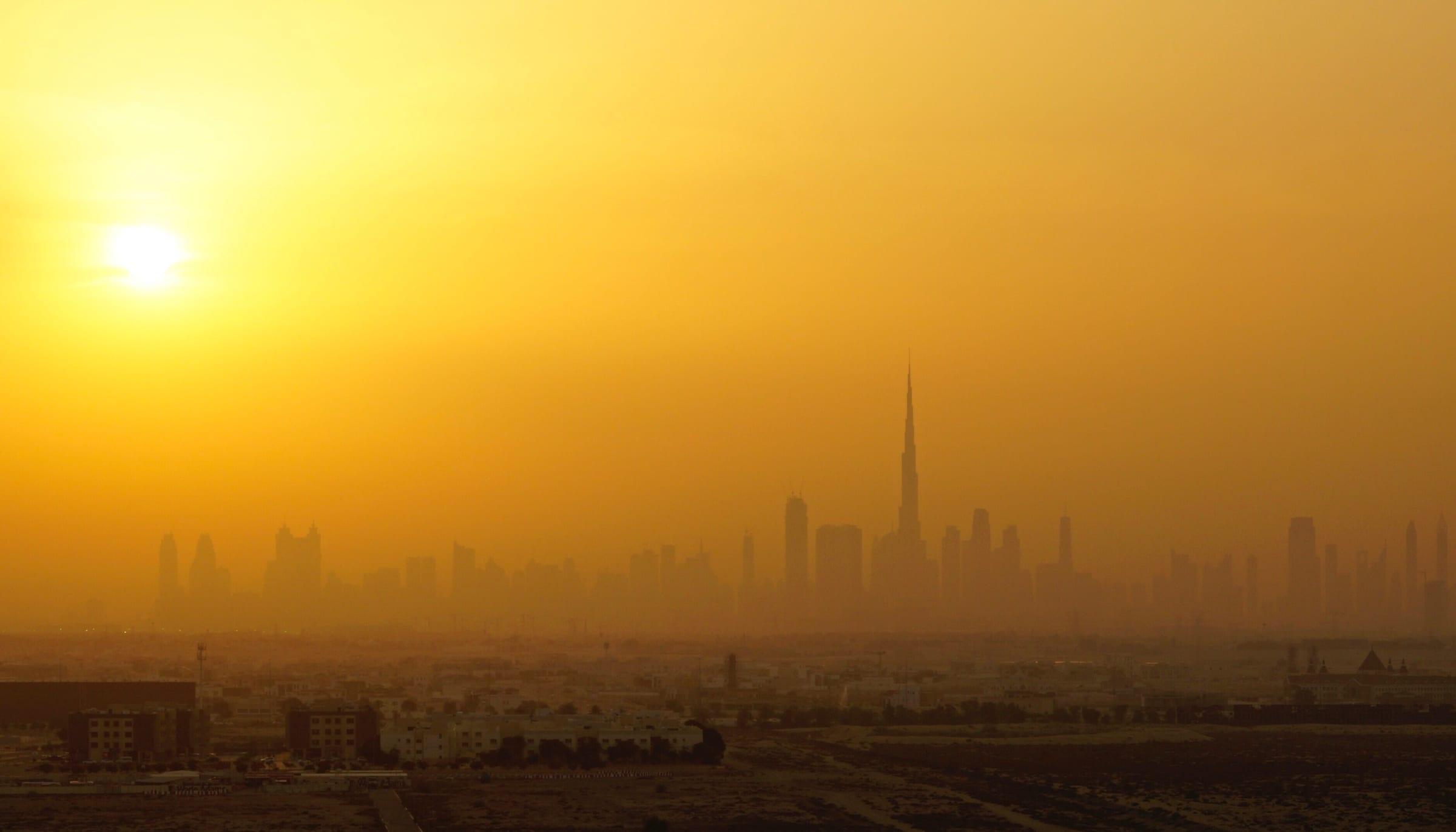
Dubai's superprime residential market posted records that would have been unimaginable five years ago. In 2025, 500 properties transacted above $10M — totalling $9.05B and representing a 1,567% increase in deal count from 2020 — with a single Bugatti Residences penthouse changing hands for $149.7M, the highest residential sale in UAE history. H1 2026 has continued the trajectory: 296 sales above $10M, valued at $5.1B, running 16% ahead of H1 2025. Behind the headline numbers, a structural arbitrage remains intact: prime Dubai at roughly $1,026 per square foot sits at approximately half the cost of comparable addresses in London, New York, and Singapore — and does so while delivering gross rental yields of 7–7.2% versus 2–4% in those cities. For sophisticated investors, the analytical question is no longer whether Dubai is a serious global real estate market — it clearly is — but where within the city the risk-adjusted return profile is most defensible and where supply risk is already pricing in.
The Superprime Surge: Deal Flow and Price Context
- Record Volume in Every Tier Above $10M:Dubai's superprime segment — defined by Knight Frank as residential transactions above $10M — has compounded at a rate that no other major city has matched. From 30 such sales in 2020, the market reached 93 in 2021, 219 in 2022, and 431 in 2024 before hitting 500 in 2025, with a combined deal value of $9.05B (+27.7% from $7.09B in 2024). Within that, the $25M+ tier produced 68 transactions in 2025, up 45% year-on-year. H1 2026 has maintained the pace: 296 deals above $10M at $5.1B (+14% YoY), with Q2 2026 setting a record 26 transactions in the $25M+ tier alone. The most expensive H1 2026 sale was an Aman Residences six-bedroom in Jumeirah at $114.9M.
- Prices at Half the Cost of Global Peer Cities:Prime Dubai transacts at approximately AED 3,800–4,000 per square foot on Palm Jumeirah ($1,050) and AED 2,980–3,170 on Downtown Dubai ($820). Emirates Hills villas command AED 14,500 per square foot ($3,950). On a global comparison basis, these prices remain structurally below Hong Kong ($3,860/sqft), New York ($2,200/sqft), London ($2,100/sqft), and Singapore ($2,000/sqft). The city-wide average crossed AED 1,976/sqft in January 2026 — up 18% year-on-year — but prime values have risen 194% since Q4 2020. At current pricing, Dubai prime still represents a meaningful discount to comparable global luxury addresses, which is the foundation of the structural demand case.
- Branded Residences Leading the Premium Tier:Dubai's branded residence pipeline has become one of the densest globally. Average pricing across the branded segment reaches AED 3,288 per square foot — a 42% premium over non-branded comparable product — with Bulgari Lighthouse achieving AED 10,668/sqft. New completions in 2026 include Armani Beach Residences on Palm Jumeirah (from AED 21M), Bugatti Residences by Binghatti in Business Bay, Burj Binghatti Jacob & Co (designed to be the world's tallest residential tower), and Mercedes-Benz Places in Downtown Dubai — the brand's first-ever residential development globally. For ultra-prime buyers, these projects deliver institutional-grade amenity stacks, guaranteed management standards, and brand-anchored liquidity that plain luxury towers cannot replicate.
The Buyer Profile: 150 Nationalities and a Structural Shift to End-Users
- Indian, British, and Chinese Buyers Drive Volume; Saudis Drive Average Ticket:Foreign buyers from 150+ countries participated in Dubai's 2025 market. Indian nationals led in transaction count (22% of foreign purchases), followed by British (17%), Chinese (14%), Saudi (11%), and Russian (9%) buyers. But the most significant buyer characteristic is average ticket size: Saudi HNW investors averaged $45.7M per transaction — the highest of any nationality group — while the Indian and British cohorts tend toward the $1–3M segment. Chinese buyers are showing a clear preference for off-plan ultra-luxury branded product and have accounted for a growing share of $10M+ deals. Dubai ranked #1 globally for HNWI relocation in 2025, attracting 94,700 real estate investors in H1 2025 (+26% year-on-year).
- End-User Dominance Reduces Speculative Cycle Risk:A structural shift is underway in who is buying and why. Knight Frank reports that the current cycle is increasingly driven by end-users — buyers seeking primary residences, lifestyle assets, and UAE Golden Visa qualification — rather than the predominantly speculative investor base that characterised the 2007-2008 cycle. Only 4% of properties sold in Dubai in 2025 were resold within 12 months (versus approximately 25% in 2008), dramatically reducing the short-flip inventory overhang risk. This shift from speculative to occupier-driven demand is one reason the current cycle has exhibited more stable pricing and absorption patterns despite a structurally larger supply pipeline than prior cycles.
- Golden Visa: The February 2026 Rule Change Expands the Market:A material regulatory catalyst arrived in February 2026: the UAE abolished the 50% equity rule for Golden Visa property qualification. Previously, buyers needed to have paid at least 50% of a property's value to qualify for the 10-year residency visa. Now, the full AED 2M purchase price on the Oqood (interim title registration) counts toward the threshold regardless of mortgage balance or payment plan stage — provided a minimum AED 200,000 has been paid to the developer. This change meaningfully expands the qualifying population for off-plan purchases priced at AED 2M+, which encompasses the majority of properties in Palm Jumeirah, Downtown Dubai, Business Bay, and Dubai Hills Estate. The visa processing timeline has also been compressed to under five working days through GDRFA.
Rental Yields: The Tax-Adjusted Arbitrage
- Gross Yields of 6.7–7.2% in a Zero-Tax Environment:Dubai's prime residential rental market delivers gross yields of approximately 6.68–7.2% for apartments, according to Engel & Volkers and JLL Q1 2026 data. By area: Business Bay 6.77%, Dubai Marina 6.18%, Downtown Dubai 5.73%. Emerging areas like Dubai South and JVC are achieving 7.4–8%+. These figures compare to gross yields of 3–4% in London, 2–3% in Hong Kong, and 3–5% in Singapore. The tax differential amplifies the yield gap materially: Dubai imposes zero personal income tax on rental income. A 7% gross yield in Dubai is equivalent to approximately 10–12% gross yield in a 40% marginal-rate jurisdiction like the UK or Germany — on a pure net-of-income-tax basis. The one-time cost is a 4% DLD registration fee versus recurring annual property and income taxes in competing markets.
- Rental Market Volume Hitting Records Alongside Sales:The rental market is not just a yield story — it is a structural demand story. June 2026 saw 40,022 lease contracts registered in Dubai, a monthly record, with new leases up 48.6% year-on-year. This sustained rental transaction velocity suggests that the population absorbing Dubai's supply pipeline (the emirate added 208,000 new residents in 2025) is translating into genuine occupier demand. For investment properties, this demand depth reduces vacancy risk in well-located stock and provides the liquidity underpinning that makes the yield numbers credible rather than theoretical.
The Risk Landscape: Supply Pipeline and Geopolitical Exposure
- Supply Is the Primary Structural Risk — But Absorption Is Robust:The most credible risk in Dubai's market is a supply pipeline running well ahead of historical delivery rates. Over 150,000 units were launched in 2025, and a registered pipeline of 160,000+ units is in various stages of construction, with 2026 projected completions of 83,000–120,000 units (estimates diverge; historical annual delivery has averaged approximately 36,000 units). Geographic concentration is particularly acute: approximately 45% of under-construction stock is in five districts — JVC/JVT, Dubai South, MBR City, Business Bay, and Dubailand — and 66% of the pipeline is studios and one-bedroom apartments. The mitigating factor is remarkable: units due for delivery in 2026 across 10 major developers show a 94.91% absorption rate — meaning nearly every unit already has a contracted buyer. But high absorption today does not preclude secondary-market oversupply once those contracted buyers become resellers.
- Localized Corrections Likely in Mid-Market; Ultra-Prime Protected:Multiple analysts, including Fitch, have flagged a potential moderate correction of 10–20% in the most supply-saturated micro-markets — particularly studio and one-bedroom apartments in JVC, Dubai South, and Business Bay. This is not a city-wide thesis: villa enclaves like Emirates Hills and prime waterfront product on Palm Jumeirah face genuine land supply constraints and buyer queues that insulate them from pipeline pressure. The analytical lens that matters is segmented: ultra-prime residential (villas above AED 20M, trophy branded residences) sits in a market with structural supply scarcity, while the speculative one-bedroom off-plan segment faces meaningful headwinds as bulk completions arrive in 2026–2027.
- Geopolitical Sensitivity and Currency Anchoring:JLL's Q1 2026 UAE Living report noted that weekly transaction values fell approximately 50% during a period of heightened regional conflict before recovering as tensions eased. Dubai's open economy and reliance on globally mobile HNWI capital means the market is meaningfully sensitive to geopolitical risk sentiment — including Gulf regional tensions, global oil price dynamics, and the investment appetite of buyer nationalities who may face domestic capital controls or sanctions regimes. The AED's peg to the US dollar eliminates currency risk for USD-base investors but creates exposure for buyers transacting in EUR, GBP, or INR, all of which have shown volatility against the dollar.
Investment Strategy: Where the Risk-Adjusted Case Is Strongest
- Target Villa Enclaves and Waterfront Prime for Capital Preservation:The clearest risk-adjusted positioning in Dubai's superprime segment is concentrated in genuine scarcity assets: Emirates Hills (AED 14,500/sqft, physically constrained villa land), Palm Jumeirah (waterfront freehold with finite plot availability), and completed branded product in Downtown Dubai and DIFC. These micro-markets are insulated from the bulk completion pipeline, command premium rental yields from the long-term HNWI rental cohort, and have benefited from the structural shift toward end-user ownership that depresses resale supply. Capital appreciation forecasts from Knight Frank for prime Dubai in full-year 2026 are conservative at +3% after a 194% cumulative run — reflecting the maturity of the cycle rather than a structural reversal.
- Avoid Undifferentiated Off-Plan Studios in JVC and Fringe Zones:The speculative off-plan trade in high-density, studio-heavy zones carries the most supply risk. JVC alone has 16,852 units in the under-construction pipeline; Business Bay has 10,127. Investors targeting these zones for short-flip or rental yield strategies face the real prospect of competing against 10,000+ units of identical product reaching the market simultaneously. Due diligence should focus rigorously on developer track record, RERA escrow compliance (funds must be held in project-specific accounts and released only on construction milestones), and Oqood registration — which prevents double-selling and is the first protection against developer default.
- Golden Visa Qualification as a Structural Return Enhancer:For investors seeking both capital return and tax residency, Dubai's February 2026 Golden Visa rule change creates a compelling structural overlay. Any property with a total purchase price of AED 2M+ now qualifies for a 10-year residency visa — regardless of payment stage — meaning a branded residence or villa purchased off-plan can be visa-qualifying from contract signature. Investors who establish UAE tax residency in conjunction with their property purchase can restructure their global income to benefit from the 0% personal income tax regime, potentially doubling the effective net yield on their Dubai portfolio versus a high-tax home jurisdiction. This is a material structural enhancer for HNWI buyers from the UK, Germany, France, and India — Dubai's four largest foreign buyer markets.
Sources
- Knight Frank — Dubai $10M+ Residential Sales Q4 2025
- Gulf News — Dubai Records 296 Luxury Home Sales Above $10M in H1 2026
- Economy Middle East — Dubai H1 2026 Superprime Sales $5.1 Billion
- Engel & Volkers Dubai — Rental Yield Report 2026
- JLL UAE — Living Market Dynamics Q1 2026
- Sherwoods Property — Golden Visa Off-Plan Property Dubai 2026
- Chainex Real Estate — Dubai Supply Pipeline: What 2026 Means for Investors
- Better Homes — Dubai vs Global Real Estate Hubs: ROI Comparison

Abhii Dabas is the Founder and CEO of INTRIC Global, the cross-border property intelligence platform for serious investors. He advises high-net-worth buyers on international real estate strategy and has evaluated residential markets across more than 40 countries.
Share
Share this article with others
Introduction
Dubai's superprime residential market posted records that would have been unimaginable five years ago. In 2025, 500 properties transacted above $10M — totalling $9.05B and representing a 1,567% increase in deal count from 2020 — with a single Bugatti Residences penthouse changing hands for $149.7M, the highest residential sale in UAE history. H1 2026 has continued the trajectory: 296 sales above $10M, valued at $5.1B, running 16% ahead of H1 2025. Behind the headline numbers, a structural arbitrage remains intact: prime Dubai at roughly $1,026 per square foot sits at approximately half the cost of comparable addresses in London, New York, and Singapore — and does so while delivering gross rental yields of 7–7.2% versus 2–4% in those cities. For sophisticated investors, the analytical question is no longer whether Dubai is a serious global real estate market — it clearly is — but where within the city the risk-adjusted return profile is most defensible and where supply risk is already pricing in.
The Superprime Surge: Deal Flow and Price Context
- Record Volume in Every Tier Above $10M:Dubai's superprime segment — defined by Knight Frank as residential transactions above $10M — has compounded at a rate that no other major city has matched. From 30 such sales in 2020, the market reached 93 in 2021, 219 in 2022, and 431 in 2024 before hitting 500 in 2025, with a combined deal value of $9.05B (+27.7% from $7.09B in 2024). Within that, the $25M+ tier produced 68 transactions in 2025, up 45% year-on-year. H1 2026 has maintained the pace: 296 deals above $10M at $5.1B (+14% YoY), with Q2 2026 setting a record 26 transactions in the $25M+ tier alone. The most expensive H1 2026 sale was an Aman Residences six-bedroom in Jumeirah at $114.9M.
- Prices at Half the Cost of Global Peer Cities:Prime Dubai transacts at approximately AED 3,800–4,000 per square foot on Palm Jumeirah ($1,050) and AED 2,980–3,170 on Downtown Dubai ($820). Emirates Hills villas command AED 14,500 per square foot ($3,950). On a global comparison basis, these prices remain structurally below Hong Kong ($3,860/sqft), New York ($2,200/sqft), London ($2,100/sqft), and Singapore ($2,000/sqft). The city-wide average crossed AED 1,976/sqft in January 2026 — up 18% year-on-year — but prime values have risen 194% since Q4 2020. At current pricing, Dubai prime still represents a meaningful discount to comparable global luxury addresses, which is the foundation of the structural demand case.
- Branded Residences Leading the Premium Tier:Dubai's branded residence pipeline has become one of the densest globally. Average pricing across the branded segment reaches AED 3,288 per square foot — a 42% premium over non-branded comparable product — with Bulgari Lighthouse achieving AED 10,668/sqft. New completions in 2026 include Armani Beach Residences on Palm Jumeirah (from AED 21M), Bugatti Residences by Binghatti in Business Bay, Burj Binghatti Jacob & Co (designed to be the world's tallest residential tower), and Mercedes-Benz Places in Downtown Dubai — the brand's first-ever residential development globally. For ultra-prime buyers, these projects deliver institutional-grade amenity stacks, guaranteed management standards, and brand-anchored liquidity that plain luxury towers cannot replicate.
The Buyer Profile: 150 Nationalities and a Structural Shift to End-Users
- Indian, British, and Chinese Buyers Drive Volume; Saudis Drive Average Ticket:Foreign buyers from 150+ countries participated in Dubai's 2025 market. Indian nationals led in transaction count (22% of foreign purchases), followed by British (17%), Chinese (14%), Saudi (11%), and Russian (9%) buyers. But the most significant buyer characteristic is average ticket size: Saudi HNW investors averaged $45.7M per transaction — the highest of any nationality group — while the Indian and British cohorts tend toward the $1–3M segment. Chinese buyers are showing a clear preference for off-plan ultra-luxury branded product and have accounted for a growing share of $10M+ deals. Dubai ranked #1 globally for HNWI relocation in 2025, attracting 94,700 real estate investors in H1 2025 (+26% year-on-year).
- End-User Dominance Reduces Speculative Cycle Risk:A structural shift is underway in who is buying and why. Knight Frank reports that the current cycle is increasingly driven by end-users — buyers seeking primary residences, lifestyle assets, and UAE Golden Visa qualification — rather than the predominantly speculative investor base that characterised the 2007-2008 cycle. Only 4% of properties sold in Dubai in 2025 were resold within 12 months (versus approximately 25% in 2008), dramatically reducing the short-flip inventory overhang risk. This shift from speculative to occupier-driven demand is one reason the current cycle has exhibited more stable pricing and absorption patterns despite a structurally larger supply pipeline than prior cycles.
- Golden Visa: The February 2026 Rule Change Expands the Market:A material regulatory catalyst arrived in February 2026: the UAE abolished the 50% equity rule for Golden Visa property qualification. Previously, buyers needed to have paid at least 50% of a property's value to qualify for the 10-year residency visa. Now, the full AED 2M purchase price on the Oqood (interim title registration) counts toward the threshold regardless of mortgage balance or payment plan stage — provided a minimum AED 200,000 has been paid to the developer. This change meaningfully expands the qualifying population for off-plan purchases priced at AED 2M+, which encompasses the majority of properties in Palm Jumeirah, Downtown Dubai, Business Bay, and Dubai Hills Estate. The visa processing timeline has also been compressed to under five working days through GDRFA.
Rental Yields: The Tax-Adjusted Arbitrage
- Gross Yields of 6.7–7.2% in a Zero-Tax Environment:Dubai's prime residential rental market delivers gross yields of approximately 6.68–7.2% for apartments, according to Engel & Volkers and JLL Q1 2026 data. By area: Business Bay 6.77%, Dubai Marina 6.18%, Downtown Dubai 5.73%. Emerging areas like Dubai South and JVC are achieving 7.4–8%+. These figures compare to gross yields of 3–4% in London, 2–3% in Hong Kong, and 3–5% in Singapore. The tax differential amplifies the yield gap materially: Dubai imposes zero personal income tax on rental income. A 7% gross yield in Dubai is equivalent to approximately 10–12% gross yield in a 40% marginal-rate jurisdiction like the UK or Germany — on a pure net-of-income-tax basis. The one-time cost is a 4% DLD registration fee versus recurring annual property and income taxes in competing markets.
- Rental Market Volume Hitting Records Alongside Sales:The rental market is not just a yield story — it is a structural demand story. June 2026 saw 40,022 lease contracts registered in Dubai, a monthly record, with new leases up 48.6% year-on-year. This sustained rental transaction velocity suggests that the population absorbing Dubai's supply pipeline (the emirate added 208,000 new residents in 2025) is translating into genuine occupier demand. For investment properties, this demand depth reduces vacancy risk in well-located stock and provides the liquidity underpinning that makes the yield numbers credible rather than theoretical.
The Risk Landscape: Supply Pipeline and Geopolitical Exposure
- Supply Is the Primary Structural Risk — But Absorption Is Robust:The most credible risk in Dubai's market is a supply pipeline running well ahead of historical delivery rates. Over 150,000 units were launched in 2025, and a registered pipeline of 160,000+ units is in various stages of construction, with 2026 projected completions of 83,000–120,000 units (estimates diverge; historical annual delivery has averaged approximately 36,000 units). Geographic concentration is particularly acute: approximately 45% of under-construction stock is in five districts — JVC/JVT, Dubai South, MBR City, Business Bay, and Dubailand — and 66% of the pipeline is studios and one-bedroom apartments. The mitigating factor is remarkable: units due for delivery in 2026 across 10 major developers show a 94.91% absorption rate — meaning nearly every unit already has a contracted buyer. But high absorption today does not preclude secondary-market oversupply once those contracted buyers become resellers.
- Localized Corrections Likely in Mid-Market; Ultra-Prime Protected:Multiple analysts, including Fitch, have flagged a potential moderate correction of 10–20% in the most supply-saturated micro-markets — particularly studio and one-bedroom apartments in JVC, Dubai South, and Business Bay. This is not a city-wide thesis: villa enclaves like Emirates Hills and prime waterfront product on Palm Jumeirah face genuine land supply constraints and buyer queues that insulate them from pipeline pressure. The analytical lens that matters is segmented: ultra-prime residential (villas above AED 20M, trophy branded residences) sits in a market with structural supply scarcity, while the speculative one-bedroom off-plan segment faces meaningful headwinds as bulk completions arrive in 2026–2027.
- Geopolitical Sensitivity and Currency Anchoring:JLL's Q1 2026 UAE Living report noted that weekly transaction values fell approximately 50% during a period of heightened regional conflict before recovering as tensions eased. Dubai's open economy and reliance on globally mobile HNWI capital means the market is meaningfully sensitive to geopolitical risk sentiment — including Gulf regional tensions, global oil price dynamics, and the investment appetite of buyer nationalities who may face domestic capital controls or sanctions regimes. The AED's peg to the US dollar eliminates currency risk for USD-base investors but creates exposure for buyers transacting in EUR, GBP, or INR, all of which have shown volatility against the dollar.
Investment Strategy: Where the Risk-Adjusted Case Is Strongest
- Target Villa Enclaves and Waterfront Prime for Capital Preservation:The clearest risk-adjusted positioning in Dubai's superprime segment is concentrated in genuine scarcity assets: Emirates Hills (AED 14,500/sqft, physically constrained villa land), Palm Jumeirah (waterfront freehold with finite plot availability), and completed branded product in Downtown Dubai and DIFC. These micro-markets are insulated from the bulk completion pipeline, command premium rental yields from the long-term HNWI rental cohort, and have benefited from the structural shift toward end-user ownership that depresses resale supply. Capital appreciation forecasts from Knight Frank for prime Dubai in full-year 2026 are conservative at +3% after a 194% cumulative run — reflecting the maturity of the cycle rather than a structural reversal.
- Avoid Undifferentiated Off-Plan Studios in JVC and Fringe Zones:The speculative off-plan trade in high-density, studio-heavy zones carries the most supply risk. JVC alone has 16,852 units in the under-construction pipeline; Business Bay has 10,127. Investors targeting these zones for short-flip or rental yield strategies face the real prospect of competing against 10,000+ units of identical product reaching the market simultaneously. Due diligence should focus rigorously on developer track record, RERA escrow compliance (funds must be held in project-specific accounts and released only on construction milestones), and Oqood registration — which prevents double-selling and is the first protection against developer default.
- Golden Visa Qualification as a Structural Return Enhancer:For investors seeking both capital return and tax residency, Dubai's February 2026 Golden Visa rule change creates a compelling structural overlay. Any property with a total purchase price of AED 2M+ now qualifies for a 10-year residency visa — regardless of payment stage — meaning a branded residence or villa purchased off-plan can be visa-qualifying from contract signature. Investors who establish UAE tax residency in conjunction with their property purchase can restructure their global income to benefit from the 0% personal income tax regime, potentially doubling the effective net yield on their Dubai portfolio versus a high-tax home jurisdiction. This is a material structural enhancer for HNWI buyers from the UK, Germany, France, and India — Dubai's four largest foreign buyer markets.
Sources
- Knight Frank — Dubai $10M+ Residential Sales Q4 2025
- Gulf News — Dubai Records 296 Luxury Home Sales Above $10M in H1 2026
- Economy Middle East — Dubai H1 2026 Superprime Sales $5.1 Billion
- Engel & Volkers Dubai — Rental Yield Report 2026
- JLL UAE — Living Market Dynamics Q1 2026
- Sherwoods Property — Golden Visa Off-Plan Property Dubai 2026
- Chainex Real Estate — Dubai Supply Pipeline: What 2026 Means for Investors
- Better Homes — Dubai vs Global Real Estate Hubs: ROI Comparison
Abhii Dabas is the Founder and CEO of INTRIC Global, the cross-border property intelligence platform for serious investors. He advises high-net-worth buyers on international real estate strategy and has evaluated residential markets across more than 40 countries.
Share this article
Share this insight with others
Share
Share this article with others
Related Market Insights
View More Market Insights
Market Analysis
US REITs in 2026: 14.4% Returns, Data Centers Surging on AI Demand, and Why Sector Selection Now Matters More Than the Fed
By Abhii Dabas · September 3, 2026

Market Analysis
Canada's Housing Market in 2026: A Qualified Recovery, a Collapsing Supply Pipeline, and a Foreign Buyer Ban That Expires in 127 Days
By Abhii Dabas · September 3, 2026
Market Analysis
Japan at One Percent: The Three Conditions Behind the Tokyo Trade Are Turning Together
By Abhii Dabas · August 7, 2026
Found this useful? Send it to someone who should read it.
Continue with INTRIC
