Maldives
Maldives Property Market for Overseas Buyers
Weekly alert
Be the first when Maldives listings go live
Pick a budget and we email you the week a new listing in the Maldives is published. One email, six at most, nothing until then.
Also in Asia
Where buyers are looking now
All listings
The Maldives
The property market in the Maldives for overseas buyers: market figures, city guides and the INTRIC buying guide, with listings as they are published.
Also in the region: Property for sale in Japan, Property for sale in Thailand, Property for sale in Vietnam, Property for sale in the Philippines, Property for sale in Malaysia, Property for sale in Indonesia, Property for sale in Cambodia, Property for sale in Sri Lanka
Buying property in the Maldives: questions buyers ask
Can foreigners buy property in the Maldives?
Not outright. Foreigners cannot own land or buildings freehold. They invest through leases, with resort islands leased for 25 to 50 years and residential leases up to 50 years. Tourism and commercial leases can run to 99 years, and all foreign investment needs government approval. Joint ventures with Maldivian partners are common for guesthouses.
What tax does an overseas buyer pay in the Maldives?
The guide records no annual property tax and no capital gains tax for individuals. Tourism Goods and Services Tax of 17% applies to tourism sales, a green tax of $12 a night applies at resorts and hotels and $6 at smaller guesthouses, and business profit tax is 15% above MVR 500,000. Take advice from a Maldivian adviser before you invest.
Leasehold or freehold in the Maldives: what do I actually get?
A lease only. A branded residence or villa in an integrated tourism development is a leasehold of 50 to 99 years inside a designated zone. The lease can be sold or passed on during its term, but the land reverts to the state at the end. Check the years remaining and who operates the property.
Can a non-resident get a Maldives mortgage?
In practice, no. Local banks serve the domestic market and offer foreigners almost nothing. Resort projects use international project finance, and individual buyers pay cash or borrow against assets in their home country. Some developers allow 30% to 50% upfront with the balance paid over one to three years.
Are Maldives properties a good investment in 2026?
Returns come from tourism, so they swing with the season and with how well the property is run. Well-run resorts report 8% to 15% net operating yield, guesthouses 10% to 20% gross in peak season, and Male flats 4% to 6% gross. Branded residences cost $500,000 to $5 million or more. Capital at risk.
Does buying property in the Maldives give residency?
No. The Maldives has no Golden Visa or residency tied to property. Visitors get a 30-day visa on arrival, and investors who run a business in the country need a business visa or work permit linked to that operation.
Guides and insights
Buying in the Maldives
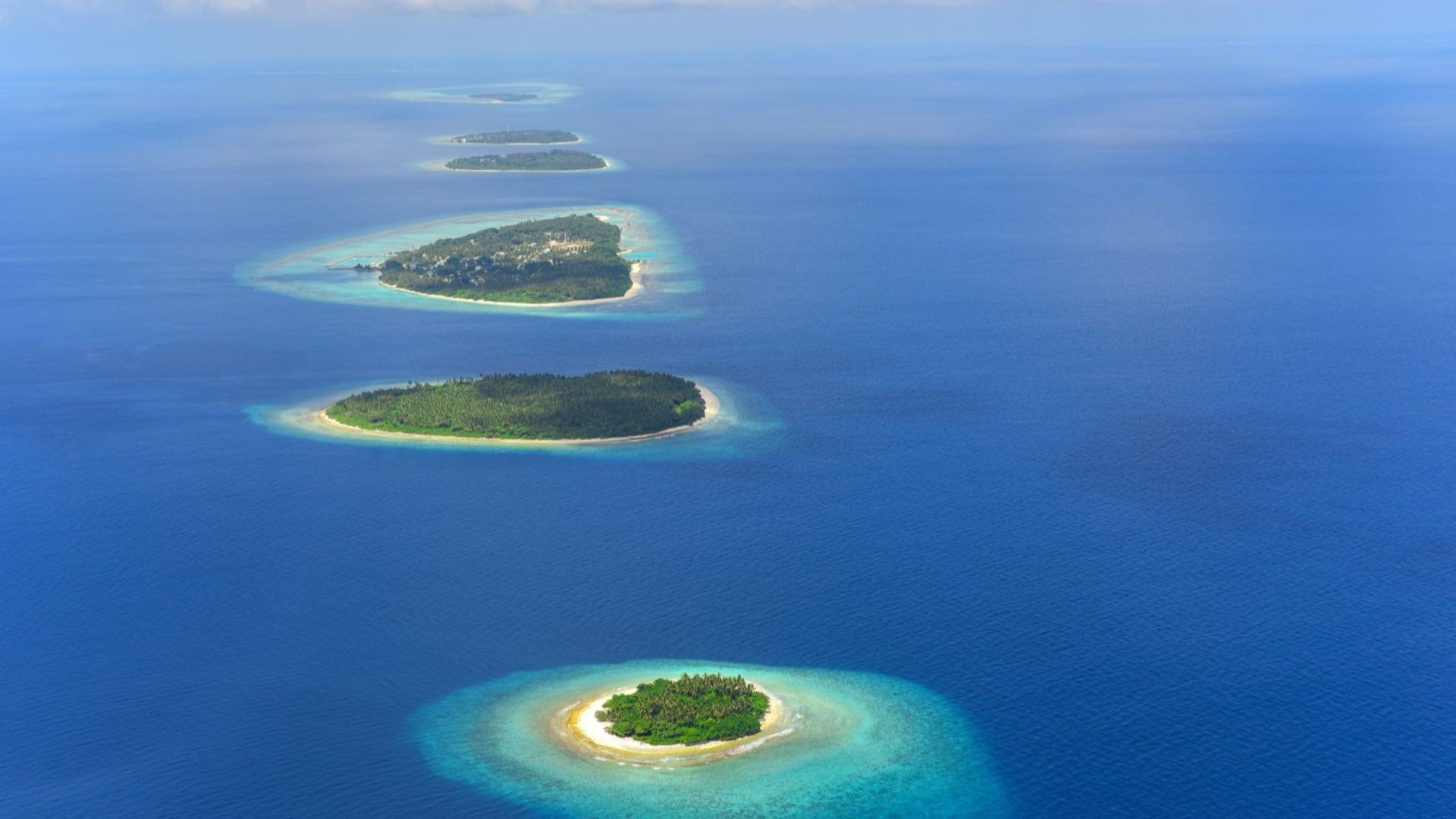 Country guide · 24 minComplete Investor Guide to Maldives PropertyUltra-luxury tourism investment in the world's most exclusive island destination: resort leases, branded residences, and tourism-focused structures for qualified investorsLuxury MarketRestricted OwnershipLeasehold OnlyRead the guide
Cities6 guides
All Maldives city guides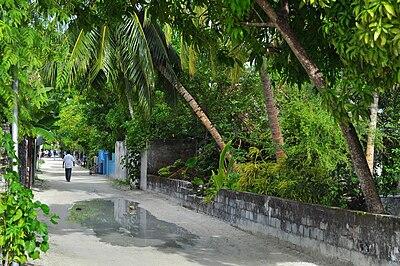 City guide · 8 minAddu CityAddu City is the Maldives' second-largest urban centre, an atoll of interconnected islands in the country's deep south with its own international airport, a distinctive British colonial heritage, and a government-backed mission to decentralize tourism away from the Male region. The launch of the official 'Addu Tourism Brand' and MVR 1.5 billion in allocated reclamation investment signal serious commitment to transforming this southern atoll. The investment landscape is defined by scale and ambition. The Hankede integrated tourism project aims to create capacity for 7,000 tourist beds across integrated resorts, hotels, and guesthouses. A 190-hectare land expansion project is underway, synchronized with new road construction. Investment villas range from USD 500,000 to USD 1.5 million — significantly below Kaafu Atoll pricing — with authorities actively seeking to attract domestic and international developers. Addu's unique character sets it apart from the typical Maldives experience. The atoll features a WWII-era British military base, freshwater lakes, mangrove ecosystems, and world-class diving sites accessible without liveaboard boats. Bridge-linked islands create a rare sense of space and mobility in the Maldives. For investors seeking early-mover advantage in a government-priority development zone with lower entry prices and diversified tourism potential, Addu City represents the Maldives' most asymmetric opportunity.
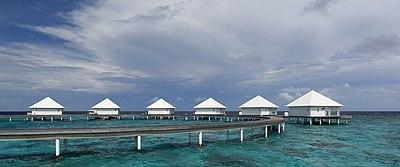 City guide · 8 minFuvahmulahFuvahmulah is the Maldives' most unique island — the only one-island atoll in the entire archipelago, with an ecosystem found nowhere else in the country. Located between Addu and Gaafu Dhaalu atolls, this oval island features freshwater lakes, tropical fruit orchards, and unique endemic species, while its surrounding waters have become one of the world's premier tiger shark diving destinations. The dive tourism economy is the primary growth catalyst. Multiple dive centres including Liquid Shark Divers (established 2025), Fuvahmulah Central Dive Center (a PADI 5-star facility), and Fuvahmulah Scuba Club draw international divers seeking daily encounters with tiger sharks, thresher sharks, hammerheads, oceanic mantas, and whale sharks. The island opens new guesthouses and lodges annually to accommodate growing international demand, with conservation-focused dive tourism creating a premium niche. Fuvahmulah's investment appeal lies in its irreplaceable natural assets and early-stage tourism development. The Ocean Country Partnership Programme has been working with the city council on sustainable shark diving practices, indicating growing institutional support for managed tourism growth. For niche investors willing to enter a frontier market with a globally unique natural asset — guaranteed tiger shark encounters — Fuvahmulah offers an extraordinary proposition that no amount of development capital can replicate elsewhere.
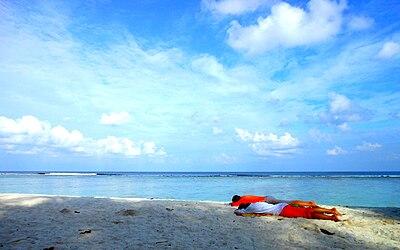 City guide · 8 minHulhumaleHulhumale is the Maldives' most strategically important urban development — a reclaimed island connected to Male and Velana International Airport by bridge and causeway, purpose-built with modern infrastructure and designed to absorb the capital region's population growth. It is the single most investable location in the Maldives for those seeking residential or mixed-use real estate. Gross rental yields already exceed 8%, exceptionally high for an urban market still in its growth phase. High-end apartments with sea views command USD 3,000-8,000 per month in rent, comparable to regional capital cities. Condominium units typically range from USD 400,000-900,000, with the Housing Development Corporation (HDC) managing land sales and development approvals. The new Velana International Airport terminal, now serving over seven million passengers annually, has dramatically improved connectivity and is a direct catalyst for property appreciation. Hulhumale represents something unique in the Maldives: genuine urban real estate in a country otherwise dominated by resort-island investment. Phase II of the island expansion is adding residential towers, commercial districts, and public facilities, while technology parks and SME office buildings diversify the economic base. For investors who want Maldives exposure without the ultra-luxury resort price tag, Hulhumale offers the country's only scalable, urban-style investment opportunity with strong fundamentals.
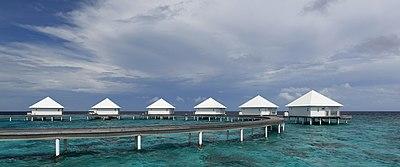 City guide · 8 minKulhudhuffushiKulhudhuffushi is the 'Heart of the North' — the largest and most developed island in Haa Dhaalu Atoll, granted city status in 2019, and designated as the international gateway and administrative hub for the Maldives' ambitious northern development zone. With a population of approximately 13,000, it is the principal urban centre serving four northern atolls and the focal point of the government's decentralization strategy. The Ministry of Tourism and Environment has launched a major bidding round for large-scale resort development across Haa Alif, Haa Dhaalu, Shaviyani, and Laamu atolls, with submissions due in February 2026. The tender includes a diverse portfolio ranging from 200-hectare parcels for flagship luxury resorts to smaller plots for niche experience-driven developments. This represents the single largest opening of new resort development territory in recent Maldivian history. Kulhudhuffushi's investment case rests on its role as the northern gateway. As resort development accelerates across the northern atolls, the city will capture service economy benefits — airport transit, supply chain logistics, staff accommodation, and local tourism. The combination of city status, government-designated development zone, and massive new resort openings in surrounding atolls positions Kulhudhuffushi as a long-horizon infrastructure play in the Maldives' most untapped region.