Japan at One Percent: The Three Conditions Behind the Tokyo Trade Are Turning Together
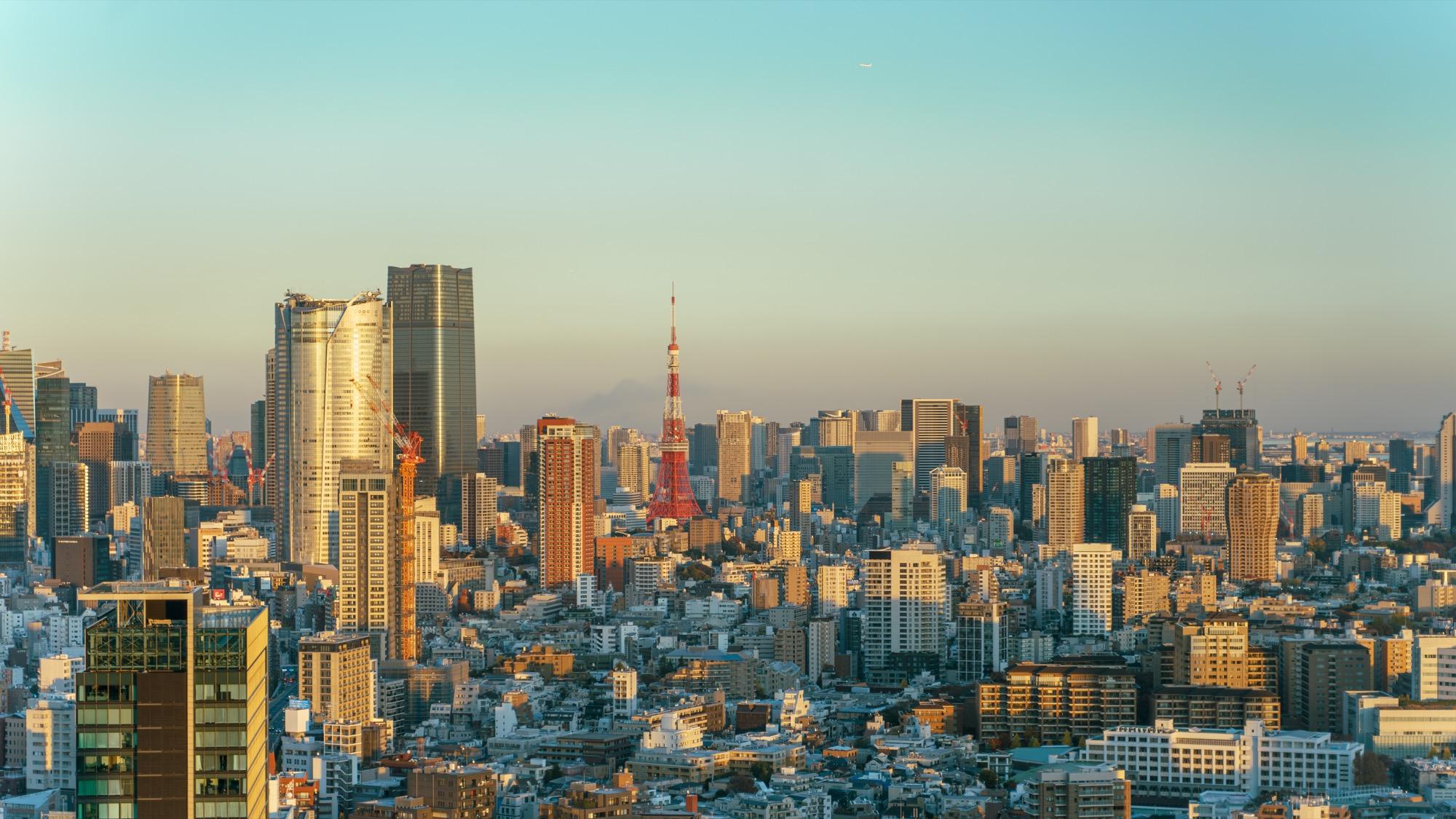
The Bank of Japan took rates to 1% in June 2026, the highest since 1995. Tokyo new-build condominiums hit a record ¥142.49 million while secondhand prices fell for the first time in over two years. Nationality disclosure began in April and full condominium tracking starts in October. Three conditions that made Tokyo the consensus trade are turning together.
Key takeaways
- 1The Bank of Japan raised its policy rate to 1.00% in June 2026, the highest since September 1995, and held there in July while warning core inflation exceeds target.
- 2New condominiums in Tokyo's 23 wards hit a record ¥142.49 million in H1 2026, up 9.1%, while secondhand condominiums fell 0.8% in June, the first monthly decline in more than two years.
- 3The yen is still around 7.7% weaker than a year ago at roughly 158 to the dollar, so the currency discount persists even as the direction reverses.
- 4Nationality declaration became mandatory at registration from 1 April 2026, and all condominium transactions come under nationality tracking from October 2026.
- 5Japan is explicitly studying restriction models used in Singapore, Canada and Australia, and is building the transaction dataset such a policy would require.
Introduction
Tokyo became the most crowded cross-border property trade in Asia on the back of three conditions: a currency that kept getting cheaper, borrowing that was effectively free, and a registry that never asked where the buyer was from. In 2026 all three are changing at once. The Bank of Japan took its policy rate to 1% in June, the first time since 1995. Japanese banks began repricing variable mortgages upward. And from April, foreign buyers have had to declare their nationality at registration, with full condominium tracking arriving in October. Meanwhile the price data has split in two, and the half that matters to a foreign owner is the half that has started to fall.
The Rate Regime Changed
- One Percent, for the First Time Since 1995:The Bank of Japan raised its short-term policy rate to 1.00% in June 2026, having reached 0.75% in December 2025. It is the first time the rate has stood at one percent since September 1995, a thirty-year high. At its July 2026 meeting the Bank held at 1.00% while warning that core inflation is running above the 2% target. For an economy that spent three decades defined by the absence of a policy rate, this is a regime change rather than a tightening cycle.
- The Board Is Leaning Further:Board member Hajime Takata proposed a hike to 1.25% at the July meeting, and two members favoured moving faster toward neutral, citing firms' greater willingness to raise prices. A further increase has been signalled as possible from September 2026. Japanese real wages rose for a sixth consecutive month in June, which removes the principal argument the Bank had been using to justify patience. The path of least resistance is now upward.
- The Yen Has Not Cooperated, Which Is the Real Story:Despite more than a year of tightening, the yen sat near 158 to the US dollar in early August 2026. It strengthened roughly 2.4% over the preceding month but remains about 7.7% weaker than a year earlier. A foreign buyer converting into yen today still enjoys a meaningful discount against the long-run average. The important change is not that the discount has gone but that it has stopped widening, which removes the tailwind that has been quietly doing much of the work in Tokyo returns.
The Price Data Split in Two
- New Builds Are Setting Records:The average price of a new condominium in Tokyo's 23 wards rose 9.1% to a record ¥142.49 million in the first half of 2026, according to the Real Estate Economic Institute. For the full fiscal year to March 2026 the average was ¥137.84 million, up 18.5% and a third consecutive year above ¥100 million. Across greater Tokyo, including Saitama, Kanagawa and Chiba, the new-build average passed ¥100 million for the first time at ¥101.35 million, up 13.1%.
- The Resale Market Just Turned:Secondhand condominiums in the same 23 wards averaged ¥127.41 million in June 2026, a decline of 0.8% from the previous month and the first monthly fall in more than two years. Reporting attributed the turn to higher interest rates and inflation weighing on domestic buyers. Gains in the resale market had already been stalling through the first half of the year before the decline registered, so the direction of travel was visible before the print.
- The Gap Between the Two Is the Exit Risk:New-build pricing is pushed by land and construction cost inflation and by developer margin, and it can keep setting records while end demand weakens. Secondhand pricing is a cleaner read on what buyers will actually pay. A foreign investor buying a new Tokyo condominium exits into the secondhand market, which means the record they are buying at and the index they will sell into are diverging. That spread is the most important number in Japanese residential right now.
- Domestic Affordability Is Already Stretched:Japan's housing price-to-income ratio stands at 11.4 in 2026, and average new condominium prices in central Tokyo now exceed ¥100 million against a domestic income base that has only recently begun growing in real terms. Younger buyers have been extending loan terms to bridge the gap. When the marginal domestic buyer is already stretching to transact, the market has limited capacity to absorb a rise in borrowing costs.
The Cost of Money Is Rising Domestically
- Variable Mortgages Are Repricing Now:Major banks offered variable rates of roughly 0.63% to 0.75% for top-tier borrowers as of February 2026, with around 0.25% increases planned to variable benchmarks in spring. In practical terms, a borrower on 0.775% through 31 March 2026 may see 1.025% applied from their July 2026 repayments. That is a one-third increase in the interest component for a household that made its purchase decision under the old rate.
- Fixed Rates Moved First and Further:Ten-year fixed rates have risen to roughly 2.20% to 2.80%, and Flat 35 products to between 2.26% and 2.50%, with ten-year fixed rates jumping 0.204% in February 2026 alone. Fixed rates price the expected path rather than the current setting, and their move is the market's statement about where the Bank of Japan ends up. The gap between a 0.7% variable and a 2.5% fixed also tells you how much of the domestic borrower base is exposed to further increases.
- Leverage Was Doing More Work Than Buyers Realised:For a decade, Japanese residential returns were flattered by borrowing costs close to zero, which allowed thin gross yields to produce respectable levered returns. As the policy rate moves toward and possibly past 1%, that arithmetic compresses from both directions: financing costs rise while the currency tailwind fades. Any Tokyo model built between 2020 and 2024 should be rerun at a materially higher cost of debt before it is used to justify a new purchase.
Japan Is Building the Data a Restriction Would Need
- Japan Still Has No Foreign Buyer Restrictions:This deserves to be stated plainly because it is frequently misreported. Japan has no general foreign-buyer ban, no nationality quota, no minimum purchase price and no residency or visa requirement for ordinary residential property. Foreign nationals can buy land, houses and apartments with the same legal rights as Japanese citizens. Nothing that took effect in 2026 changed that. What changed is what the state knows about the transaction.
- Disclosure Arrived in April, Tracking Arrives in October:From 1 April 2026, foreign buyers must declare their nationality when registering property with the Legal Affairs Bureau. From October 2026, nationality tracking becomes mandatory for all condominium transactions, and the Ministry of Land, Infrastructure, Transport and Tourism is working toward a unified property base registry by 2029. Individually these are administrative. Sequentially they are the construction of a dataset that does not currently exist.
- The Government Is Studying Restriction Models:Japanese authorities have been examining the restrictive frameworks used in Singapore, Canada and Australia with a view to potential condominium acquisition restrictions on non-resident foreign buyers. Those three jurisdictions represent the full menu: a punitive stamp duty surcharge, an outright temporary ban and a screening-plus-fee regime. Which model Japan borrows from, if any, will determine whether a future policy is a cost or a prohibition.
- Concentration Is What Invites Policy:Foreign participation reached 19.0% in prime Tokyo districts of Chiyoda, Minato and Shibuya in the first half of 2025, against 12.7% across the rest of the 23 wards. Restriction policy is generally triggered by visible concentration in politically salient locations rather than by national aggregates, and the same pattern preceded intervention in Canada and Australia. The tracking regime beginning in October will, for the first time, make that concentration officially measurable.
How to Position
- Underwrite the Secondhand Index, Not the New-Build Headline:The record ¥142.49 million new-build average is the price you pay. The ¥127.41 million secondhand average, now falling, is closer to the market you sell into. Any Tokyo acquisition should be modelled with an explicit assumption about that spread over the holding period, and the base case should not assume it closes in your favour. This single discipline separates a considered Japanese position from a momentum one.
- Separate the Currency Bet From the Property Bet:A substantial share of foreign returns from Tokyo over the past five years came from yen weakness rather than from Japanese property. With the yen roughly 7.7% weaker year on year but strengthening over the past month, and the Bank of Japan tightening, those two exposures are now pointing in different directions. Decide which one you actually want. If the answer is the property, the currency exposure should be considered for hedging rather than left as an unmanaged position.
- Transact Before the Registry, Not Against It:The disclosure and tracking measures are not restrictions and should not be treated as a reason to rush a purchase. They are, however, a reliable signal that the policy environment for non-resident buyers is being actively reconsidered. The prudent response is to avoid structures whose economics depend on the current absence of scrutiny, and to prefer positions that would remain sound under a Singaporean-style surcharge or an Australian-style screening fee.
- The Long Case Is Still Intact, at a Different Price:Japan's attraction was never only the cheap yen. It is a deep, liquid, legally secure market with genuine urban concentration and an inflation dynamic that has finally turned positive, with real wages rising for six consecutive months. Rate normalisation is what a functioning economy looks like, and an investor who wanted Japan for its fundamentals should not abandon it because the free money ended. They should simply stop paying the price that the free money justified.
Frequently asked questions
Can foreigners still buy property in Japan in 2026?+
What are the new disclosure rules?+
Where are Japanese interest rates now?+
Are Tokyo property prices still rising?+
Has the weak yen advantage disappeared?+
Sources
- CNBC — Bank of Japan Hikes Rates to 1%, Highest Since 1995
- CNBC — BOJ Holds Rates at 1%, Warns of Core Inflation Exceeding 2% Target
- The Japan Times — Tokyo-Area Condo Prices Hit Record High in First Half of 2026
- The Japan Times — Tokyo Condo Prices Fall Two Months in Row in Sign Boom May Fade
- Trading Economics — Japanese Yen
- Japan Real Estate Analytics — Japan Foreign Property Ownership Rules, 2026 Policy
- Home in Nihon — Japan Property Law Changes for Foreigners, 2024-2026 Updates
- Dovetail — Japan's 10-Year Fixed Mortgage Rates Jump 0.204% in February 2026

Abhii Dabas is the Founder and CEO of INTRIC Global, the cross-border property intelligence platform for serious investors. He advises high-net-worth buyers on international real estate strategy across more than 40 countries, and has watched Tokyo become the most crowded cross-border trade in Asia on the strength of three conditions that are now all changing at the same time.
Share
Share this article with others
The Bank of Japan took rates to 1% in June 2026, the highest since 1995. Tokyo new-build condominiums hit a record ¥142.49 million while secondhand prices fell for the first time in over two years. Nationality disclosure began in April and full condominium tracking starts in October. Three conditions that made Tokyo the consensus trade are turning together.
Key takeaways
- 1The Bank of Japan raised its policy rate to 1.00% in June 2026, the highest since September 1995, and held there in July while warning core inflation exceeds target.
- 2New condominiums in Tokyo's 23 wards hit a record ¥142.49 million in H1 2026, up 9.1%, while secondhand condominiums fell 0.8% in June, the first monthly decline in more than two years.
- 3The yen is still around 7.7% weaker than a year ago at roughly 158 to the dollar, so the currency discount persists even as the direction reverses.
- 4Nationality declaration became mandatory at registration from 1 April 2026, and all condominium transactions come under nationality tracking from October 2026.
- 5Japan is explicitly studying restriction models used in Singapore, Canada and Australia, and is building the transaction dataset such a policy would require.
Introduction
Tokyo became the most crowded cross-border property trade in Asia on the back of three conditions: a currency that kept getting cheaper, borrowing that was effectively free, and a registry that never asked where the buyer was from. In 2026 all three are changing at once. The Bank of Japan took its policy rate to 1% in June, the first time since 1995. Japanese banks began repricing variable mortgages upward. And from April, foreign buyers have had to declare their nationality at registration, with full condominium tracking arriving in October. Meanwhile the price data has split in two, and the half that matters to a foreign owner is the half that has started to fall.
The Rate Regime Changed
- One Percent, for the First Time Since 1995:The Bank of Japan raised its short-term policy rate to 1.00% in June 2026, having reached 0.75% in December 2025. It is the first time the rate has stood at one percent since September 1995, a thirty-year high. At its July 2026 meeting the Bank held at 1.00% while warning that core inflation is running above the 2% target. For an economy that spent three decades defined by the absence of a policy rate, this is a regime change rather than a tightening cycle.
- The Board Is Leaning Further:Board member Hajime Takata proposed a hike to 1.25% at the July meeting, and two members favoured moving faster toward neutral, citing firms' greater willingness to raise prices. A further increase has been signalled as possible from September 2026. Japanese real wages rose for a sixth consecutive month in June, which removes the principal argument the Bank had been using to justify patience. The path of least resistance is now upward.
- The Yen Has Not Cooperated, Which Is the Real Story:Despite more than a year of tightening, the yen sat near 158 to the US dollar in early August 2026. It strengthened roughly 2.4% over the preceding month but remains about 7.7% weaker than a year earlier. A foreign buyer converting into yen today still enjoys a meaningful discount against the long-run average. The important change is not that the discount has gone but that it has stopped widening, which removes the tailwind that has been quietly doing much of the work in Tokyo returns.
The Price Data Split in Two
- New Builds Are Setting Records:The average price of a new condominium in Tokyo's 23 wards rose 9.1% to a record ¥142.49 million in the first half of 2026, according to the Real Estate Economic Institute. For the full fiscal year to March 2026 the average was ¥137.84 million, up 18.5% and a third consecutive year above ¥100 million. Across greater Tokyo, including Saitama, Kanagawa and Chiba, the new-build average passed ¥100 million for the first time at ¥101.35 million, up 13.1%.
- The Resale Market Just Turned:Secondhand condominiums in the same 23 wards averaged ¥127.41 million in June 2026, a decline of 0.8% from the previous month and the first monthly fall in more than two years. Reporting attributed the turn to higher interest rates and inflation weighing on domestic buyers. Gains in the resale market had already been stalling through the first half of the year before the decline registered, so the direction of travel was visible before the print.
- The Gap Between the Two Is the Exit Risk:New-build pricing is pushed by land and construction cost inflation and by developer margin, and it can keep setting records while end demand weakens. Secondhand pricing is a cleaner read on what buyers will actually pay. A foreign investor buying a new Tokyo condominium exits into the secondhand market, which means the record they are buying at and the index they will sell into are diverging. That spread is the most important number in Japanese residential right now.
- Domestic Affordability Is Already Stretched:Japan's housing price-to-income ratio stands at 11.4 in 2026, and average new condominium prices in central Tokyo now exceed ¥100 million against a domestic income base that has only recently begun growing in real terms. Younger buyers have been extending loan terms to bridge the gap. When the marginal domestic buyer is already stretching to transact, the market has limited capacity to absorb a rise in borrowing costs.
The Cost of Money Is Rising Domestically
- Variable Mortgages Are Repricing Now:Major banks offered variable rates of roughly 0.63% to 0.75% for top-tier borrowers as of February 2026, with around 0.25% increases planned to variable benchmarks in spring. In practical terms, a borrower on 0.775% through 31 March 2026 may see 1.025% applied from their July 2026 repayments. That is a one-third increase in the interest component for a household that made its purchase decision under the old rate.
- Fixed Rates Moved First and Further:Ten-year fixed rates have risen to roughly 2.20% to 2.80%, and Flat 35 products to between 2.26% and 2.50%, with ten-year fixed rates jumping 0.204% in February 2026 alone. Fixed rates price the expected path rather than the current setting, and their move is the market's statement about where the Bank of Japan ends up. The gap between a 0.7% variable and a 2.5% fixed also tells you how much of the domestic borrower base is exposed to further increases.
- Leverage Was Doing More Work Than Buyers Realised:For a decade, Japanese residential returns were flattered by borrowing costs close to zero, which allowed thin gross yields to produce respectable levered returns. As the policy rate moves toward and possibly past 1%, that arithmetic compresses from both directions: financing costs rise while the currency tailwind fades. Any Tokyo model built between 2020 and 2024 should be rerun at a materially higher cost of debt before it is used to justify a new purchase.
Japan Is Building the Data a Restriction Would Need
- Japan Still Has No Foreign Buyer Restrictions:This deserves to be stated plainly because it is frequently misreported. Japan has no general foreign-buyer ban, no nationality quota, no minimum purchase price and no residency or visa requirement for ordinary residential property. Foreign nationals can buy land, houses and apartments with the same legal rights as Japanese citizens. Nothing that took effect in 2026 changed that. What changed is what the state knows about the transaction.
- Disclosure Arrived in April, Tracking Arrives in October:From 1 April 2026, foreign buyers must declare their nationality when registering property with the Legal Affairs Bureau. From October 2026, nationality tracking becomes mandatory for all condominium transactions, and the Ministry of Land, Infrastructure, Transport and Tourism is working toward a unified property base registry by 2029. Individually these are administrative. Sequentially they are the construction of a dataset that does not currently exist.
- The Government Is Studying Restriction Models:Japanese authorities have been examining the restrictive frameworks used in Singapore, Canada and Australia with a view to potential condominium acquisition restrictions on non-resident foreign buyers. Those three jurisdictions represent the full menu: a punitive stamp duty surcharge, an outright temporary ban and a screening-plus-fee regime. Which model Japan borrows from, if any, will determine whether a future policy is a cost or a prohibition.
- Concentration Is What Invites Policy:Foreign participation reached 19.0% in prime Tokyo districts of Chiyoda, Minato and Shibuya in the first half of 2025, against 12.7% across the rest of the 23 wards. Restriction policy is generally triggered by visible concentration in politically salient locations rather than by national aggregates, and the same pattern preceded intervention in Canada and Australia. The tracking regime beginning in October will, for the first time, make that concentration officially measurable.
How to Position
- Underwrite the Secondhand Index, Not the New-Build Headline:The record ¥142.49 million new-build average is the price you pay. The ¥127.41 million secondhand average, now falling, is closer to the market you sell into. Any Tokyo acquisition should be modelled with an explicit assumption about that spread over the holding period, and the base case should not assume it closes in your favour. This single discipline separates a considered Japanese position from a momentum one.
- Separate the Currency Bet From the Property Bet:A substantial share of foreign returns from Tokyo over the past five years came from yen weakness rather than from Japanese property. With the yen roughly 7.7% weaker year on year but strengthening over the past month, and the Bank of Japan tightening, those two exposures are now pointing in different directions. Decide which one you actually want. If the answer is the property, the currency exposure should be considered for hedging rather than left as an unmanaged position.
- Transact Before the Registry, Not Against It:The disclosure and tracking measures are not restrictions and should not be treated as a reason to rush a purchase. They are, however, a reliable signal that the policy environment for non-resident buyers is being actively reconsidered. The prudent response is to avoid structures whose economics depend on the current absence of scrutiny, and to prefer positions that would remain sound under a Singaporean-style surcharge or an Australian-style screening fee.
- The Long Case Is Still Intact, at a Different Price:Japan's attraction was never only the cheap yen. It is a deep, liquid, legally secure market with genuine urban concentration and an inflation dynamic that has finally turned positive, with real wages rising for six consecutive months. Rate normalisation is what a functioning economy looks like, and an investor who wanted Japan for its fundamentals should not abandon it because the free money ended. They should simply stop paying the price that the free money justified.
Frequently asked questions
Can foreigners still buy property in Japan in 2026?+
What are the new disclosure rules?+
Where are Japanese interest rates now?+
Are Tokyo property prices still rising?+
Has the weak yen advantage disappeared?+
Sources
- CNBC — Bank of Japan Hikes Rates to 1%, Highest Since 1995
- CNBC — BOJ Holds Rates at 1%, Warns of Core Inflation Exceeding 2% Target
- The Japan Times — Tokyo-Area Condo Prices Hit Record High in First Half of 2026
- The Japan Times — Tokyo Condo Prices Fall Two Months in Row in Sign Boom May Fade
- Trading Economics — Japanese Yen
- Japan Real Estate Analytics — Japan Foreign Property Ownership Rules, 2026 Policy
- Home in Nihon — Japan Property Law Changes for Foreigners, 2024-2026 Updates
- Dovetail — Japan's 10-Year Fixed Mortgage Rates Jump 0.204% in February 2026
Abhii Dabas is the Founder and CEO of INTRIC Global, the cross-border property intelligence platform for serious investors. He advises high-net-worth buyers on international real estate strategy across more than 40 countries, and has watched Tokyo become the most crowded cross-border trade in Asia on the strength of three conditions that are now all changing at the same time.
Share this article
Share this insight with others
Share
Share this article with others
Related Market Insights
View More Market Insights
Market Analysis
The Currency Tax: Why the Same Property Returned 137% to One Investor and 42% to Another
By Abhii Dabas · July 31, 2026
Market Analysis
China's 35-Month Decline and Hong Kong's Recovery: Why "China Property" Is Not One Trade
By Abhii Dabas · July 10, 2026

Cross-Border Property
The Cross-Border Property Due Diligence Framework: A 10-Point Standard for HNW Investors
By Abhii Dabas · August 7, 2026
Found this useful? Send it to someone who should read it.
Continue with INTRIC