Trade War Real Estate: How US-China Tariffs Are Reshaping Asia Pacific Investment in 2026

Introduction
The US–China trade war entered a new phase of intensity in 2025, with Washington escalating tariffs on Chinese goods to 145% and Beijing retaliating with 125% levies on American imports. By mid-2025, US imports from China had fallen approximately 50% year-on-year — the most dramatic bilateral trade contraction since the Second World War. For real estate investors, these numbers translate into something tangible and investable: a historic reorganisation of global manufacturing footprints, a surge of Chinese capital seeking offshore safe havens, and a profound reshaping of which Asian real estate markets attract institutional capital. This analysis examines where the opportunities lie, where capital is flowing, and what sophisticated investors need to understand before positioning in Asia Pacific real estate in 2026.
The Macro Backdrop: Why Trade War Reshapes Real Estate
- Scale of the Tariff Shock:The 145% US tariff on Chinese goods — the largest US tax increase as a share of GDP since 1993 — has fundamentally altered the economics of China-based manufacturing for Western markets. American households face an average additional annual tax burden of $1,500, with the effect flowing through to import prices, inventory strategies, and sourcing decisions across every major manufacturing sector. This is not a temporary disruption: the scale of the tariff regime and the geopolitical dynamics underlying it suggest a structural, multi-year realignment rather than a cycle that reverts to 2019 norms.
- Southeast Asia Trade Surplus Expansion:Malaysia, Thailand, and Vietnam have been the immediate beneficiaries of trade flow diversion, expanding their US trade surpluses by 45%, 44%, and 28% respectively in 2025. These numbers reflect both genuine manufacturing relocation and some transshipment arbitrage — but the underlying factory construction and FDI inflows are real, durable, and accelerating. For industrial real estate investors, understanding which Southeast Asian markets are capturing genuine value-add manufacturing versus acting as transit points is the critical distinction that separates alpha from noise.
- China Capital Outflows — The Offshore Reallocation:Net FDI from China fell from a peak of $334 billion in 2021 to -$154 billion in outflows in 2024, with the capital and financial account deficit reaching $240 billion by Q3 2025. Chinese institutional and high-net-worth capital is actively seeking offshore real estate assets across Singapore, Japan, Hong Kong, and Southeast Asia. SAFE outbound quota rules have been eased to $100,000 per person, and sophisticated capital is routing through Hong Kong holding structures to access regional property markets with minimal friction.
Industrial Real Estate: Following the Factory Migration
- Vietnam — The Primary Manufacturing Relocation Beneficiary:Vietnam has captured 31% of all documented manufacturing relocations out of China since 2018 — the largest single-country share. The industrial real estate market now stands at $19.07 billion and is projected to grow at a 15.42% CAGR through 2033. As of Q3 2024, industrial land sits at 77% occupancy across 41,000+ hectares, with ready-built factories at 76% occupancy ($4.8/sqm/month) and warehouses at 77% ($4.6/sqm/month). Southern industrial hubs post 90% occupancy at $191/sqm per lease cycle. The supply pipeline adds 10,600 hectares of industrial land at 7.5% annual growth through 2027, with FDI M&A in industrial real estate hitting $178 million in the first nine months of 2024 alone — 91% of total sector transaction value.
- Malaysia and Thailand — Semiconductor and Automotive Plays:Malaysia has emerged as the preferred destination for semiconductor supply chain relocation, with Penang's electronics cluster attracting semiconductor packaging and testing facilities from Intel, Infineon, and multiple Taiwanese contract manufacturers. Thailand's Eastern Economic Corridor is capturing automotive and EV battery supply chain investments, particularly from Japanese and South Korean manufacturers repositioning away from China. Both markets offer industrial yields of 6–8%, lower land costs than Singapore, and significant government investment in infrastructure supporting logistics and manufacturing operations.
- India — Long-Game Industrial Opportunity:India's manufacturing ambitions are structural and government-backed through the Production-Linked Incentive (PLI) scheme, which has committed $26 billion across 14 key sectors. Apple's supply chain expansion — shifting 25% of iPhone production to India by 2025 — has catalysed an ecosystem of component manufacturers establishing tier-1 and tier-2 industrial facilities around Chennai, Bengaluru, and Pune. India's industrial and logistics real estate sector attracted $750 million from GIC and ESR in a single joint venture in 2025, reflecting institutional conviction in the long-term manufacturing relocation thesis.
Safe-Haven Capital Flows: Singapore, Hong Kong, Japan
- Singapore — The Dominant Regional Capital Hub:Singapore has captured approximately 61% of total Asia Pacific real estate investment volumes, with 2025 property investment surging 27% to $34.12 billion. The city-state's appeal rests on its political stability, transparent legal framework, sophisticated financial infrastructure, and proximity to Southeast Asian growth markets. Chinese institutional capital inflows surged 433% year-on-year, driving mega-fund and portfolio acquisitions across Grade A office, retail, and logistics assets. Singapore's position as the preferred Asian booking centre for global institutional real estate funds has strengthened considerably as uncertainty in China and Hong Kong elevated its relative governance premium.
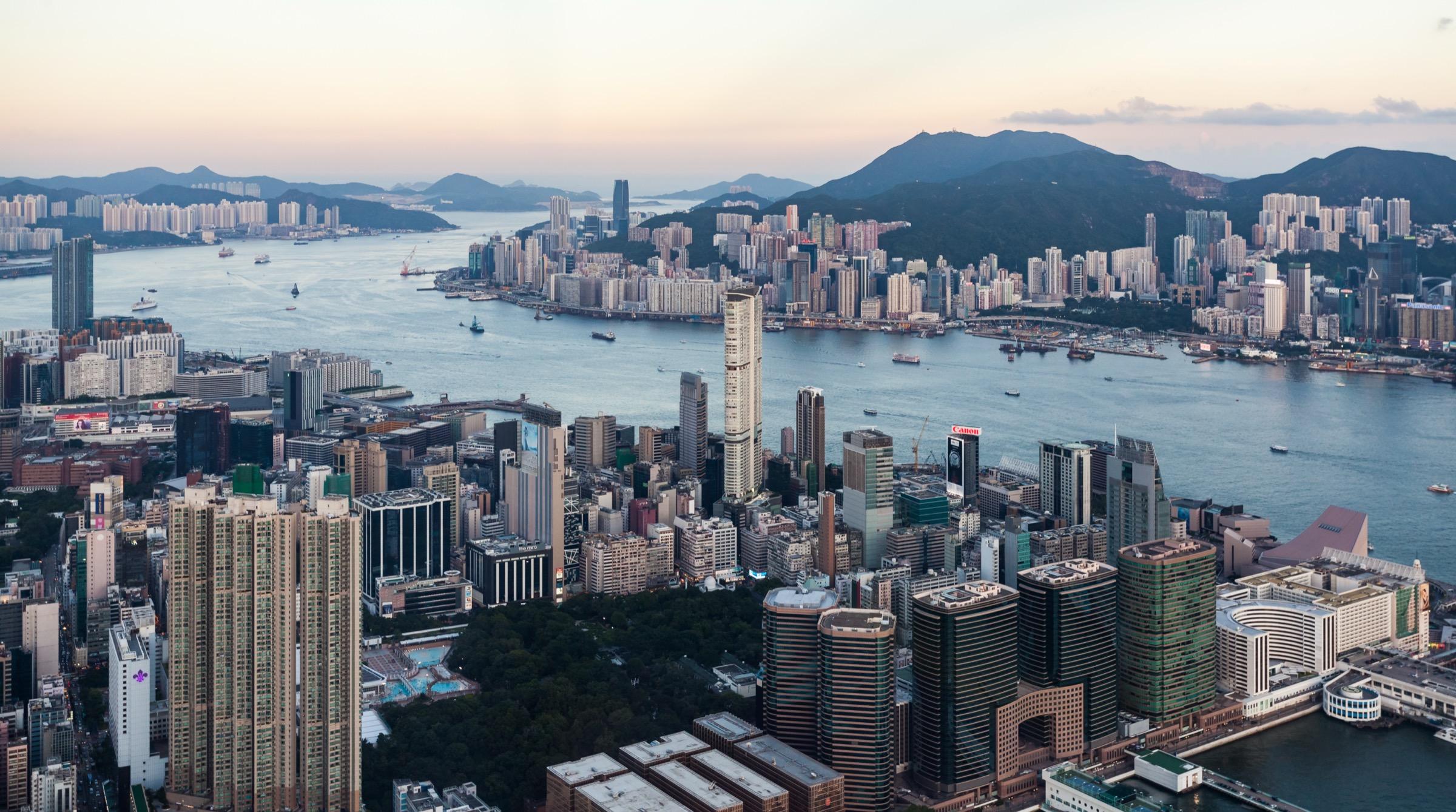
- Hong Kong — Recovery Play with Structural Tailwinds:After falling approximately 30% from their 2021 peak, Hong Kong property prices have rebounded 4.7% in 2025 and are tracking at 4.3% year-on-year growth in early 2026, with forecasts of 10%+ appreciation for the full year. The catalysts are convergent: declining interest rates, a recovering equity market, the return of mainland Chinese buyers, and an IPO pipeline revival. The city's investment ranking in PwC's Emerging Trends survey jumped nine places to #10 in 2026. Student housing near major universities has emerged as a high-conviction sector, with mainland Chinese student demand significantly exceeding supply of purpose-built accommodation.
- Japan — Yield Compression and Safe-Haven Capital:Japan attracted $13.2 billion in real estate investment in 2025, concentrated in Tokyo office assets. The yen weakness has created a structural currency advantage for foreign investors — particularly from the US, Europe, and the Middle East — who are effectively purchasing Japanese assets at a 30–40% discount relative to historical exchange rate averages. Tokyo Grade A office rents have held firm despite global office headwinds, and logistics assets in the Greater Tokyo and Osaka corridors are seeing strong demand from e-commerce and cold-chain operators expanding ahead of demographic-driven consumption shifts.
Institutional Capital Repositioning Across Sectors
- Institutional Conviction in APAC Is Accelerating:Asia Pacific-focused fundraising jumped 130%+ since 2024, now accounting for 11% of global capital raised. Full-year 2025 APAC investment volumes reached $157 billion — a 22% increase over 2024 — with CBRE projecting a further 5–10% growth in 2026. Capital raised in the first half of 2025 alone reached 80% of full-year 2024 levels, reflecting genuine urgency from institutional investors to establish or expand regional allocations. Office has returned as investors' most preferred APAC asset class for the first time since 2020, driven by prime Grade A demand from financial and technology occupiers in Singapore, Tokyo, and Sydney.
- Data Centres — The Structural Demand Layer:The AI and cloud infrastructure build-out is creating a new class of real estate demand across Asia Pacific. Data centre investment is dominated by foreign institutional capital in every major APAC market, with Singapore, Malaysia (Johor), Tokyo, and Sydney emerging as the primary development corridors. Hyperscaler demand from Microsoft, Google, Amazon, and their Chinese counterparts is creating multi-decade lease commitments that generate bond-like income streams at yields materially above core office or logistics. The Malaysia government's approval of 14 hyperscale data centre campuses in 2024–2025 has made Johor a top-10 global data centre destination in under three years.
- Living Sectors — Demographic Dividend:Population mobility driven by manufacturing relocation, student migration, and expatriate workforce expansion is creating structural demand for purpose-built rental accommodation across Vietnam, Malaysia, Thailand, and the Philippines. Student housing in Hong Kong, Tokyo, and Sydney faces chronic undersupply relative to rising Asian university enrolment. Co-living operators are gaining traction in Singapore, where high residential costs and a transient professional workforce create natural demand for flexible rental solutions at institutional scale.
Key Risks: Transshipment, Capital Controls, and Geopolitics
- Transshipment Risk — Not All Industrial Is Equal:A significant fraction of Southeast Asia's expanded US trade surpluses reflects Chinese goods being re-routed through third countries rather than genuine value-added manufacturing. US Customs and Border Protection has increased enforcement of country-of-origin rules, and several Vietnamese industrial park operators have faced scrutiny. Investors must conduct granular due diligence on which tenants are manufacturing in-country versus using facilities primarily for final assembly or labelling — the regulatory and reputational risk of holding the wrong asset is non-trivial as enforcement tightens.
- China Domestic Market Pressure on Chinese Outflows:While Chinese capital outflows are structurally elevated, the Beijing government retains significant capital control levers and has historically intervened to slow outflows when they threaten RMB stability. Investors relying on continued Chinese capital flows to support liquidity in Singapore, Hong Kong, or Japanese real estate should stress-test scenarios where capital controls tighten, particularly as the PBOC faces competing pressures between supporting the domestic economy and managing currency depreciation dynamics.
- Geopolitical Escalation Scenarios:The Taiwan Strait remains the single most significant geopolitical tail risk for Asia Pacific real estate. Any military incident or significantly heightened tension would trigger rapid capital flight from the entire region, with even Singapore — perceived as a neutral safe haven — unlikely to be fully insulated. Investors with large Asia Pacific allocations should ensure geopolitical scenario analysis is built into their portfolio construction, with particular attention to concentration risk in Taiwan and mainland China-adjacent markets.
Investment Strategy: Positioning for the Trade War Realignment
- Vietnam Industrial — Entry Timing Is Now:With Vietnam industrial occupancy at 77–90% and new supply growing at 7.5% annually, the window for entry at current pricing is finite. The most sophisticated institutional investors — Mapletree, CapitaLand, GLP — are already establishing large footprints. Private investors and smaller family offices seeking Vietnam industrial exposure should prioritise ready-built warehouse platforms in Binh Duong, Long An, and Hanoi industrial corridors, where yield-to-cost dynamics remain attractive relative to more liquid markets.
- Singapore and Japan for Portfolio Anchoring:Institutional-grade office and logistics in Singapore and Japan provide the portfolio stability layer for Asia Pacific real estate allocations. Both markets offer deep liquidity, transparent legal frameworks, and — in Japan's case — structural currency upside as yen normalisation continues. Core Singapore Grade A office yields of 3.5–4.0% and Tokyo logistics yields of 3.8–4.2% are low by global standards but reflect risk-adjusted quality that justifies the premium for investors seeking Asian exposure without frontier-market execution risk.
- Hong Kong as a Tactical Allocation:With prices down 30% from peak and catalysts in place for 10%+ appreciation in 2026, Hong Kong offers an attractive tactical entry for investors with a 2–5 year horizon. The primary sectors to focus on are ESG-compliant Grade A office (attracting hedge fund and financial tenant demand), student housing (chronic undersupply against rising mainland demand), and luxury residential (Chinese HNW buyer return). The risk is political — any deterioration in the One Country Two Systems framework would reverse the recovery thesis quickly.
This content is AI-generated and may contain errors. Figures are indicative and subject to change. Do your own due diligence and seek independent legal and financial advice.
Sources
- CBRE — Asia Pacific Real Estate Market Outlook 2026
- Knight Frank — Asia-Pacific Real Estate 2026: Hunting for Value Amid Volatility
- PwC — Emerging Trends in Real Estate Asia Pacific 2026
- Cushman & Wakefield — Vietnam Industrial Real Estate Market Analysis
- JLL — Asia Pacific Capital Tracker Spring 2026
- Real Estate Asia — Singapore Property Investment Surges 27% to $34.12B in 2025
- China Briefing — Trump's China Tariffs Raised to 145%: Overview and Trade Implications
- Morgan Stanley — Hong Kong Real Estate Market 2026

Abhii Dabas is the Founder and CEO of INTRIC Global, the cross-border property intelligence platform for serious investors. He advises high-net-worth buyers on international real estate strategy and has evaluated residential markets across more than 40 countries.
Share
Share this article with others
Introduction
The US–China trade war entered a new phase of intensity in 2025, with Washington escalating tariffs on Chinese goods to 145% and Beijing retaliating with 125% levies on American imports. By mid-2025, US imports from China had fallen approximately 50% year-on-year — the most dramatic bilateral trade contraction since the Second World War. For real estate investors, these numbers translate into something tangible and investable: a historic reorganisation of global manufacturing footprints, a surge of Chinese capital seeking offshore safe havens, and a profound reshaping of which Asian real estate markets attract institutional capital. This analysis examines where the opportunities lie, where capital is flowing, and what sophisticated investors need to understand before positioning in Asia Pacific real estate in 2026.
The Macro Backdrop: Why Trade War Reshapes Real Estate
- Scale of the Tariff Shock:The 145% US tariff on Chinese goods — the largest US tax increase as a share of GDP since 1993 — has fundamentally altered the economics of China-based manufacturing for Western markets. American households face an average additional annual tax burden of $1,500, with the effect flowing through to import prices, inventory strategies, and sourcing decisions across every major manufacturing sector. This is not a temporary disruption: the scale of the tariff regime and the geopolitical dynamics underlying it suggest a structural, multi-year realignment rather than a cycle that reverts to 2019 norms.
- Southeast Asia Trade Surplus Expansion:Malaysia, Thailand, and Vietnam have been the immediate beneficiaries of trade flow diversion, expanding their US trade surpluses by 45%, 44%, and 28% respectively in 2025. These numbers reflect both genuine manufacturing relocation and some transshipment arbitrage — but the underlying factory construction and FDI inflows are real, durable, and accelerating. For industrial real estate investors, understanding which Southeast Asian markets are capturing genuine value-add manufacturing versus acting as transit points is the critical distinction that separates alpha from noise.
- China Capital Outflows — The Offshore Reallocation:Net FDI from China fell from a peak of $334 billion in 2021 to -$154 billion in outflows in 2024, with the capital and financial account deficit reaching $240 billion by Q3 2025. Chinese institutional and high-net-worth capital is actively seeking offshore real estate assets across Singapore, Japan, Hong Kong, and Southeast Asia. SAFE outbound quota rules have been eased to $100,000 per person, and sophisticated capital is routing through Hong Kong holding structures to access regional property markets with minimal friction.
Industrial Real Estate: Following the Factory Migration
- Vietnam — The Primary Manufacturing Relocation Beneficiary:Vietnam has captured 31% of all documented manufacturing relocations out of China since 2018 — the largest single-country share. The industrial real estate market now stands at $19.07 billion and is projected to grow at a 15.42% CAGR through 2033. As of Q3 2024, industrial land sits at 77% occupancy across 41,000+ hectares, with ready-built factories at 76% occupancy ($4.8/sqm/month) and warehouses at 77% ($4.6/sqm/month). Southern industrial hubs post 90% occupancy at $191/sqm per lease cycle. The supply pipeline adds 10,600 hectares of industrial land at 7.5% annual growth through 2027, with FDI M&A in industrial real estate hitting $178 million in the first nine months of 2024 alone — 91% of total sector transaction value.
- Malaysia and Thailand — Semiconductor and Automotive Plays:Malaysia has emerged as the preferred destination for semiconductor supply chain relocation, with Penang's electronics cluster attracting semiconductor packaging and testing facilities from Intel, Infineon, and multiple Taiwanese contract manufacturers. Thailand's Eastern Economic Corridor is capturing automotive and EV battery supply chain investments, particularly from Japanese and South Korean manufacturers repositioning away from China. Both markets offer industrial yields of 6–8%, lower land costs than Singapore, and significant government investment in infrastructure supporting logistics and manufacturing operations.
- India — Long-Game Industrial Opportunity:India's manufacturing ambitions are structural and government-backed through the Production-Linked Incentive (PLI) scheme, which has committed $26 billion across 14 key sectors. Apple's supply chain expansion — shifting 25% of iPhone production to India by 2025 — has catalysed an ecosystem of component manufacturers establishing tier-1 and tier-2 industrial facilities around Chennai, Bengaluru, and Pune. India's industrial and logistics real estate sector attracted $750 million from GIC and ESR in a single joint venture in 2025, reflecting institutional conviction in the long-term manufacturing relocation thesis.
Safe-Haven Capital Flows: Singapore, Hong Kong, Japan
- Singapore — The Dominant Regional Capital Hub:Singapore has captured approximately 61% of total Asia Pacific real estate investment volumes, with 2025 property investment surging 27% to $34.12 billion. The city-state's appeal rests on its political stability, transparent legal framework, sophisticated financial infrastructure, and proximity to Southeast Asian growth markets. Chinese institutional capital inflows surged 433% year-on-year, driving mega-fund and portfolio acquisitions across Grade A office, retail, and logistics assets. Singapore's position as the preferred Asian booking centre for global institutional real estate funds has strengthened considerably as uncertainty in China and Hong Kong elevated its relative governance premium.
- Hong Kong — Recovery Play with Structural Tailwinds:After falling approximately 30% from their 2021 peak, Hong Kong property prices have rebounded 4.7% in 2025 and are tracking at 4.3% year-on-year growth in early 2026, with forecasts of 10%+ appreciation for the full year. The catalysts are convergent: declining interest rates, a recovering equity market, the return of mainland Chinese buyers, and an IPO pipeline revival. The city's investment ranking in PwC's Emerging Trends survey jumped nine places to #10 in 2026. Student housing near major universities has emerged as a high-conviction sector, with mainland Chinese student demand significantly exceeding supply of purpose-built accommodation.
- Japan — Yield Compression and Safe-Haven Capital:Japan attracted $13.2 billion in real estate investment in 2025, concentrated in Tokyo office assets. The yen weakness has created a structural currency advantage for foreign investors — particularly from the US, Europe, and the Middle East — who are effectively purchasing Japanese assets at a 30–40% discount relative to historical exchange rate averages. Tokyo Grade A office rents have held firm despite global office headwinds, and logistics assets in the Greater Tokyo and Osaka corridors are seeing strong demand from e-commerce and cold-chain operators expanding ahead of demographic-driven consumption shifts.
Institutional Capital Repositioning Across Sectors
- Institutional Conviction in APAC Is Accelerating:Asia Pacific-focused fundraising jumped 130%+ since 2024, now accounting for 11% of global capital raised. Full-year 2025 APAC investment volumes reached $157 billion — a 22% increase over 2024 — with CBRE projecting a further 5–10% growth in 2026. Capital raised in the first half of 2025 alone reached 80% of full-year 2024 levels, reflecting genuine urgency from institutional investors to establish or expand regional allocations. Office has returned as investors' most preferred APAC asset class for the first time since 2020, driven by prime Grade A demand from financial and technology occupiers in Singapore, Tokyo, and Sydney.
- Data Centres — The Structural Demand Layer:The AI and cloud infrastructure build-out is creating a new class of real estate demand across Asia Pacific. Data centre investment is dominated by foreign institutional capital in every major APAC market, with Singapore, Malaysia (Johor), Tokyo, and Sydney emerging as the primary development corridors. Hyperscaler demand from Microsoft, Google, Amazon, and their Chinese counterparts is creating multi-decade lease commitments that generate bond-like income streams at yields materially above core office or logistics. The Malaysia government's approval of 14 hyperscale data centre campuses in 2024–2025 has made Johor a top-10 global data centre destination in under three years.
- Living Sectors — Demographic Dividend:Population mobility driven by manufacturing relocation, student migration, and expatriate workforce expansion is creating structural demand for purpose-built rental accommodation across Vietnam, Malaysia, Thailand, and the Philippines. Student housing in Hong Kong, Tokyo, and Sydney faces chronic undersupply relative to rising Asian university enrolment. Co-living operators are gaining traction in Singapore, where high residential costs and a transient professional workforce create natural demand for flexible rental solutions at institutional scale.
Key Risks: Transshipment, Capital Controls, and Geopolitics
- Transshipment Risk — Not All Industrial Is Equal:A significant fraction of Southeast Asia's expanded US trade surpluses reflects Chinese goods being re-routed through third countries rather than genuine value-added manufacturing. US Customs and Border Protection has increased enforcement of country-of-origin rules, and several Vietnamese industrial park operators have faced scrutiny. Investors must conduct granular due diligence on which tenants are manufacturing in-country versus using facilities primarily for final assembly or labelling — the regulatory and reputational risk of holding the wrong asset is non-trivial as enforcement tightens.
- China Domestic Market Pressure on Chinese Outflows:While Chinese capital outflows are structurally elevated, the Beijing government retains significant capital control levers and has historically intervened to slow outflows when they threaten RMB stability. Investors relying on continued Chinese capital flows to support liquidity in Singapore, Hong Kong, or Japanese real estate should stress-test scenarios where capital controls tighten, particularly as the PBOC faces competing pressures between supporting the domestic economy and managing currency depreciation dynamics.
- Geopolitical Escalation Scenarios:The Taiwan Strait remains the single most significant geopolitical tail risk for Asia Pacific real estate. Any military incident or significantly heightened tension would trigger rapid capital flight from the entire region, with even Singapore — perceived as a neutral safe haven — unlikely to be fully insulated. Investors with large Asia Pacific allocations should ensure geopolitical scenario analysis is built into their portfolio construction, with particular attention to concentration risk in Taiwan and mainland China-adjacent markets.
Investment Strategy: Positioning for the Trade War Realignment
- Vietnam Industrial — Entry Timing Is Now:With Vietnam industrial occupancy at 77–90% and new supply growing at 7.5% annually, the window for entry at current pricing is finite. The most sophisticated institutional investors — Mapletree, CapitaLand, GLP — are already establishing large footprints. Private investors and smaller family offices seeking Vietnam industrial exposure should prioritise ready-built warehouse platforms in Binh Duong, Long An, and Hanoi industrial corridors, where yield-to-cost dynamics remain attractive relative to more liquid markets.
- Singapore and Japan for Portfolio Anchoring:Institutional-grade office and logistics in Singapore and Japan provide the portfolio stability layer for Asia Pacific real estate allocations. Both markets offer deep liquidity, transparent legal frameworks, and — in Japan's case — structural currency upside as yen normalisation continues. Core Singapore Grade A office yields of 3.5–4.0% and Tokyo logistics yields of 3.8–4.2% are low by global standards but reflect risk-adjusted quality that justifies the premium for investors seeking Asian exposure without frontier-market execution risk.
- Hong Kong as a Tactical Allocation:With prices down 30% from peak and catalysts in place for 10%+ appreciation in 2026, Hong Kong offers an attractive tactical entry for investors with a 2–5 year horizon. The primary sectors to focus on are ESG-compliant Grade A office (attracting hedge fund and financial tenant demand), student housing (chronic undersupply against rising mainland demand), and luxury residential (Chinese HNW buyer return). The risk is political — any deterioration in the One Country Two Systems framework would reverse the recovery thesis quickly.
This content is AI-generated and may contain errors. Figures are indicative and subject to change. Do your own due diligence and seek independent legal and financial advice.
Sources
- CBRE — Asia Pacific Real Estate Market Outlook 2026
- Knight Frank — Asia-Pacific Real Estate 2026: Hunting for Value Amid Volatility
- PwC — Emerging Trends in Real Estate Asia Pacific 2026
- Cushman & Wakefield — Vietnam Industrial Real Estate Market Analysis
- JLL — Asia Pacific Capital Tracker Spring 2026
- Real Estate Asia — Singapore Property Investment Surges 27% to $34.12B in 2025
- China Briefing — Trump's China Tariffs Raised to 145%: Overview and Trade Implications
- Morgan Stanley — Hong Kong Real Estate Market 2026
Abhii Dabas is the Founder and CEO of INTRIC Global, the cross-border property intelligence platform for serious investors. He advises high-net-worth buyers on international real estate strategy and has evaluated residential markets across more than 40 countries.
Share this article
Share this insight with others
Share
Share this article with others
Properties in JAPAN & VIETNAM
View all properties
Indonesia
Fashion-Branded Beachfront Resort in Seminyak, Bali
Bali's first internationally fashion-branded beachfront resort residence
Vietnam
Beachfront Branded Residences in Da Nang, Vietnam
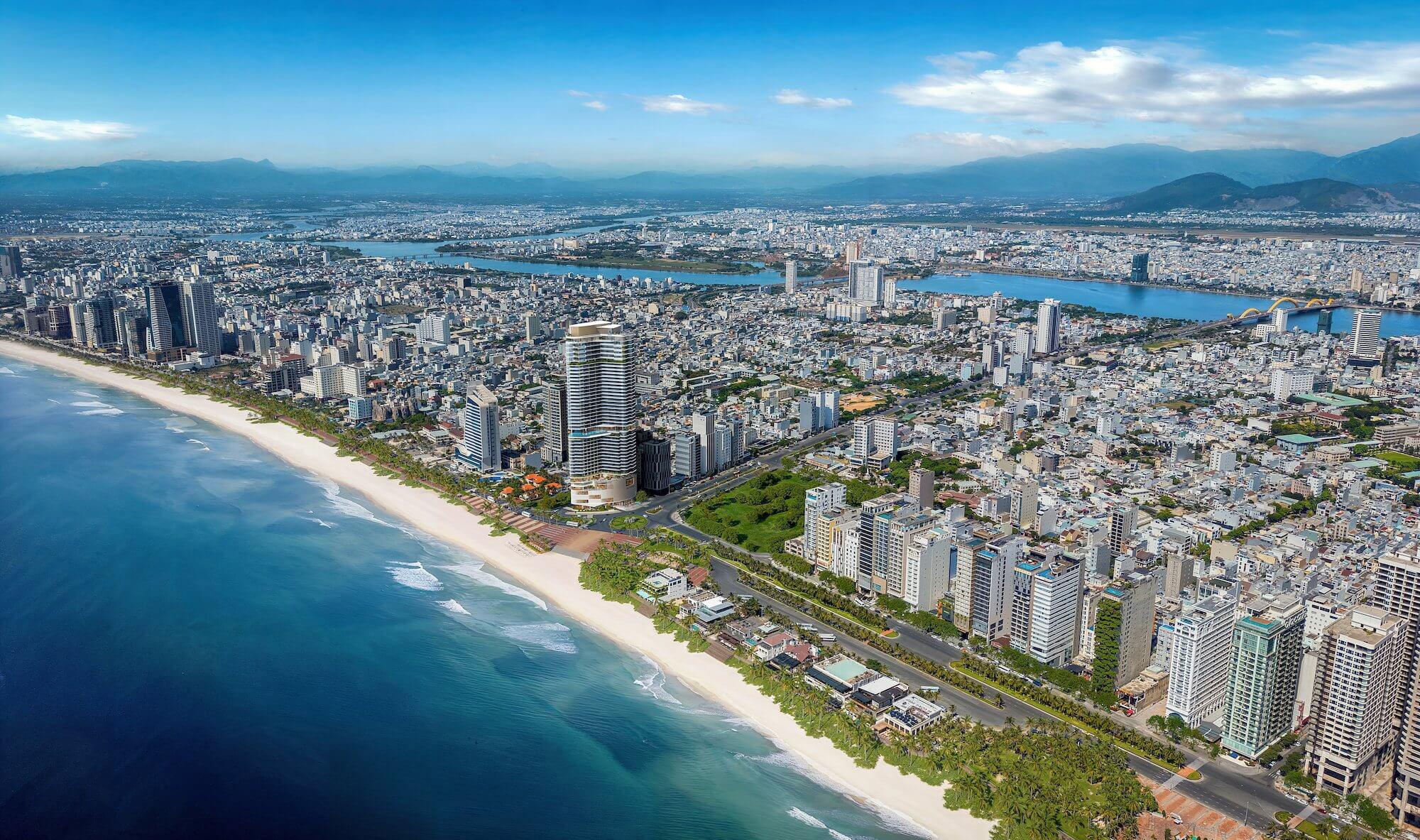
Vietnam's first residence by a globally recognised hospitality brand, on a celebrated stretch of Da Nang coastline
Related Market Insights
View More Market Insights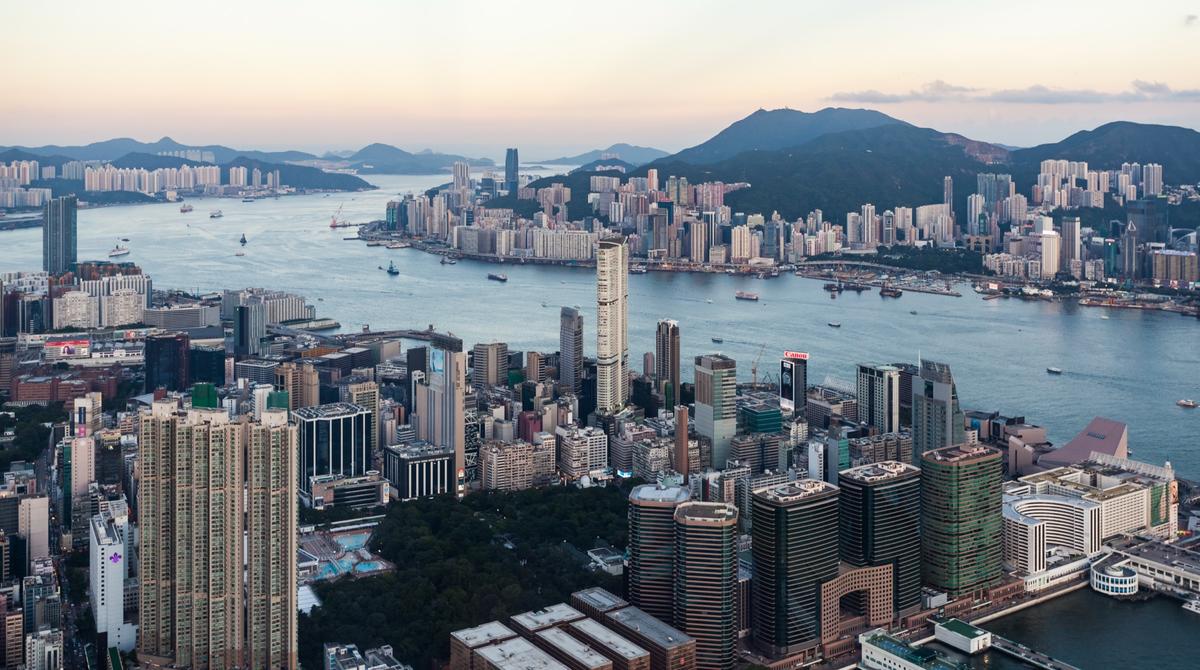
Market Analysis
China's 35-Month Decline and Hong Kong's Recovery: Why "China Property" Is Not One Trade
By Abhii Dabas · July 10, 2026

Market Analysis
Nordic Real Estate in 2026: Record Institutional Capital Meets Europe's Worst Housing Shortage
By Abhii Dabas · June 25, 2026

Market Analysis
Spain and Iberia in 2026: Europe's Top Investment Market Navigates a Housing Paradox
By Abhii Dabas · June 25, 2026
Found this useful? Send it to someone who should read it.
Continue with INTRIC