Buying Prime London Property in 2026: A Guide for Gulf Family Investors
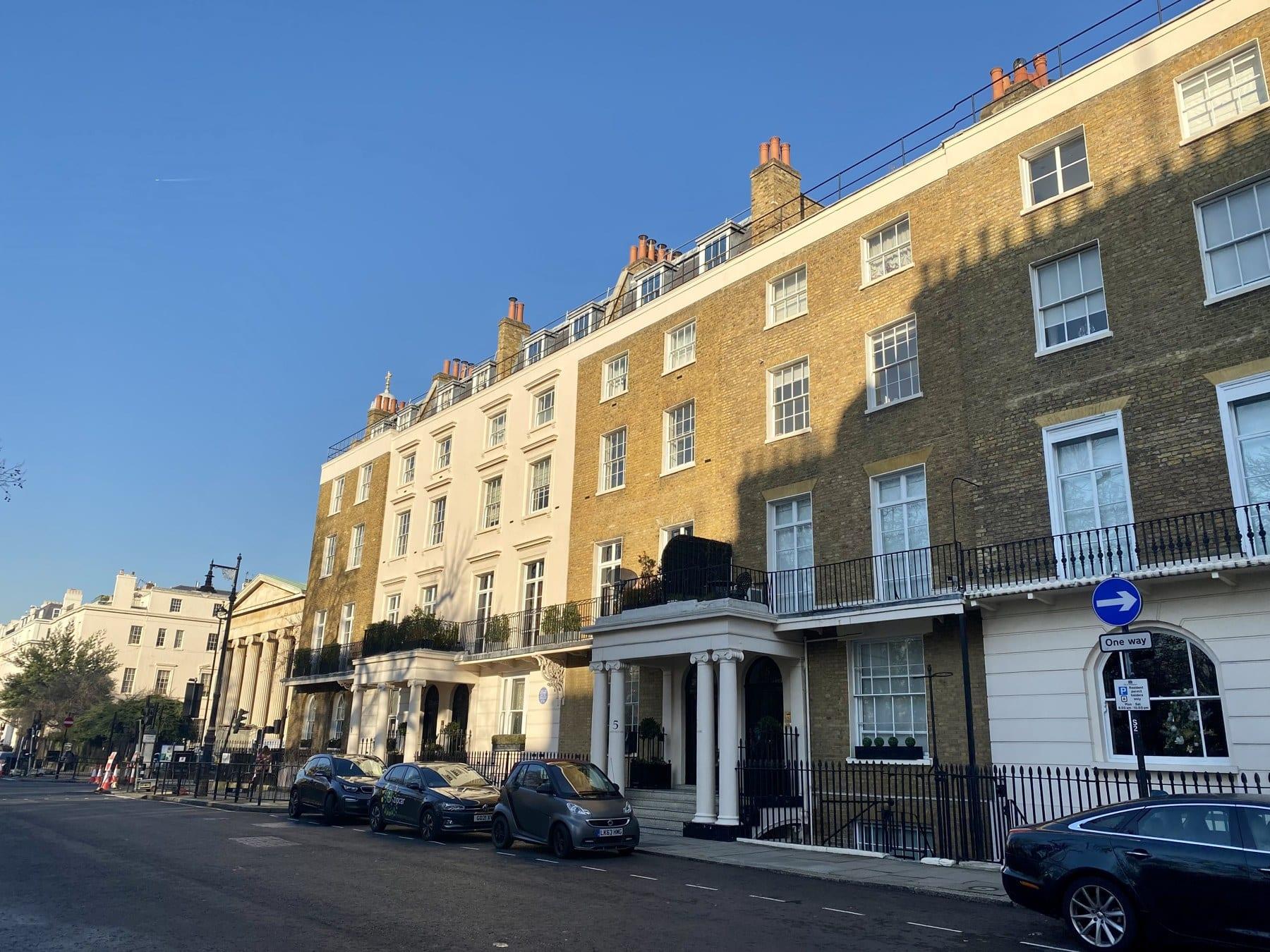
Gulf families buying in prime London in 2026 face a materially higher cost of entry than the received wisdom assumes. A non-resident buying a GBP 3 million flat as an additional dwelling pays about GBP 483,750 in stamp duty, an effective 16.13%, because the additional dwellings surcharge rose to 5% in October 2024 and the 2% non-resident surcharge stacks on top. Offshore company ownership stopped sheltering UK residential property from inheritance tax in 2017 but still triggers ATED. Prime central London fell 7.0% in the year to Q1 2026, which is both the risk and the opportunity.
Key takeaways
- 1A non-resident Gulf buyer purchasing a GBP 3 million London flat as an additional dwelling pays approximately GBP 483,750 in stamp duty, an effective rate of 16.13%.
- 2The higher rate for additional dwellings rose from 3% to 5% on 31 October 2024, and the 2% non-resident surcharge stacks on top of it.
- 3Offshore company ownership has not sheltered UK residential property from inheritance tax since 6 April 2017, but it still triggers an annual ATED charge of GBP 32,200 in the GBP 2 million to GBP 5 million band.
- 4A property kept available for the family to use in summer fails the ATED rental relief test, so the annual charge applies in full.
- 5Prime central London fell 7.0% in the year to Q1 2026 on LonRes data, with transactions down 32.6%, which is the source of the discounts drawing Gulf buyers back.
Introduction
Gulf families have bought residential property in London for three generations, and the reasons have been remarkably stable: education, healthcare, a seasonal residence during the Gulf summer, and a store of value denominated outside the region. What has changed is the cost of entry and the cost of holding. Between October 2024 and April 2026 the UK raised the additional dwellings surcharge, abolished the non-dom regime, moved inheritance tax onto a residence basis, and announced a new surcharge on high value homes. The London thesis for Gulf buyers is still intact, but the arithmetic behind it now has to be run explicitly rather than assumed.
Why do Gulf families buy residential property in London?
Gulf families buy in London for four reasons that compound rather than compete: schooling for children, access to the Harley Street medical cluster, a temperate residence during the Gulf summer, and a hard asset held outside regional currency and political risk. The Harley Street Medical Area concentrates more than 5,000 specialists and 250 clinics across roughly 95 acres of Marylebone, and it markets directly into the Middle East. That single cluster explains more London geography than any yield model does.
The currency logic is more subtle than it is usually presented. The Saudi riyal, the UAE dirham and the Qatari riyal are pegged to the US dollar, at 3.75, 3.6725 and 3.64 respectively, so for those buyers a London purchase is effectively a dollar-to-sterling decision and sterling weakness opens a buying window. The Kuwaiti dinar is the exception and is not a dollar peg at all. The Central Bank of Kuwait has pegged it to an undisclosed weighted basket of trading partner currencies since 20 May 2007, which means Kuwaiti buyers face a different entry calculus from their neighbours.
Buyers in this corridor are rarely buying a yield. They are buying a place the family already goes, and the return has to be measured over fifteen years, not five.
What does a non-resident Gulf buyer actually pay in stamp duty?
A non-resident buying an additional dwelling pays three layers of stamp duty that stack on each other: the standard residential rates, the higher rate for additional dwellings, and the 2% non-resident surcharge. The higher rate rose from 3% to 5% on 31 October 2024, and the standard nil-rate band reverted to GBP 125,000 on 1 April 2025. Any calculation still using a 3% surcharge or a GBP 250,000 nil-rate band understates the bill materially. The non-resident test is mechanical: fewer than 183 days in the UK in the twelve months before the transaction.
For a GBP 3 million flat, the total is approximately GBP 483,750, an effective rate of 16.13%. The arithmetic checks two ways: standard SDLT of GBP 273,750, plus 5% of GBP 3 million (GBP 150,000), plus 2% of GBP 3 million (GBP 60,000).
| Purchase price | Total SDLT | Effective rate | Structure |
|---|---|---|---|
| GBP 2,000,000 | GBP 293,750 | 14.69% | Non-resident individual, additional dwelling |
| GBP 3,000,000 | GBP 483,750 | 16.13% | Non-resident individual, additional dwelling |
| GBP 5,000,000 | GBP 863,750 | 17.28% | Non-resident individual, additional dwelling |
| GBP 3,000,000 | GBP 570,000 | 19.00% | Non-resident company, flat rate |
The final row is the one that surprises people. A non-resident company buying a dwelling above GBP 500,000 pays a flat 17%, raised from 15% at the same October 2024 Budget, plus the 2% non-resident surcharge, for a flat 19%. That rate replaces the banded rates and the additional dwellings surcharge rather than stacking with them. Below roughly GBP 3 million the corporate route costs more than personal ownership. It is not a shelter.
How did the 2025 non-dom and inheritance tax changes affect Gulf buyers?
The remittance basis was abolished on 6 April 2025 and replaced with the four-year Foreign Income and Gains regime. It is available only to someone in their first four years of UK residence following at least ten consecutive years of non-UK residence, and it must be claimed annually. For a Gulf family whose members visit London without becoming UK resident, the FIG regime is largely irrelevant. For a family whose children stay on to work after university, it is the difference between a manageable and an expensive transition.
Inheritance tax moved onto a residence basis on the same date. A long-term resident, defined as UK resident for at least ten of the previous twenty tax years, has worldwide assets brought into scope at 40%. The status does not end on departure: it trails for between three and ten years depending on how long the person was resident, and resets only after ten consecutive non-resident years. The nil-rate band of GBP 325,000 is frozen until April 2031.
The most persistent misconception in this corridor concerns offshore structures. Holding a London flat through a BVI or Jersey company did shelter it from UK inheritance tax, and that is precisely why so many Gulf families hold that way. Schedule A1 of the Inheritance Tax Act ended it on 6 April 2017 by looking through the company to the underlying UK residential property, and from 6 April 2026 the same treatment extends to UK agricultural property. Families still holding through pre-2017 structures are paying for a shelter that stopped existing nine years ago.
The offshore company no longer removes the inheritance tax. It only adds an annual charge on top of it.
That annual charge is the Annual Tax on Enveloped Dwellings. For 2026 to 2027 it runs from GBP 4,600 on a GBP 500,000 to GBP 1 million property to GBP 303,450 above GBP 20 million, with the GBP 2 million to GBP 5 million band at GBP 32,200. Relief exists where the dwelling is let commercially to a third party, but the condition is strict: it must not be occupied, or even available for occupation, by anyone connected with the owner. A Mayfair flat held in a company and kept free for the family in August fails that test and pays the full charge every year.
One further change is scheduled and is not yet priced into most advice. The High Value Council Tax Surcharge, announced at the Autumn Budget 2025, applies from April 2028 to English homes worth GBP 2 million or more, valued at 2026 prices. It runs from GBP 2,500 to GBP 7,500 a year, is uprated by CPI, and is payable by the owner rather than the occupier, which places it squarely on a non-resident buyer whose property sits empty for much of the year. The treatment of companies, trusts and partnerships is still under consultation.
Which London submarkets do Gulf families actually buy in?
Belgravia was the most purchased Middle East address in London in 2025, taking 8 of 41 tracked super-prime transactions, up from 3 the year before, with Knightsbridge next at 4. Mayfair and Knightsbridge remain constrained by the supply of genuinely turnkey stock rather than by demand. Marylebone draws its demand from the Harley Street cluster, and St John's Wood appears consistently in agency accounts of Gulf preferences, though without published figures behind it.
A caveat belongs here rather than in a footnote. Almost every published figure on Gulf buyer share in London traces back to a single agency, Beauchamp Estates, through its own survey. On that data, Middle Eastern buyers accounted for 25% of London sales above GBP 15 million in 2025, up from 20% in 2024, and around 20% of prime central London sales and 25% of Mayfair sales in 2026 to date, with roughly three quarters of super-prime deals settled in cash. Knight Frank, Savills and LonRes publish no comparable Gulf-specific series. The direction of travel is credible and consistent; the precision is not, and anyone modelling off these numbers should treat them as one house's view of its own order book.
How does Shariah-compliant financing work for non-resident Gulf buyers?
Shariah-compliant home purchase plans are available to non-resident Gulf buyers, but on different terms from those advertised to UK residents. Gatehouse Bank places non-residents in its International Residents tier and offers them the Acquisition and Rent structure only, a diminishing ownership arrangement paired with rent on the bank's share. As of its June 2026 product guide, maximum finance-to-value is 80%, maximum finance is GBP 5 million with larger cases by referral, terms run 5 to 40 years, and initial rental rates sit between 6.74% and 7.14% depending on term, green status and finance-to-value.
Al Rayan Bank offers a standard home purchase plan built on diminishing Musharaka combined with Ijara, but non-resident Gulf nationals are routed instead to Premier Home Finance, which is structured as Commodity Murabaha. Rates and finance-to-value are negotiated case by case rather than published. Eligibility is worth checking early: the published country list covers Qatar, Saudi Arabia, Kuwait, Bahrain and Oman, and the UAE is not on it, which is the opposite of what most buyers assume. Leasehold flats need 80 years remaining plus the finance term.
Cash remains the dominant route at the top of this market, which makes the financing question less binding than it first appears. It matters most to the buyer who wants sterling leverage against a dollar-linked income rather than to the buyer moving family capital.
Is the London thesis still intact for Gulf buyers in 2026?
The honest answer is that prime central London is falling, and the discounts are the attraction. LonRes recorded prime central London down 7.0% in the year to Q1 2026, wider prime London down 5.0%, transactions down 32.6% year on year, and average discounts to asking price of 14.2%. Knight Frank cut its 2026 prime central London forecast from flat to minus 2%, having already cut 2025 to minus 4%, and Savills puts prime London 24.5% below its 2014 peak. A Gulf buyer entering now is buying a market in drawdown, which is a defensible decision provided it is a deliberate one.
Two counterweights deserve attention. The first is Dubai, which is retaining Gulf capital that would once have gone to London: prices rose 10% year on year in Q3 2025 on a record 56,854 transactions, and Dubai was the world's most active market for sales above USD 10 million in 2025. The offsetting point is that Knight Frank projects Dubai prime growth of only around 3% in 2026 after a 194% run since 2020, so the comparison is between a market in drawdown and a market at the end of a long expansion.
The second is more uncomfortable. Knight Frank observes that the increase in Middle East relocation demand since February 2026 has been more notable in the rental market than in sales. Gulf interest in London is real and rising, and a meaningful share of it is choosing to rent rather than buy. That is the clearest available evidence that the tax changes have altered behaviour, and it is a better argument than the widely repeated non-dom exodus narrative, which does not survive scrutiny: the headline millionaire migration figures were shown to rest on a wealth definition that changed mid-series, and HMRC data indicates departures broadly in line with official forecasts.
Rising interest that expresses itself as tenancy rather than purchase is not a bullish signal for prices. It is a signal that buyers are keeping their options open.
On income, expectations should be set low. Knight Frank puts prime central London gross yields at 2.5% to 3.5%, and net yields land 1.5 to 2 percentage points below that once service charges, ground rent and management are taken out, so 0.5% to 2% net is the realistic band. Leasehold structures deserve scrutiny: the proposed GBP 250 ground rent cap announced in January 2026 is a Bill, not law, and is unlikely to take effect before 2028. Underwriting a purchase on the assumption it has already passed would be a mistake.
How does INTRIC vet developments in this corridor?
INTRIC applies a 10-point due diligence framework before listing any developer or asset in this corridor. For prime London the framework weighs lease length and title security, service charge trajectory rather than the current figure, the developer's record on delivered rather than marketed schemes, and whether the ownership structure a buyer arrives with still does what they believe it does. A significant share of the work in this corridor is unwinding pre-2017 offshore structures that now cost money without conferring a benefit.
INTRIC is private and invitation-only. Gulf family buyers seeking access to vetted London developments should approach INTRIC through an existing member referral or through INTRIC's curated outreach process. The platform does not solicit retail applications and does not publish open listings.
Frequently asked questions
Can Saudi, Emirati, Kuwaiti and Qatari nationals buy property in London?+
How much stamp duty does a non-resident Gulf buyer pay on a GBP 3 million London flat?+
Does holding a London property through an offshore company avoid UK inheritance tax?+
Can Gulf buyers get Shariah-compliant financing for a London property?+
What yield does prime central London actually produce?+
Sources
- GOV.UK — Rates of Stamp Duty Land Tax for non-UK residents
- GOV.UK — Check if you can claim the 4-year foreign income and gains regime
- GOV.UK — Inheritance Tax if you are a long-term UK resident
- HMRC Inheritance Tax Manual IHTM04311 — Schedule A1 and UK residential property
- GOV.UK — Annual Tax on Enveloped Dwellings: the basics
- GOV.UK — High Value Council Tax Surcharge
- Knight Frank — UK Housing Market Forecast, Q2 2026
- LonRes — Prime London Market Update, Spring 2026

Abhii Dabas is the Founder and CEO of INTRIC Global, the cross-border property intelligence platform for serious investors. He advises high-net-worth buyers on international real estate strategy and has evaluated residential markets across more than 40 countries. INTRIC works closely with Gulf family buyers structuring prime London purchases through the 2025 and 2026 tax changes.
Share
Share this article with others
Gulf families buying in prime London in 2026 face a materially higher cost of entry than the received wisdom assumes. A non-resident buying a GBP 3 million flat as an additional dwelling pays about GBP 483,750 in stamp duty, an effective 16.13%, because the additional dwellings surcharge rose to 5% in October 2024 and the 2% non-resident surcharge stacks on top. Offshore company ownership stopped sheltering UK residential property from inheritance tax in 2017 but still triggers ATED. Prime central London fell 7.0% in the year to Q1 2026, which is both the risk and the opportunity.
Key takeaways
- 1A non-resident Gulf buyer purchasing a GBP 3 million London flat as an additional dwelling pays approximately GBP 483,750 in stamp duty, an effective rate of 16.13%.
- 2The higher rate for additional dwellings rose from 3% to 5% on 31 October 2024, and the 2% non-resident surcharge stacks on top of it.
- 3Offshore company ownership has not sheltered UK residential property from inheritance tax since 6 April 2017, but it still triggers an annual ATED charge of GBP 32,200 in the GBP 2 million to GBP 5 million band.
- 4A property kept available for the family to use in summer fails the ATED rental relief test, so the annual charge applies in full.
- 5Prime central London fell 7.0% in the year to Q1 2026 on LonRes data, with transactions down 32.6%, which is the source of the discounts drawing Gulf buyers back.
Introduction
Gulf families have bought residential property in London for three generations, and the reasons have been remarkably stable: education, healthcare, a seasonal residence during the Gulf summer, and a store of value denominated outside the region. What has changed is the cost of entry and the cost of holding. Between October 2024 and April 2026 the UK raised the additional dwellings surcharge, abolished the non-dom regime, moved inheritance tax onto a residence basis, and announced a new surcharge on high value homes. The London thesis for Gulf buyers is still intact, but the arithmetic behind it now has to be run explicitly rather than assumed.
Why do Gulf families buy residential property in London?
Gulf families buy in London for four reasons that compound rather than compete: schooling for children, access to the Harley Street medical cluster, a temperate residence during the Gulf summer, and a hard asset held outside regional currency and political risk. The Harley Street Medical Area concentrates more than 5,000 specialists and 250 clinics across roughly 95 acres of Marylebone, and it markets directly into the Middle East. That single cluster explains more London geography than any yield model does.
The currency logic is more subtle than it is usually presented. The Saudi riyal, the UAE dirham and the Qatari riyal are pegged to the US dollar, at 3.75, 3.6725 and 3.64 respectively, so for those buyers a London purchase is effectively a dollar-to-sterling decision and sterling weakness opens a buying window. The Kuwaiti dinar is the exception and is not a dollar peg at all. The Central Bank of Kuwait has pegged it to an undisclosed weighted basket of trading partner currencies since 20 May 2007, which means Kuwaiti buyers face a different entry calculus from their neighbours.
Buyers in this corridor are rarely buying a yield. They are buying a place the family already goes, and the return has to be measured over fifteen years, not five.
What does a non-resident Gulf buyer actually pay in stamp duty?
A non-resident buying an additional dwelling pays three layers of stamp duty that stack on each other: the standard residential rates, the higher rate for additional dwellings, and the 2% non-resident surcharge. The higher rate rose from 3% to 5% on 31 October 2024, and the standard nil-rate band reverted to GBP 125,000 on 1 April 2025. Any calculation still using a 3% surcharge or a GBP 250,000 nil-rate band understates the bill materially. The non-resident test is mechanical: fewer than 183 days in the UK in the twelve months before the transaction.
For a GBP 3 million flat, the total is approximately GBP 483,750, an effective rate of 16.13%. The arithmetic checks two ways: standard SDLT of GBP 273,750, plus 5% of GBP 3 million (GBP 150,000), plus 2% of GBP 3 million (GBP 60,000).
| Purchase price | Total SDLT | Effective rate | Structure |
|---|---|---|---|
| GBP 2,000,000 | GBP 293,750 | 14.69% | Non-resident individual, additional dwelling |
| GBP 3,000,000 | GBP 483,750 | 16.13% | Non-resident individual, additional dwelling |
| GBP 5,000,000 | GBP 863,750 | 17.28% | Non-resident individual, additional dwelling |
| GBP 3,000,000 | GBP 570,000 | 19.00% | Non-resident company, flat rate |
The final row is the one that surprises people. A non-resident company buying a dwelling above GBP 500,000 pays a flat 17%, raised from 15% at the same October 2024 Budget, plus the 2% non-resident surcharge, for a flat 19%. That rate replaces the banded rates and the additional dwellings surcharge rather than stacking with them. Below roughly GBP 3 million the corporate route costs more than personal ownership. It is not a shelter.
How did the 2025 non-dom and inheritance tax changes affect Gulf buyers?
The remittance basis was abolished on 6 April 2025 and replaced with the four-year Foreign Income and Gains regime. It is available only to someone in their first four years of UK residence following at least ten consecutive years of non-UK residence, and it must be claimed annually. For a Gulf family whose members visit London without becoming UK resident, the FIG regime is largely irrelevant. For a family whose children stay on to work after university, it is the difference between a manageable and an expensive transition.
Inheritance tax moved onto a residence basis on the same date. A long-term resident, defined as UK resident for at least ten of the previous twenty tax years, has worldwide assets brought into scope at 40%. The status does not end on departure: it trails for between three and ten years depending on how long the person was resident, and resets only after ten consecutive non-resident years. The nil-rate band of GBP 325,000 is frozen until April 2031.
The most persistent misconception in this corridor concerns offshore structures. Holding a London flat through a BVI or Jersey company did shelter it from UK inheritance tax, and that is precisely why so many Gulf families hold that way. Schedule A1 of the Inheritance Tax Act ended it on 6 April 2017 by looking through the company to the underlying UK residential property, and from 6 April 2026 the same treatment extends to UK agricultural property. Families still holding through pre-2017 structures are paying for a shelter that stopped existing nine years ago.
The offshore company no longer removes the inheritance tax. It only adds an annual charge on top of it.
That annual charge is the Annual Tax on Enveloped Dwellings. For 2026 to 2027 it runs from GBP 4,600 on a GBP 500,000 to GBP 1 million property to GBP 303,450 above GBP 20 million, with the GBP 2 million to GBP 5 million band at GBP 32,200. Relief exists where the dwelling is let commercially to a third party, but the condition is strict: it must not be occupied, or even available for occupation, by anyone connected with the owner. A Mayfair flat held in a company and kept free for the family in August fails that test and pays the full charge every year.
One further change is scheduled and is not yet priced into most advice. The High Value Council Tax Surcharge, announced at the Autumn Budget 2025, applies from April 2028 to English homes worth GBP 2 million or more, valued at 2026 prices. It runs from GBP 2,500 to GBP 7,500 a year, is uprated by CPI, and is payable by the owner rather than the occupier, which places it squarely on a non-resident buyer whose property sits empty for much of the year. The treatment of companies, trusts and partnerships is still under consultation.
Which London submarkets do Gulf families actually buy in?
Belgravia was the most purchased Middle East address in London in 2025, taking 8 of 41 tracked super-prime transactions, up from 3 the year before, with Knightsbridge next at 4. Mayfair and Knightsbridge remain constrained by the supply of genuinely turnkey stock rather than by demand. Marylebone draws its demand from the Harley Street cluster, and St John's Wood appears consistently in agency accounts of Gulf preferences, though without published figures behind it.
A caveat belongs here rather than in a footnote. Almost every published figure on Gulf buyer share in London traces back to a single agency, Beauchamp Estates, through its own survey. On that data, Middle Eastern buyers accounted for 25% of London sales above GBP 15 million in 2025, up from 20% in 2024, and around 20% of prime central London sales and 25% of Mayfair sales in 2026 to date, with roughly three quarters of super-prime deals settled in cash. Knight Frank, Savills and LonRes publish no comparable Gulf-specific series. The direction of travel is credible and consistent; the precision is not, and anyone modelling off these numbers should treat them as one house's view of its own order book.
How does Shariah-compliant financing work for non-resident Gulf buyers?
Shariah-compliant home purchase plans are available to non-resident Gulf buyers, but on different terms from those advertised to UK residents. Gatehouse Bank places non-residents in its International Residents tier and offers them the Acquisition and Rent structure only, a diminishing ownership arrangement paired with rent on the bank's share. As of its June 2026 product guide, maximum finance-to-value is 80%, maximum finance is GBP 5 million with larger cases by referral, terms run 5 to 40 years, and initial rental rates sit between 6.74% and 7.14% depending on term, green status and finance-to-value.
Al Rayan Bank offers a standard home purchase plan built on diminishing Musharaka combined with Ijara, but non-resident Gulf nationals are routed instead to Premier Home Finance, which is structured as Commodity Murabaha. Rates and finance-to-value are negotiated case by case rather than published. Eligibility is worth checking early: the published country list covers Qatar, Saudi Arabia, Kuwait, Bahrain and Oman, and the UAE is not on it, which is the opposite of what most buyers assume. Leasehold flats need 80 years remaining plus the finance term.
Cash remains the dominant route at the top of this market, which makes the financing question less binding than it first appears. It matters most to the buyer who wants sterling leverage against a dollar-linked income rather than to the buyer moving family capital.
Is the London thesis still intact for Gulf buyers in 2026?
The honest answer is that prime central London is falling, and the discounts are the attraction. LonRes recorded prime central London down 7.0% in the year to Q1 2026, wider prime London down 5.0%, transactions down 32.6% year on year, and average discounts to asking price of 14.2%. Knight Frank cut its 2026 prime central London forecast from flat to minus 2%, having already cut 2025 to minus 4%, and Savills puts prime London 24.5% below its 2014 peak. A Gulf buyer entering now is buying a market in drawdown, which is a defensible decision provided it is a deliberate one.
Two counterweights deserve attention. The first is Dubai, which is retaining Gulf capital that would once have gone to London: prices rose 10% year on year in Q3 2025 on a record 56,854 transactions, and Dubai was the world's most active market for sales above USD 10 million in 2025. The offsetting point is that Knight Frank projects Dubai prime growth of only around 3% in 2026 after a 194% run since 2020, so the comparison is between a market in drawdown and a market at the end of a long expansion.
The second is more uncomfortable. Knight Frank observes that the increase in Middle East relocation demand since February 2026 has been more notable in the rental market than in sales. Gulf interest in London is real and rising, and a meaningful share of it is choosing to rent rather than buy. That is the clearest available evidence that the tax changes have altered behaviour, and it is a better argument than the widely repeated non-dom exodus narrative, which does not survive scrutiny: the headline millionaire migration figures were shown to rest on a wealth definition that changed mid-series, and HMRC data indicates departures broadly in line with official forecasts.
Rising interest that expresses itself as tenancy rather than purchase is not a bullish signal for prices. It is a signal that buyers are keeping their options open.
On income, expectations should be set low. Knight Frank puts prime central London gross yields at 2.5% to 3.5%, and net yields land 1.5 to 2 percentage points below that once service charges, ground rent and management are taken out, so 0.5% to 2% net is the realistic band. Leasehold structures deserve scrutiny: the proposed GBP 250 ground rent cap announced in January 2026 is a Bill, not law, and is unlikely to take effect before 2028. Underwriting a purchase on the assumption it has already passed would be a mistake.
How does INTRIC vet developments in this corridor?
INTRIC applies a 10-point due diligence framework before listing any developer or asset in this corridor. For prime London the framework weighs lease length and title security, service charge trajectory rather than the current figure, the developer's record on delivered rather than marketed schemes, and whether the ownership structure a buyer arrives with still does what they believe it does. A significant share of the work in this corridor is unwinding pre-2017 offshore structures that now cost money without conferring a benefit.
INTRIC is private and invitation-only. Gulf family buyers seeking access to vetted London developments should approach INTRIC through an existing member referral or through INTRIC's curated outreach process. The platform does not solicit retail applications and does not publish open listings.
Frequently asked questions
Can Saudi, Emirati, Kuwaiti and Qatari nationals buy property in London?+
How much stamp duty does a non-resident Gulf buyer pay on a GBP 3 million London flat?+
Does holding a London property through an offshore company avoid UK inheritance tax?+
Can Gulf buyers get Shariah-compliant financing for a London property?+
What yield does prime central London actually produce?+
Sources
- GOV.UK — Rates of Stamp Duty Land Tax for non-UK residents
- GOV.UK — Check if you can claim the 4-year foreign income and gains regime
- GOV.UK — Inheritance Tax if you are a long-term UK resident
- HMRC Inheritance Tax Manual IHTM04311 — Schedule A1 and UK residential property
- GOV.UK — Annual Tax on Enveloped Dwellings: the basics
- GOV.UK — High Value Council Tax Surcharge
- Knight Frank — UK Housing Market Forecast, Q2 2026
- LonRes — Prime London Market Update, Spring 2026
Abhii Dabas is the Founder and CEO of INTRIC Global, the cross-border property intelligence platform for serious investors. He advises high-net-worth buyers on international real estate strategy and has evaluated residential markets across more than 40 countries. INTRIC works closely with Gulf family buyers structuring prime London purchases through the 2025 and 2026 tax changes.
Share this article
Share this insight with others
Share
Share this article with others
Related Market Insights
View More Market Insights
Investment Guide
India's Luxury Real Estate Boom: NRI Capital, Branded Residences, and Record Mumbai Sales Are Redefining the Market in 2026
By Abhii Dabas · September 3, 2026

Investment Guide
Education-led Property in 2026
By Abhii Dabas · August 28, 2026

Investment Guide
Who Inherits Your Foreign Property: The Succession Rules That Override Your Will
By Abhii Dabas · July 31, 2026
Found this useful? Send it to someone who should read it.
Continue with INTRIC