Eastern Europe Rising: CEE Real Estate's EUR 11.8 Billion Structural Opportunity in 2026
Introduction
Central and Eastern Europe's real estate investment markets delivered a landmark year in 2025, with total transaction volumes across the region reaching EUR 11.8 billion — a 34% year-on-year increase and the strongest annual figure recorded since 2019. Poland and the Czech Republic anchored the recovery, deploying EUR 4.5 billion and EUR 4.2 billion respectively, while Romania's industrial sector posted its second-highest leasing volume ever at 1.275 million square metres. The structural driver behind the entire cycle is logistics: industrial and logistics assets attracted EUR 2.8 billion in investment across CEE in 2025, more than doubling year-on-year, underpinned by nearshoring from Asia and the systematic reshoring of European supply chains. Against a backdrop of yield premiums of 75–200 basis points versus Western European equivalents, improving EU infrastructure, and a cautious but accelerating return of institutional capital, CEE is transitioning from a recovery story into one of the most compelling structural opportunities in global real estate for 2026.
CEE Investment Recovery: A Regional Market Entering Early Expansion
- Record Transaction Volumes and Renewed Institutional Confidence:Total commercial real estate investment across CEE's six core markets reached EUR 11.8 billion in 2025 — the highest annual volume since 2019 — reversing three years of ECB-rate-driven pricing dislocation that had stalled deal flow from 2022 to 2023. H1 2025 alone delivered EUR 5.3 billion, up 52% year-on-year, as buyers and sellers found common ground on repriced assets. The shift is structural: CEE investors are entering 2026 with stronger momentum than their Western European peers, with 41% of CEE-active investors prioritising asset modernisation and value-add strategies — above the European average of 37% — reflecting a market that still offers meaningful spread between acquisition pricing and underlying value. Cushman & Wakefield's H2 2025 CEE update confirmed that prime yields across the region have stabilised, with selective compression beginning in top-tier office and logistics assets.
- Domestic Capital as a Structural Market Anchor:A defining feature of the 2025 recovery was the surge in domestic capital deployment. Czech investors accounted for 86% of total volume in the Czech Republic and began expanding acquisitions into Slovakia and Poland. Polish domestic capital reached 18% of total investment — a record level. Romanian local investors contributed 37% of their market's volume. This domestication of capital has created a floor under pricing: CEE real estate is no longer solely dependent on the ebb and flow of cross-border institutional capital from Germany, the UK, and the US. The depth of local investor pools — anchored by Czech REITS, Polish funds, and Romanian family offices and developers — is a material change from the 2012–2018 cycle, when thin domestic buyer bases created sharp price swings on any global risk-off episode.
- Sector Leadership: Logistics First, Office Recovery, Retail Resilience:Industrial and logistics assets commanded EUR 2.8 billion of the EUR 11.8 billion total — the sector's third consecutive year as the CEE investment market's structural backbone. Office investment captured 32–36% of total CEE volume, with Warsaw and Prague leading on occupier demand strength and vacancy compression. Retail continued its comeback via retail parks rather than shopping centres, accounting for EUR 1.9 billion (17% of total), as discount operators, fitness brands, and F&B chains drove occupancy across secondary cities. Hotels recorded their highest-ever share of CEE investment at 9%, reflecting tourism recovery in Prague, Budapest, and Warsaw. For institutional investors benchmarking sector allocation, the data validates an overweight to logistics and selective underweight to speculative office, with retail parks increasingly viewed as inflation-hedged income products.
Poland: EUR 4.5 Billion and the Logistics Superpower Consolidating Its Lead
- The Scale of Polish Logistics: Europe's Third-Largest Warehouse Market:Poland's total modern warehouse and logistics stock reached 36.45 million square metres by Q3 2025 — a 7% year-on-year increase — cementing its position as Europe's third-largest industrial real estate market behind Germany and the Netherlands. Panattoni, the market's dominant developer, launched 840,000 sqm of new projects in 2025 alone, representing PLN 2.83 billion in investment, leased approximately 1.5 million sqm of space, and completed the sale of 19 logistics parks to international investors. The company sold three assets in December 2025 alone for approximately EUR 150 million. Prologis simultaneously strengthened its Warsaw-region footprint to over 700,000 sqm, acquiring Prologis Park Grodzisk — a four-building, 70,000 sqm complex 35 kilometres from Warsaw — as part of its ongoing core logistics strategy in Poland. Poland's market stabilised in 2025 with vacancy at 8.2% and new supply down 26% year-on-year as developers exercised disciplined pricing — a platform for renewed absorption-driven tightening in 2026.
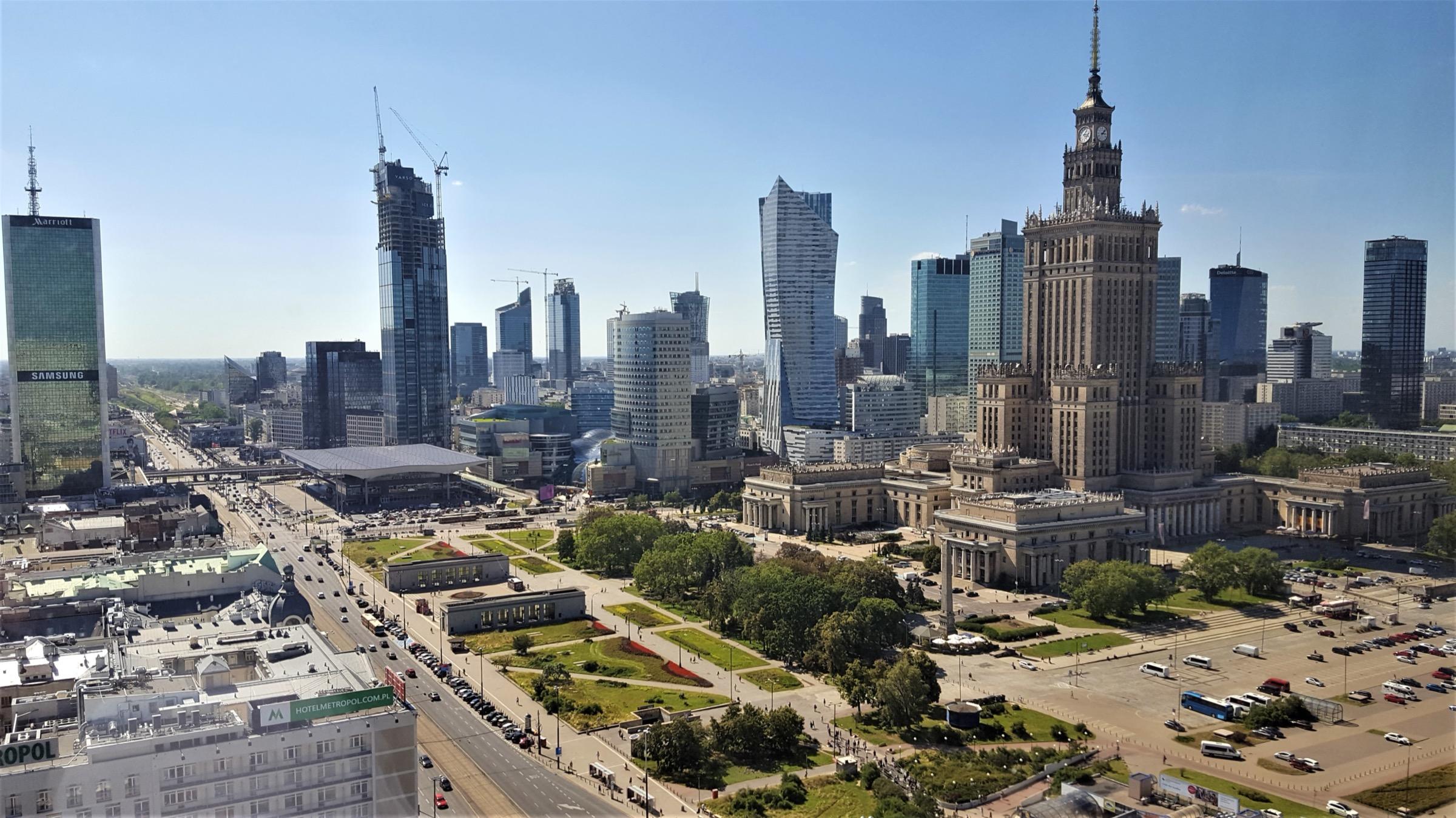
- Warsaw Office Vacancy Matches European Average for the First Time:Warsaw's office market achieved a historic milestone in 2025: vacancy fell to 9.1%, matching the European city average for the first time in Polish office market history. The Central Business District tightened further, with vacancy at 6.5% after a 3.9 percentage-point YoY decline — a direct consequence of minimal new supply, strong net absorption from financial services and technology occupiers, and growing preference for prime CBD floors. Prime CBD rents reached EUR 28.75/sqm/month, with select upper floors commanding EUR 30/sqm/month and above. Minimal new completions are expected through 2026, maintaining a landlord-favourable supply dynamic and further rental growth across Warsaw's prime submarkets.
- Polish Residential: Affordability Premium vs Western Europe Persists:Warsaw's average residential transaction price in early 2026 stands at approximately PLN 17,000/sqm (EUR 4,040/sqm), with prime central districts (Śródmieście) exceeding PLN 22,500/sqm — still a fraction of comparable Munich (EUR 9,500–12,000/sqm) or London (EUR 10,000–15,000/sqm) pricing. Prices in Poland's major cities have approximately doubled since 2020, yet affordability relative to wage growth and Western European alternatives continues to attract domestic demand, EU migration inflows, and Ukrainian diaspora buyers. Rental yields remain competitive: Warsaw generates 5.2–7.1% gross, Kraków 5.6–6.5%, and Wrocław 6.1–6.5%. The structural undersupply of high-quality housing in Polish cities — driven by construction cost inflation, permitting delays, and land constraints — supports continued rent growth in the BTR and PRS segment, an area of growing institutional interest.
- Tri-City and Regional Logistics Corridors:Beyond Warsaw, the Tri-City region of Gdańsk, Gdynia, and Sopot has emerged as Poland's most strategic port logistics hub, with Gdańsk port handling over 79.6 million tonnes of cargo — a 26.1% increase in a single year. The Port of Gdańsk is now one of the Baltic Sea's largest container facilities, and the surrounding industrial and logistics park market is expanding to serve port-adjacent services, last-mile e-commerce, and cross-Baltic trade. The S6 expressway connection linking Gdynia port to the national highway network, alongside the planned Red Road ring infrastructure, is materially improving logistics economics for the Tri-City market. Upper Silesia (Śląsk), Wrocław in Lower Silesia, the Łódź hub, and the Poznań corridor all add depth to Poland's position as the primary logistics gateway between Western Europe and its eastern hinterland.
Czech Republic, Romania, and Hungary: Three Markets at Different Stages
- Czech Republic: EUR 4.2 Billion and Prague's Office Supply Crunch:The Czech Republic's remarkable 2025 — EUR 4.2 billion in commercial real estate investment, up 155% year-on-year — was driven by the convergence of domestic capital strength, a Prague office market in acute structural undersupply, and logistics demand that surged 120.9% in take-up annually by Q3 2025. Prague's office vacancy reached its lowest level since 2020, falling to 5.9%, with new completions in 2025 representing the lowest single-year supply addition in Prague's modern office market history at less than 27,000 sqm. Prime office rents solidified at EUR 30/sqm/month in the city centre, with outer-ring areas at EUR 20.50/sqm/month. Industrial vacancy held at 4.0% with prime rents at EUR 7.40/sqm/month. Prime logistics yields compressed to approximately 4.7% NIY — inside Poland's Warsaw rate — reflecting Czech institutional quality premiums. Czech investors have begun acquiring assets in Slovakia and Poland, extending the domestic capital reach regionally.
- Romania: Record Industrial Leasing and the Nearshoring Gateway Story:Romania's industrial and logistics sector posted the strongest performance of any CEE market in 2025 in relative terms: total take-up reached 1.275 million sqm, up 51% year-on-year and the second-highest level ever recorded. Total national stock reached 7.9–8.17 million sqm by year-end, with 48% concentrated in Bucharest, and national vacancy tightened to just 5.3% (Bucharest: 4.7%). Romania's strategic positioning is accelerating: full Schengen accession, ongoing motorway and rail infrastructure funded through its EUR 21.4 billion National Recovery and Resilience Plan, and growing interest from Asian manufacturers using Romania as their EU production gateway are converging into a structural logistics demand story. Prime logistics yields of 7.0–7.5% offer CEE's highest spread over Western European benchmarks for investors who price the currency (RON) and political risk correctly. Bucharest's office stock of 3.4 million sqm saw no new completions in 2025 — a first — reinforcing rental stability at a time of moderate but growing demand from IT and business services occupiers.
- Hungary: Investment Recovery Complicated by Governance Risk:Budapest's commercial real estate market recovered to EUR 280 million in H1 2025 investment volume, up 55% year-on-year, with offices leading at 49% of activity — including two landmark deals — and the HelloParks industrial portfolio sale demonstrating continued institutional appetite for quality Hungarian logistics product. Budapest's residential market powered ahead with prices surging 21.3% nationally and 26.2% in the capital (MNB House Price Index, Q3 2025), with average prices reaching HUF 1.16–1.27 million/sqm (EUR 2,800–3,100). Prime office rents stand at EUR 25.5/sqm/month, with vacancy at 12.8–13.4% overall but as low as 7.3% in Central Buda. The critical caveat for institutional investors is governance risk: the European Parliament repeatedly flagged Hungary's deepening rule of law crisis through 2025, with EUR 18 billion in EU cohesion funds frozen, threats to judicial independence documented by the Civil Liberties Committee in November 2025, and continued non-compliance with European Court of Human Rights judgments. For real estate investors, this translates into elevated political risk premium, EUR-denominated lease structures as a currency hedge, and a preference for conservative leverage with lenders comfortable with Hungary-specific country risk.
The Baltic States: High-Yield Frontier on NATO's Eastern Flank
- Vilnius: The Baltics' Most Active Real Estate Market:Lithuania's capital Vilnius generated approximately EUR 204 million in commercial real estate investment in H1 2025 — the most active Baltic market — with investment interest concentrated in prime logistics assets delivering stable, low-risk income. Vilnius is maintaining momentum in the industrial sector with new warehouse completions absorbing steadily, even as its office market navigates hybrid work trends that favour smaller, cost-efficient spaces over large headquarters leases. The Lithuanian economy's greater diversification, its NATO membership (defence spending above 3% of GDP), and its growing IT sector draw favourable comparisons with Tallinn as a digital economy hub. Baltic yields rarely fall below 7% for quality assets, positioning Vilnius logistics as a genuine yield maximiser in the context of a EUR-denominated, EU-member legal framework.
- Tallinn and Riga: Development Activity with Cautious Absorption:Estonia's Tallinn registered approximately EUR 100 million in commercial investment in H1 2025, reflecting a measured approach following a strong 2024. The office market faces active development alongside challenging pre-letting, and elevated industrial rents are limiting large-scale speculative warehouse schemes. Riga's market is characterised by gross yields of 8.61% (Q2 2025) — the highest in CEE — reflecting the highest risk premium in the region, as Latvia's smaller investor pool and lower liquidity demand compensation. Approximately 90% of Riga's 2025 office pipeline had been delivered by mid-year, pushing tenants toward Class B options for cost efficiency. For investors accepting the Baltics' thinner liquidity profile, the yield premium — 200–300 basis points above Poland and 400+ basis points above the Czech Republic — represents a genuine risk-adjusted opportunity in EUR-denominated economies with full EU and NATO membership.
Nearshoring, ESG, and the Structural Forces Remaking CEE Logistics
- Europe's Supply Chain Reshoring Is a CEE Industrial Demand Multiplier:The nearshoring and friend-shoring trend that has redirected global manufacturing flows — from Asia to Mexico for North America, from China to CEE for Western Europe — is the defining structural force behind CEE logistics demand. CTP Group, listed on Euronext Amsterdam with a target of 20 million sqm by 2030 and over EUR 1.2 billion in annualised rental income, has built multiple 50,000+ sqm build-to-suit facilities in CEE for Taiwanese and other Asian electronics and automotive manufacturers seeking their first European production footprint. A BMW chassis supplier — a Chinese company's first EU facility — commenced in Serbia via the Panattoni/CTP ecosystem in 2025, illustrating the direction of travel: Asian manufacturers need EU-based production to access European OEMs, and CEE's cost base, skilled workforce, EU membership, and proximity to German and Austrian industrial clusters make it the logical destination. Tesla's Berlin Gigafactory supply chain pulls extensively from Polish and Czech component manufacturers, creating deep logistics demand in Upper Silesia, the Wrocław corridor, and northern Bohemia.
- ESG Compliance as a Value Bifurcation Driver:ESG compliance has moved from optional to obligatory in institutional-grade CEE real estate, creating a widening performance gap between certified and non-certified assets. BREEAM and LEED certification, solar-ready rooftops, green lease frameworks, and demonstrably lower operating costs are now baseline requirements for pan-European occupiers and institutional landlords in Poland's prime logistics parks and Prague's Grade A offices. Panattoni targeted emission neutrality from its 2025 pipeline; CTP publishes annual sustainability reports aligned with EU Taxonomy requirements. The practical consequence for investors is a two-tier market: ESG-compliant assets command rent premiums of 10–20% and yield compression of 25–50 basis points versus comparable non-certified stock, with secondary assets facing growing vacancy risk as lease renewal decisions increasingly hinge on energy performance certificates and scope 3 supply chain reporting requirements from occupier parent companies.
- EU Cohesion Funds and Infrastructure as a Real Estate Value Creator:EU cohesion funds flowing into CEE infrastructure — motorways, rail, energy grids, and digital infrastructure — are a structural real estate value creator that rarely appears explicitly in yield models but materially underpins asset appreciation. Romania's EUR 21.4 billion NRRP (approved November 2025) is funding motorway construction connecting Bucharest to Western European corridors; Poland's Via Baltica and Rail Baltica projects link the Baltic states to Central Europe; Czech Republic and Slovak infrastructure investments are compressing logistics park-to-port travel times that justify higher rents. For CEE investors, the discipline is to identify assets whose logistics economics will materially improve as infrastructure completions occur over 2026–2030 — logistics parks adjacent to planned motorway junctions or intermodal terminals represent the clearest expression of this infrastructure optionality.
Risks and Investment Strategy for Global Institutional Allocators
- Currency Risk: Managing PLN, CZK, HUF, and RON Exposure:Currency risk is the primary structural challenge for non-EUR investors allocating to CEE real estate. The Polish zloty (PLN), Czech koruna (CZK), Hungarian forint (HUF), and Romanian leu (RON) are managed-float currencies that have historically experienced volatility against the EUR during periods of global risk aversion. A ceasefire in Ukraine would be materially positive for all CEE currencies — analysts at major investment banks project the HUF benefitting most (given its proximity sensitivity), followed by PLN. The critical risk mitigation in logistics is structural: the majority of institutional-grade Polish and Czech logistics leases are denominated in EUR, creating natural currency hedging. Office and residential leases in PLN or CZK require explicit currency hedging in institutional portfolios. Romanian RON leases are partially EUR-indexed. Investors without EUR-denomination in lease structures should model a 5–10% adverse currency scenario across a five-year hold before committing at current yields.
- Geopolitical Risk: Ukraine Proximity, NATO Membership, and Differentiated Exposure:The proximity to Ukraine — Poland shares a 535km border; the Baltic states have Russian borders — has weighed on investor sentiment since February 2022, but the practical impact on real estate fundamentals has been more limited than feared. Poland's 4% GDP defence spending, the Baltic states' commitments of 2–3% GDP, and the full integration of these markets into NATO's Article 5 framework provide an institutional backstop that has anchored occupier demand. The more differentiated risk is reputational and financing-related: certain insurance underwriters and lenders impose higher country-risk premia on Poland and Baltic loans, increasing debt costs by 25–50 basis points versus comparable Western European facilities. Investors should assess whether their leverage strategy accounts for this spread and whether equity-heavy structures with conservative LTVs offer a more risk-appropriate approach to CEE logistics.
- Investment Strategy: Sector Concentration, Country Selection, and Vehicle Choice:For institutional investors entering or expanding CEE exposure in 2026, the optimal positioning centres on three principles. First, concentrate in logistics: the EUR 2.8 billion invested in CEE logistics in 2025 reflects rational capital allocation toward the sector with the most durable demand drivers — nearshoring, e-commerce, EU infrastructure — and the best currency protection via EUR leases. Second, overweight Poland and Czech Republic for liquidity: their EUR 4.5 billion and EUR 4.2 billion 2025 volumes provide transaction liquidity that Hungary and Romania cannot yet match, and the domestic investor base provides a viable exit path. Third, treat Romania as a higher-yielding complement for investors comfortable with its risk profile: prime logistics yields of 7.0–7.5% with 51% take-up growth and 5.3% vacancy represent genuine fundamental support. Baltic allocations should be sized as satellite positions — 5–10% of a CEE portfolio — where the yield premium (7–8.6% in Riga) compensates for thinner liquidity. Avoid speculative office development in Budapest given governance uncertainty; pursue prime, ESG-certified, EUR-leased logistics as the core building block across the region.
Sources
- British Polish Chamber of Commerce / Cushman & Wakefield — CEE Investment Markets Gain Momentum with EUR 11.3 Billion Deployed
- Cushman & Wakefield Czech Republic — CEE Investment Update H2 2025
- Cushman & Wakefield Czech — Commercial Real Estate Investment Breaks Records EUR 2.1 Billion H1 2025
- Poland Insight — Poland Commercial Real Estate EUR 4.5 Billion and the Rise of Local Capital
- Panattoni Europe — Investments Worth PLN 2.83 Billion: Developer Reviews 2025 Poland Industrial Market
- Romania Insider — Romania Posts Record Industrial and Logistics Leasing in 2025 as Total Stock Nears 8 Million sqm
- Property Forum — Warsaw Office Market Rebounds as Vacancy Hits 9.1% and Rents Rise
- Colliers International — Baltic Real Estate Market Overview Q4 2025
- Supply Chain Digital — CTP: Powering Europe's Industrial Future Through CEE Logistics
- IPEC Group — Market Analysis and Investment Opportunities in CEE Logistics Sector

Abhii Dabas is the Founder and CEO of INTRIC Global, the cross-border property intelligence platform for serious investors. He advises high-net-worth buyers on international real estate strategy and has evaluated residential markets across more than 40 countries.
Share
Share this article with others
Introduction
Central and Eastern Europe's real estate investment markets delivered a landmark year in 2025, with total transaction volumes across the region reaching EUR 11.8 billion — a 34% year-on-year increase and the strongest annual figure recorded since 2019. Poland and the Czech Republic anchored the recovery, deploying EUR 4.5 billion and EUR 4.2 billion respectively, while Romania's industrial sector posted its second-highest leasing volume ever at 1.275 million square metres. The structural driver behind the entire cycle is logistics: industrial and logistics assets attracted EUR 2.8 billion in investment across CEE in 2025, more than doubling year-on-year, underpinned by nearshoring from Asia and the systematic reshoring of European supply chains. Against a backdrop of yield premiums of 75–200 basis points versus Western European equivalents, improving EU infrastructure, and a cautious but accelerating return of institutional capital, CEE is transitioning from a recovery story into one of the most compelling structural opportunities in global real estate for 2026.
CEE Investment Recovery: A Regional Market Entering Early Expansion
- Record Transaction Volumes and Renewed Institutional Confidence:Total commercial real estate investment across CEE's six core markets reached EUR 11.8 billion in 2025 — the highest annual volume since 2019 — reversing three years of ECB-rate-driven pricing dislocation that had stalled deal flow from 2022 to 2023. H1 2025 alone delivered EUR 5.3 billion, up 52% year-on-year, as buyers and sellers found common ground on repriced assets. The shift is structural: CEE investors are entering 2026 with stronger momentum than their Western European peers, with 41% of CEE-active investors prioritising asset modernisation and value-add strategies — above the European average of 37% — reflecting a market that still offers meaningful spread between acquisition pricing and underlying value. Cushman & Wakefield's H2 2025 CEE update confirmed that prime yields across the region have stabilised, with selective compression beginning in top-tier office and logistics assets.
- Domestic Capital as a Structural Market Anchor:A defining feature of the 2025 recovery was the surge in domestic capital deployment. Czech investors accounted for 86% of total volume in the Czech Republic and began expanding acquisitions into Slovakia and Poland. Polish domestic capital reached 18% of total investment — a record level. Romanian local investors contributed 37% of their market's volume. This domestication of capital has created a floor under pricing: CEE real estate is no longer solely dependent on the ebb and flow of cross-border institutional capital from Germany, the UK, and the US. The depth of local investor pools — anchored by Czech REITS, Polish funds, and Romanian family offices and developers — is a material change from the 2012–2018 cycle, when thin domestic buyer bases created sharp price swings on any global risk-off episode.
- Sector Leadership: Logistics First, Office Recovery, Retail Resilience:Industrial and logistics assets commanded EUR 2.8 billion of the EUR 11.8 billion total — the sector's third consecutive year as the CEE investment market's structural backbone. Office investment captured 32–36% of total CEE volume, with Warsaw and Prague leading on occupier demand strength and vacancy compression. Retail continued its comeback via retail parks rather than shopping centres, accounting for EUR 1.9 billion (17% of total), as discount operators, fitness brands, and F&B chains drove occupancy across secondary cities. Hotels recorded their highest-ever share of CEE investment at 9%, reflecting tourism recovery in Prague, Budapest, and Warsaw. For institutional investors benchmarking sector allocation, the data validates an overweight to logistics and selective underweight to speculative office, with retail parks increasingly viewed as inflation-hedged income products.
Poland: EUR 4.5 Billion and the Logistics Superpower Consolidating Its Lead
- The Scale of Polish Logistics: Europe's Third-Largest Warehouse Market:Poland's total modern warehouse and logistics stock reached 36.45 million square metres by Q3 2025 — a 7% year-on-year increase — cementing its position as Europe's third-largest industrial real estate market behind Germany and the Netherlands. Panattoni, the market's dominant developer, launched 840,000 sqm of new projects in 2025 alone, representing PLN 2.83 billion in investment, leased approximately 1.5 million sqm of space, and completed the sale of 19 logistics parks to international investors. The company sold three assets in December 2025 alone for approximately EUR 150 million. Prologis simultaneously strengthened its Warsaw-region footprint to over 700,000 sqm, acquiring Prologis Park Grodzisk — a four-building, 70,000 sqm complex 35 kilometres from Warsaw — as part of its ongoing core logistics strategy in Poland. Poland's market stabilised in 2025 with vacancy at 8.2% and new supply down 26% year-on-year as developers exercised disciplined pricing — a platform for renewed absorption-driven tightening in 2026.
- Warsaw Office Vacancy Matches European Average for the First Time:Warsaw's office market achieved a historic milestone in 2025: vacancy fell to 9.1%, matching the European city average for the first time in Polish office market history. The Central Business District tightened further, with vacancy at 6.5% after a 3.9 percentage-point YoY decline — a direct consequence of minimal new supply, strong net absorption from financial services and technology occupiers, and growing preference for prime CBD floors. Prime CBD rents reached EUR 28.75/sqm/month, with select upper floors commanding EUR 30/sqm/month and above. Minimal new completions are expected through 2026, maintaining a landlord-favourable supply dynamic and further rental growth across Warsaw's prime submarkets.
- Polish Residential: Affordability Premium vs Western Europe Persists:Warsaw's average residential transaction price in early 2026 stands at approximately PLN 17,000/sqm (EUR 4,040/sqm), with prime central districts (Śródmieście) exceeding PLN 22,500/sqm — still a fraction of comparable Munich (EUR 9,500–12,000/sqm) or London (EUR 10,000–15,000/sqm) pricing. Prices in Poland's major cities have approximately doubled since 2020, yet affordability relative to wage growth and Western European alternatives continues to attract domestic demand, EU migration inflows, and Ukrainian diaspora buyers. Rental yields remain competitive: Warsaw generates 5.2–7.1% gross, Kraków 5.6–6.5%, and Wrocław 6.1–6.5%. The structural undersupply of high-quality housing in Polish cities — driven by construction cost inflation, permitting delays, and land constraints — supports continued rent growth in the BTR and PRS segment, an area of growing institutional interest.
- Tri-City and Regional Logistics Corridors:Beyond Warsaw, the Tri-City region of Gdańsk, Gdynia, and Sopot has emerged as Poland's most strategic port logistics hub, with Gdańsk port handling over 79.6 million tonnes of cargo — a 26.1% increase in a single year. The Port of Gdańsk is now one of the Baltic Sea's largest container facilities, and the surrounding industrial and logistics park market is expanding to serve port-adjacent services, last-mile e-commerce, and cross-Baltic trade. The S6 expressway connection linking Gdynia port to the national highway network, alongside the planned Red Road ring infrastructure, is materially improving logistics economics for the Tri-City market. Upper Silesia (Śląsk), Wrocław in Lower Silesia, the Łódź hub, and the Poznań corridor all add depth to Poland's position as the primary logistics gateway between Western Europe and its eastern hinterland.
Czech Republic, Romania, and Hungary: Three Markets at Different Stages
- Czech Republic: EUR 4.2 Billion and Prague's Office Supply Crunch:The Czech Republic's remarkable 2025 — EUR 4.2 billion in commercial real estate investment, up 155% year-on-year — was driven by the convergence of domestic capital strength, a Prague office market in acute structural undersupply, and logistics demand that surged 120.9% in take-up annually by Q3 2025. Prague's office vacancy reached its lowest level since 2020, falling to 5.9%, with new completions in 2025 representing the lowest single-year supply addition in Prague's modern office market history at less than 27,000 sqm. Prime office rents solidified at EUR 30/sqm/month in the city centre, with outer-ring areas at EUR 20.50/sqm/month. Industrial vacancy held at 4.0% with prime rents at EUR 7.40/sqm/month. Prime logistics yields compressed to approximately 4.7% NIY — inside Poland's Warsaw rate — reflecting Czech institutional quality premiums. Czech investors have begun acquiring assets in Slovakia and Poland, extending the domestic capital reach regionally.
- Romania: Record Industrial Leasing and the Nearshoring Gateway Story:Romania's industrial and logistics sector posted the strongest performance of any CEE market in 2025 in relative terms: total take-up reached 1.275 million sqm, up 51% year-on-year and the second-highest level ever recorded. Total national stock reached 7.9–8.17 million sqm by year-end, with 48% concentrated in Bucharest, and national vacancy tightened to just 5.3% (Bucharest: 4.7%). Romania's strategic positioning is accelerating: full Schengen accession, ongoing motorway and rail infrastructure funded through its EUR 21.4 billion National Recovery and Resilience Plan, and growing interest from Asian manufacturers using Romania as their EU production gateway are converging into a structural logistics demand story. Prime logistics yields of 7.0–7.5% offer CEE's highest spread over Western European benchmarks for investors who price the currency (RON) and political risk correctly. Bucharest's office stock of 3.4 million sqm saw no new completions in 2025 — a first — reinforcing rental stability at a time of moderate but growing demand from IT and business services occupiers.
- Hungary: Investment Recovery Complicated by Governance Risk:Budapest's commercial real estate market recovered to EUR 280 million in H1 2025 investment volume, up 55% year-on-year, with offices leading at 49% of activity — including two landmark deals — and the HelloParks industrial portfolio sale demonstrating continued institutional appetite for quality Hungarian logistics product. Budapest's residential market powered ahead with prices surging 21.3% nationally and 26.2% in the capital (MNB House Price Index, Q3 2025), with average prices reaching HUF 1.16–1.27 million/sqm (EUR 2,800–3,100). Prime office rents stand at EUR 25.5/sqm/month, with vacancy at 12.8–13.4% overall but as low as 7.3% in Central Buda. The critical caveat for institutional investors is governance risk: the European Parliament repeatedly flagged Hungary's deepening rule of law crisis through 2025, with EUR 18 billion in EU cohesion funds frozen, threats to judicial independence documented by the Civil Liberties Committee in November 2025, and continued non-compliance with European Court of Human Rights judgments. For real estate investors, this translates into elevated political risk premium, EUR-denominated lease structures as a currency hedge, and a preference for conservative leverage with lenders comfortable with Hungary-specific country risk.
The Baltic States: High-Yield Frontier on NATO's Eastern Flank
- Vilnius: The Baltics' Most Active Real Estate Market:Lithuania's capital Vilnius generated approximately EUR 204 million in commercial real estate investment in H1 2025 — the most active Baltic market — with investment interest concentrated in prime logistics assets delivering stable, low-risk income. Vilnius is maintaining momentum in the industrial sector with new warehouse completions absorbing steadily, even as its office market navigates hybrid work trends that favour smaller, cost-efficient spaces over large headquarters leases. The Lithuanian economy's greater diversification, its NATO membership (defence spending above 3% of GDP), and its growing IT sector draw favourable comparisons with Tallinn as a digital economy hub. Baltic yields rarely fall below 7% for quality assets, positioning Vilnius logistics as a genuine yield maximiser in the context of a EUR-denominated, EU-member legal framework.
- Tallinn and Riga: Development Activity with Cautious Absorption:Estonia's Tallinn registered approximately EUR 100 million in commercial investment in H1 2025, reflecting a measured approach following a strong 2024. The office market faces active development alongside challenging pre-letting, and elevated industrial rents are limiting large-scale speculative warehouse schemes. Riga's market is characterised by gross yields of 8.61% (Q2 2025) — the highest in CEE — reflecting the highest risk premium in the region, as Latvia's smaller investor pool and lower liquidity demand compensation. Approximately 90% of Riga's 2025 office pipeline had been delivered by mid-year, pushing tenants toward Class B options for cost efficiency. For investors accepting the Baltics' thinner liquidity profile, the yield premium — 200–300 basis points above Poland and 400+ basis points above the Czech Republic — represents a genuine risk-adjusted opportunity in EUR-denominated economies with full EU and NATO membership.
Nearshoring, ESG, and the Structural Forces Remaking CEE Logistics
- Europe's Supply Chain Reshoring Is a CEE Industrial Demand Multiplier:The nearshoring and friend-shoring trend that has redirected global manufacturing flows — from Asia to Mexico for North America, from China to CEE for Western Europe — is the defining structural force behind CEE logistics demand. CTP Group, listed on Euronext Amsterdam with a target of 20 million sqm by 2030 and over EUR 1.2 billion in annualised rental income, has built multiple 50,000+ sqm build-to-suit facilities in CEE for Taiwanese and other Asian electronics and automotive manufacturers seeking their first European production footprint. A BMW chassis supplier — a Chinese company's first EU facility — commenced in Serbia via the Panattoni/CTP ecosystem in 2025, illustrating the direction of travel: Asian manufacturers need EU-based production to access European OEMs, and CEE's cost base, skilled workforce, EU membership, and proximity to German and Austrian industrial clusters make it the logical destination. Tesla's Berlin Gigafactory supply chain pulls extensively from Polish and Czech component manufacturers, creating deep logistics demand in Upper Silesia, the Wrocław corridor, and northern Bohemia.
- ESG Compliance as a Value Bifurcation Driver:ESG compliance has moved from optional to obligatory in institutional-grade CEE real estate, creating a widening performance gap between certified and non-certified assets. BREEAM and LEED certification, solar-ready rooftops, green lease frameworks, and demonstrably lower operating costs are now baseline requirements for pan-European occupiers and institutional landlords in Poland's prime logistics parks and Prague's Grade A offices. Panattoni targeted emission neutrality from its 2025 pipeline; CTP publishes annual sustainability reports aligned with EU Taxonomy requirements. The practical consequence for investors is a two-tier market: ESG-compliant assets command rent premiums of 10–20% and yield compression of 25–50 basis points versus comparable non-certified stock, with secondary assets facing growing vacancy risk as lease renewal decisions increasingly hinge on energy performance certificates and scope 3 supply chain reporting requirements from occupier parent companies.
- EU Cohesion Funds and Infrastructure as a Real Estate Value Creator:EU cohesion funds flowing into CEE infrastructure — motorways, rail, energy grids, and digital infrastructure — are a structural real estate value creator that rarely appears explicitly in yield models but materially underpins asset appreciation. Romania's EUR 21.4 billion NRRP (approved November 2025) is funding motorway construction connecting Bucharest to Western European corridors; Poland's Via Baltica and Rail Baltica projects link the Baltic states to Central Europe; Czech Republic and Slovak infrastructure investments are compressing logistics park-to-port travel times that justify higher rents. For CEE investors, the discipline is to identify assets whose logistics economics will materially improve as infrastructure completions occur over 2026–2030 — logistics parks adjacent to planned motorway junctions or intermodal terminals represent the clearest expression of this infrastructure optionality.
Risks and Investment Strategy for Global Institutional Allocators
- Currency Risk: Managing PLN, CZK, HUF, and RON Exposure:Currency risk is the primary structural challenge for non-EUR investors allocating to CEE real estate. The Polish zloty (PLN), Czech koruna (CZK), Hungarian forint (HUF), and Romanian leu (RON) are managed-float currencies that have historically experienced volatility against the EUR during periods of global risk aversion. A ceasefire in Ukraine would be materially positive for all CEE currencies — analysts at major investment banks project the HUF benefitting most (given its proximity sensitivity), followed by PLN. The critical risk mitigation in logistics is structural: the majority of institutional-grade Polish and Czech logistics leases are denominated in EUR, creating natural currency hedging. Office and residential leases in PLN or CZK require explicit currency hedging in institutional portfolios. Romanian RON leases are partially EUR-indexed. Investors without EUR-denomination in lease structures should model a 5–10% adverse currency scenario across a five-year hold before committing at current yields.
- Geopolitical Risk: Ukraine Proximity, NATO Membership, and Differentiated Exposure:The proximity to Ukraine — Poland shares a 535km border; the Baltic states have Russian borders — has weighed on investor sentiment since February 2022, but the practical impact on real estate fundamentals has been more limited than feared. Poland's 4% GDP defence spending, the Baltic states' commitments of 2–3% GDP, and the full integration of these markets into NATO's Article 5 framework provide an institutional backstop that has anchored occupier demand. The more differentiated risk is reputational and financing-related: certain insurance underwriters and lenders impose higher country-risk premia on Poland and Baltic loans, increasing debt costs by 25–50 basis points versus comparable Western European facilities. Investors should assess whether their leverage strategy accounts for this spread and whether equity-heavy structures with conservative LTVs offer a more risk-appropriate approach to CEE logistics.
- Investment Strategy: Sector Concentration, Country Selection, and Vehicle Choice:For institutional investors entering or expanding CEE exposure in 2026, the optimal positioning centres on three principles. First, concentrate in logistics: the EUR 2.8 billion invested in CEE logistics in 2025 reflects rational capital allocation toward the sector with the most durable demand drivers — nearshoring, e-commerce, EU infrastructure — and the best currency protection via EUR leases. Second, overweight Poland and Czech Republic for liquidity: their EUR 4.5 billion and EUR 4.2 billion 2025 volumes provide transaction liquidity that Hungary and Romania cannot yet match, and the domestic investor base provides a viable exit path. Third, treat Romania as a higher-yielding complement for investors comfortable with its risk profile: prime logistics yields of 7.0–7.5% with 51% take-up growth and 5.3% vacancy represent genuine fundamental support. Baltic allocations should be sized as satellite positions — 5–10% of a CEE portfolio — where the yield premium (7–8.6% in Riga) compensates for thinner liquidity. Avoid speculative office development in Budapest given governance uncertainty; pursue prime, ESG-certified, EUR-leased logistics as the core building block across the region.
Sources
- British Polish Chamber of Commerce / Cushman & Wakefield — CEE Investment Markets Gain Momentum with EUR 11.3 Billion Deployed
- Cushman & Wakefield Czech Republic — CEE Investment Update H2 2025
- Cushman & Wakefield Czech — Commercial Real Estate Investment Breaks Records EUR 2.1 Billion H1 2025
- Poland Insight — Poland Commercial Real Estate EUR 4.5 Billion and the Rise of Local Capital
- Panattoni Europe — Investments Worth PLN 2.83 Billion: Developer Reviews 2025 Poland Industrial Market
- Romania Insider — Romania Posts Record Industrial and Logistics Leasing in 2025 as Total Stock Nears 8 Million sqm
- Property Forum — Warsaw Office Market Rebounds as Vacancy Hits 9.1% and Rents Rise
- Colliers International — Baltic Real Estate Market Overview Q4 2025
- Supply Chain Digital — CTP: Powering Europe's Industrial Future Through CEE Logistics
- IPEC Group — Market Analysis and Investment Opportunities in CEE Logistics Sector
Abhii Dabas is the Founder and CEO of INTRIC Global, the cross-border property intelligence platform for serious investors. He advises high-net-worth buyers on international real estate strategy and has evaluated residential markets across more than 40 countries.
Share this article
Share this insight with others
Share
Share this article with others
Related Market Insights
View More Market Insights
Emerging Markets
Morocco and North Africa: The Real Estate Frontier Where World Cup Infrastructure Meets Frontier-Grade Returns
By Abhii Dabas · June 25, 2026

Emerging Markets
Latin America Real Estate 2026: Brazil's Logistics Boom and Colombia's Dollar-Arbitrage Opportunity
By Abhii Dabas · June 17, 2026

TAX & RESIDENCY
Cross-Border Property Tax Guide for Singapore, UAE, and UK-Based Investors in 2026
By Abhii Dabas · July 27, 2026
Found this useful? Send it to someone who should read it.
Continue with INTRIC
