A scenario guide for cross-border investors on corrections, currency, and recovery.
 ByAbhii Dabas
The realistic downside scenario for 2026
The realistic downside for residential property over a five-year hold is a 15 to 25% peak-to-trough decline, typically driven by an interest rate shock, a regional recession, or a foreign-capital reversal. The 20% figure used in stress-testing is the midpoint of that range. Model it as a base case, not a worst case, and verify that the holding period and structure remain workable under it.
History supports the range. London prime fell roughly 22% peak-to-trough during 2008 to 2009 and recovered within four years. Tokyo fell more modestly through the same period. Sydney corrected about 15% during 2017 to 2019 and recovered within 30 months. Markets more dependent on foreign capital correct more deeply and recover more slowly.
I have bought property in markets that corrected meaningfully. The difference between a setback and a permanent loss was almost always whether I needed to sell during the correction. Cash buyers who can hold through the cycle generally do. Leveraged buyers forced to sell at the wrong moment realise the loss.
The currency axis, which is often as large as the market move
A Singapore investor holding a GBP 800,000 London apartment through a 20% UK correction sees the GBP value fall to GBP 640,000. In SGD terms the outcome depends on the simultaneous GBP/SGD move. If GBP weakens 10% during the correction, the SGD-equivalent loss is around 28%. If GBP strengthens 10%, it compresses to around 12%. Currency exposure can double or halve the home-currency impact.
Historical London corrections have typically come with GBP weakness, amplifying losses for non-sterling investors. The 2008 to 2009 correction saw GBP fall around 30% against SGD over 18 months, and the combined property and currency impact for Singapore investors that period exceeded 40%. Investors with a 10-year-plus horizon absorbed the cycle. Investors with a three-year horizon did not.
More broadly, corrections in commodity-driven economies often coincide with local currency weakness, amplifying losses for foreign holders. Corrections in reserve-currency economies can coincide with safe-haven strength, cushioning them. The pattern is not guaranteed, but it is observable across cycles. Model the property and currency scenarios together, not separately.
On INTRIC now — Residences on INTRIC are open to enquiry straight from this page.

Montauroux Architect Villa
HOUSE · Montauroux, 83440, Var, Provence-Alpes-Cote d'Azur, France
EUR 950K – EUR 1.65M

Nobu Residences
APARTMENT · POA - Son Tra, Danang, Vietnam
USD 180K – USD 2.70M

Redwood Avenue
HOUSE · Dubai, Jumeirah Golf Estates, United Arab Emirates
From AED 53.99M

NEXT Address
Apartment · 11 Tbel Abuseridze Str, Batumi, 6010, Georgia
USD 50.9K – USD 191.2K
Exit liquidity when the market turns
Japanese residential has historically kept meaningful exit liquidity through corrections because the buyer pool is dominated by domestic owner-occupiers and institutional landlords, not foreign speculators. Days-on-market in central Tokyo extended from roughly 60 days to 100 to 120 days during 2008 to 2010, but properties kept transacting. That depth is a structural advantage. The trade-off is lower yield and slower capital growth, so investors prioritising downside protection often weight Japan more heavily than a yield-led portfolio would suggest.
Historical correction depth and recovery time
| Market | Largest recent correction | Peak-to-trough depth | Recovery time |
|---|---|---|---|
| London prime | 2008-2009 | ~22% | ~4 years |
| Tokyo central | 2008-2010 | ~10-12% | ~3 years |
| Sydney metro | 2017-2019 | ~15% | ~30 months |
| Bangkok prime | 2020-2022 | ~10-15% | ~3-4 years (uneven) |
The structural protections that matter
Three protections matter most: cash purchase, so there is no forced selling under leverage pressure; a holding period long enough to ride out a typical cycle, seven years or more; and an entry currency position that does not require near-term repatriation. Investors who satisfy all three have historically absorbed cycles without permanent capital loss in most major markets. Investors who satisfy none are exposed to forced selling at the worst moment.
Additional protections include diversification across uncorrelated markets (Tokyo and Lisbon move on different cycles), a mix of yield and capital-growth assets, and explicit liquidity reserves outside the property portfolio sized to cover 24 to 36 months of carrying costs. Together they reduce the probability of a forced sale in any single market.
On INTRIC now — Still open on INTRIC — every one of these answers enquiries directly.

Riva Residences
APARTMENT · Dubai Maritime City, Dubai, United Arab Emirates
AED 2.53M – AED 5.80M

Q Gardens Lofts 2
APARTMENT · Q Gardens Lofts 2, District 12, Jumeirah Village Circle, Dubai, United Arab Emirates
From AED 597K
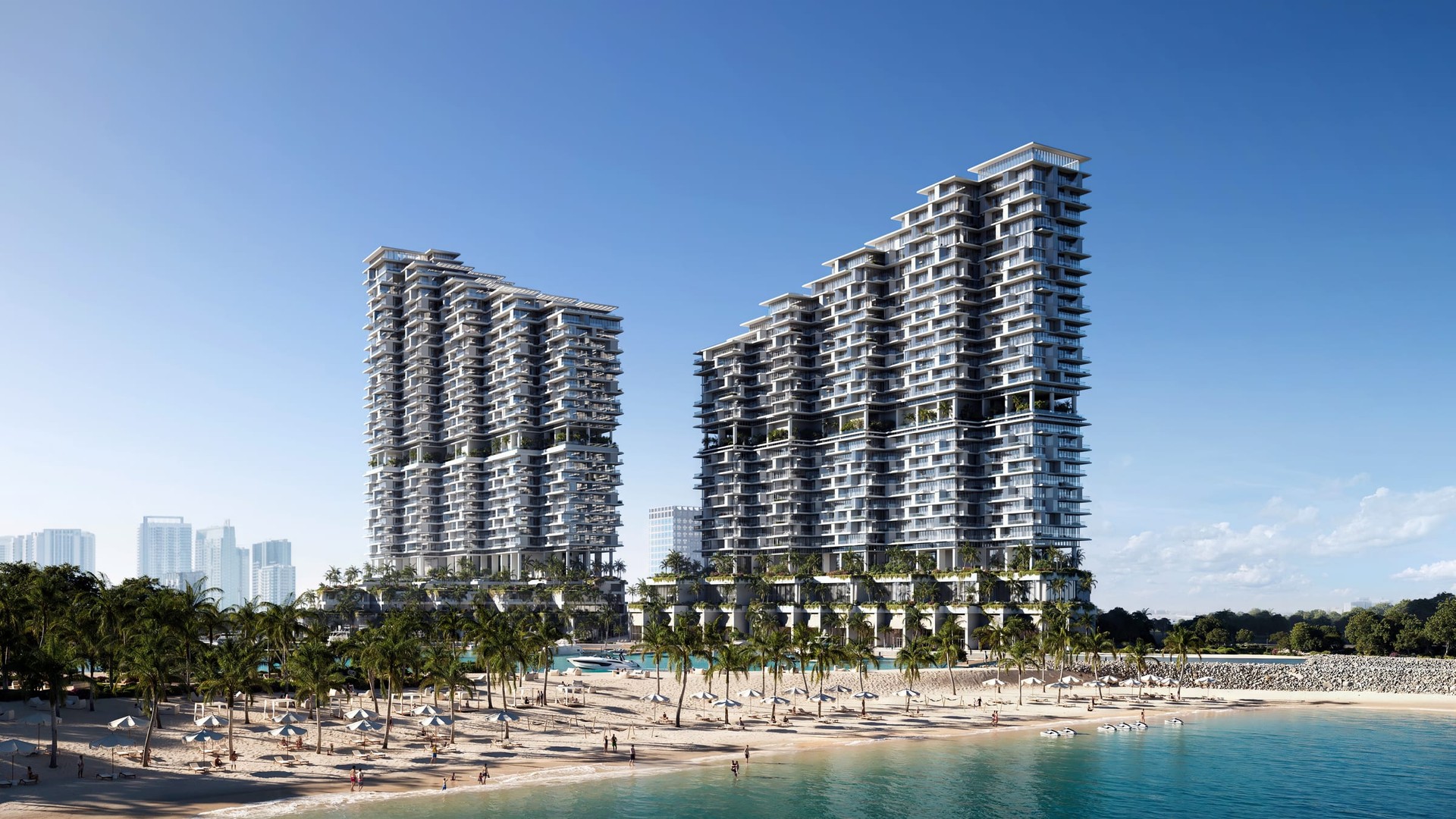
Riviera Residences
Apartment · Al Reem Island, Abu Dhabi, UAE
AED 1.90M – AED 4.85M

Rukan Tower B
APARTMENT · Rukan Tower B, Rukan Tower, Dubai Land, UAE
AED 555K – AED 850K
How INTRIC stress-tests its corridor markets
INTRIC stress-tests every market in its coverage against three scenarios: a 20% correction in local currency, a 15% adverse currency move against the investor's home currency, and a management infrastructure failure. The test asks what the recovery path is in each scenario, and under all three at once. Markets that fail the simultaneous test are flagged in the platform's intelligence.
The stress test is a structural check, not a prediction. The result is shared with members evaluating a specific market so they can size in line with their tolerance for the modelled scenario. INTRIC does not advise on sizing. It provides the framework that lets members and their advisors size sensibly.
Frequently asked questions
How likely is a 20% correction in the next five years? A 20% peak-to-trough decline somewhere in a five-year window is a base-case scenario for most residential markets, not a worst case. Stress-testing against it does not assume the correction is imminent; it assumes the structural position should remain workable if it occurs.
Does cash buying eliminate downside risk? Cash buying eliminates the risk of forced selling under leverage covenants. It does not remove the underlying market and currency risk. A cash buyer still carries the paper loss until prices recover, but keeps the freedom to hold through the cycle.
How long should investors plan to hold? A seven to ten year minimum is consistent with historical correction-and-recovery cycles in most major residential markets. Shorter holds materially increase the risk that a specific exit moment coincides with a market low.
Are emerging markets too risky for cross-border property? Emerging markets carry deeper correction risk and longer recovery timelines, but higher gross yields and faster appreciation in growth phases. The question is not whether they are too risky, but what proportion of the portfolio they should represent at a given risk tolerance.
Does INTRIC publish its stress-test results? INTRIC shares stress-test results with members evaluating specific markets, as part of the intelligence layer that informs sizing discussions. The full methodology is shared on request.
Sources and further reading
- Knight Frank Global Residential Cities Index - Long-run city-level price data
- Nationwide UK House Price Index - UK residential historical series
- Japan Real Estate Institute Residential Index - Japan residential price history
- BIS Property Price Statistics - Cross-country property price comparisons
Abhii Dabas is the Founder and CEO of INTRIC Global, the cross-border property intelligence platform for serious investors. He advises high-net-worth buyers on international real estate strategy and has evaluated residential markets across more than 40 countries.