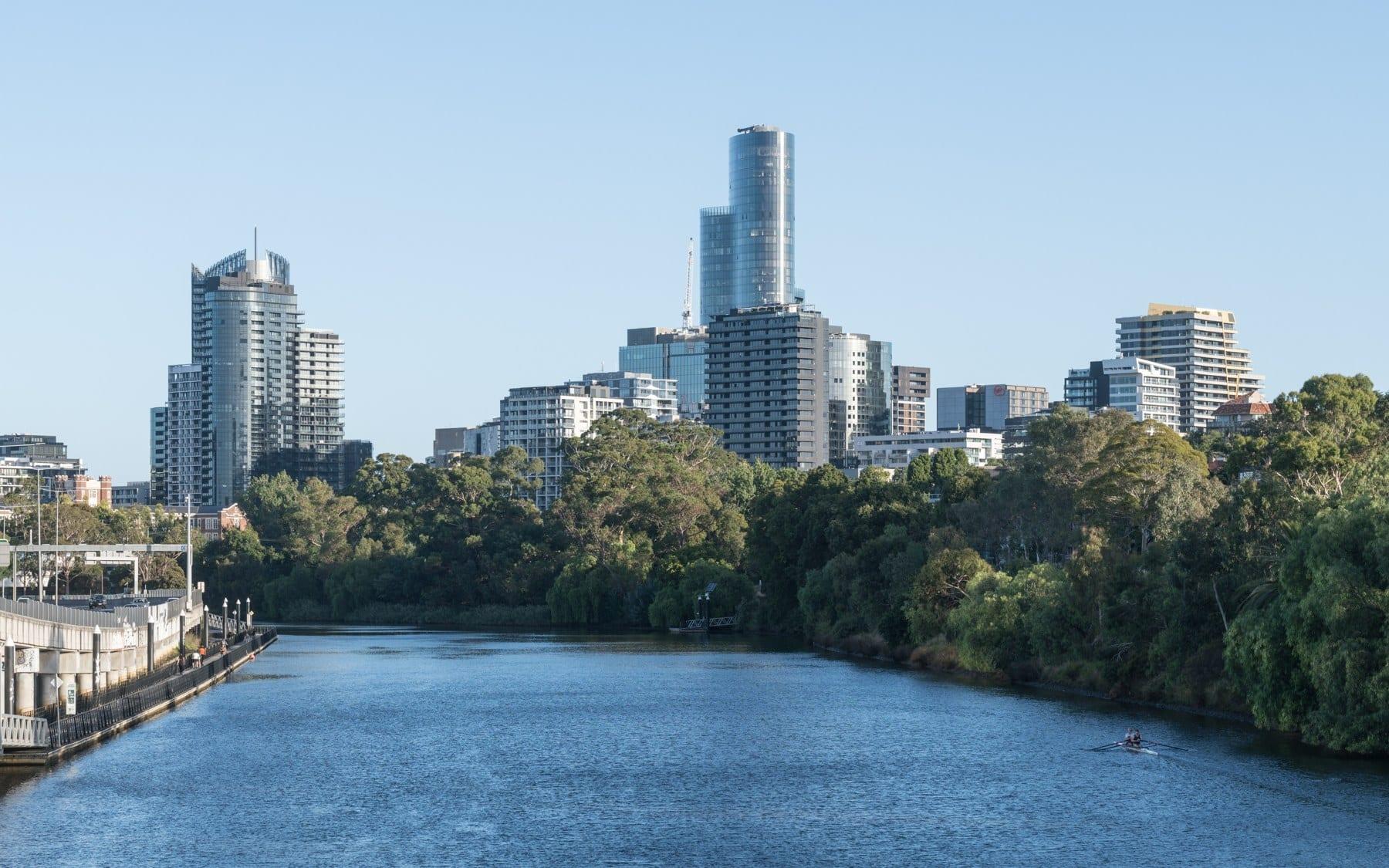
Indonesian and Malaysian buyers can still purchase Australian residential property, but only new or near-new dwellings and off-the-plan apartments. Foreign investors are banned from established dwellings from 1 April 2025 to 30 June 2029, a date extended from 2027 at the 2026-27 Budget. The FIRB fee for a new dwelling up to AUD 1 million is AUD 15,600, and New South Wales adds 9% surcharge duty upfront plus a 5% land tax surcharge every year. Indonesian approvals are growing while Chinese approvals halve.
Indonesian and Malaysian buyers occupy an unusual position in the Australian residential market. They are a small corridor by volume, they are growing while larger corridors contract, and they are now buying into the most heavily restricted foreign purchase regime Australia has ever operated. Since 1 April 2025 foreign investors have been barred from buying established dwellings, a prohibition now extended to 30 June 2029, which funnels every non-resident purchase into new-build stock. Understanding what that funnel costs, and what it exposes a buyer to, is the whole of the decision.
The rule that governs everything else is short. Australian government guidance states that from 1 April 2025 to 30 June 2029, foreign investors are generally prohibited from purchasing established dwellings. This is not the older restriction that pushed non-residents toward new stock while leaving established homes technically available with approval. It is a prohibition, and it now runs for more than four years.
The end date matters more than it appears. The ban was originally legislated as a two-year measure running to 31 March 2027, and it was extended by a further two years and three months at the 2026-27 Budget. A large volume of advisory commentary published in 2025 still carries the 2027 date and describes the ban as a temporary window that a buyer might simply wait out. Anyone planning around 2027 is planning around a rule that no longer exists.
What remains available is new or near-new dwellings, off-the-plan apartments, and vacant land where construction is completed within four years and the land is not sold beforehand. New and near-new dwellings carry no usage conditions and no cap on how many a foreign person may acquire. The exceptions to the ban exist but are commercial in nature: redevelopment that increases housing stock by at least twenty additional dwellings, housing delivered at commercial scale such as build-to-rent or student accommodation, and accommodation for Pacific labour scheme workers. None of them is reachable by an individual family buyer.
The ban does not narrow the choice for a foreign buyer. It removes an entire asset class and leaves exactly one.
FIRB fees are indexed every 1 July, and the figure most often repeated in circulation is out of date. For the 2026-27 financial year the application fee for a new or near-new dwelling is AUD 15,600 up to AUD 1 million, AUD 31,300 up to AUD 2 million, AUD 62,600 up to AUD 3 million and AUD 125,200 up to AUD 5 million. The established dwelling column runs at exactly three times those amounts, a legacy of the April 2024 tripling, and is now largely academic given the ban.
| Cost | Amount | Basis |
|---|---|---|
| FIRB application fee | AUD 15,600 | New dwelling up to AUD 1m, 2026-27 |
| NSW surcharge purchaser duty | 9% of dutiable value | One-off, on top of standard transfer duty |
| VIC foreign purchaser additional duty | 8% of dutiable value | One-off |
| QLD additional foreign acquirer duty | 8% of dutiable value | One-off, raised from 7% on 1 July 2024 |
| WA foreign buyers duty | 7% of dutiable value | One-off |
| NSW foreign owner land tax surcharge | 5% of land value | Every year, no tax-free threshold |
| Vacancy fee | AUD 31,200 | Every year the dwelling is occupied under 183 days |
The upfront surcharges attract the attention, but the recurring ones do the damage. A New South Wales purchase carries 9% surcharge duty at acquisition and then a 5% foreign owner land tax surcharge on the land value every year thereafter, with no tax-free threshold, payable from the first dollar. Victoria charges 4% and Queensland 3% on land above AUD 350,000. A one-off surcharge is a haircut on entry. An annual surcharge compounds directly against yield for as long as the asset is held.
The vacancy fee deserves specific attention because the trap in it is procedural rather than financial. The fee applies where a dwelling is occupied or genuinely available for rent for fewer than 183 days in a vacancy year, and for vacancy years beginning on or after 9 April 2024 it is charged at double the original application fee. For a AUD 1 million new apartment that is roughly AUD 31,200 annually. Two details catch buyers out: short-term letting of under 30 days does not count as occupied or available, so an Airbnb strategy does not discharge the obligation, and failing to lodge the annual return within 30 days makes the fee payable regardless of how well occupied the property actually was.
Australian foreign investment data breaks out both countries, and the picture is more interesting than the volumes suggest. In 2024-25 Indonesia recorded 234 residential approvals worth AUD 0.2 billion and Malaysia 201 approvals worth AUD 0.1 billion. Set against China at 1,355 approvals, both look marginal. The trend tells a different story: Indonesian approvals rose from 190 in 2022-23 to 194 and then 234, while Chinese approvals roughly halved from 2,601 over the same period. Indonesia grew through the tightening. In the January to March 2026 quarter Indonesia ranked fourth by number of approvals. Malaysia dropped out of the top ten entirely, so no current-year figure is published for it.
Two caveats belong on this data. Approvals are not settled purchases, and a family that receives approval and then does not proceed still appears in the count. And the published values round to one decimal place in billions, so AUD 0.2 billion is the full precision available. Anything more specific is not derivable from the source.
The corridor is anchored in education. Australia hosted a record 24,000 Indonesian students in 2025, and the 2026 international student cap rose 9% to 295,000, with universities able to seek higher allocations by demonstrating engagement with Indonesia and Southeast Asia. That is a deliberate policy tilt toward this corridor at the same moment the property rules tightened against it. It is worth being honest about the limits of the public data here: Australian government publications carry no state or city breakdown for residential foreign investment, so any claim that Indonesian buyers concentrate in Melbourne or Malaysian buyers in Perth cannot be sourced, however often it is asserted.
Published median values are the wrong benchmark for this buyer, and using them produces a systematically wrong answer. Because foreign purchasers are barred from established stock, they cannot transact at the median at all. The median describes a market they are locked out of. New apartment stock priced at contract averaged AUD 17,165 per square metre nationally in the first quarter of 2026, which puts a typical two-bedroom apartment above the median unit value in every capital except Sydney. The premium is real, but the specific percentages circulating online are blog-sourced and untraceable to any primary document, so they are not repeated here.
On yields, the market data is counterintuitive relative to the assumptions most buyers arrive with. Measured at 31 March 2026, gross unit yields ran 4.7% in Perth, 4.3% in Brisbane, 4.1% in Sydney, 4.0% in Adelaide and 3.7% in Melbourne, against a national dwelling yield of 3.57% which has drifted down over the year. Melbourne, the city most often named as the Southeast Asian entry point, has the lowest yield of the five and the weakest recent price performance.
| City | Gross unit yield | Median unit value | Annual change |
|---|---|---|---|
| Perth | 4.7% | AUD 746,779 | +28.1% |
| Brisbane | 4.3% | AUD 865,548 | +21.5% |
| Sydney | 4.1% | AUD 911,743 | +3.5% |
| Adelaide | 4.0% | AUD 686,698 | +12.3% |
| Melbourne | 3.7% | AUD 644,074 | +2.0% |
The direction of travel also deserves stating plainly. National home prices fell 0.3% in June 2026, the third consecutive monthly decline, and Melbourne is the only capital sitting below where it was a year earlier. The market data provider describes this as the early stages of a downturn. A buyer entering this corridor in 2026 is entering a softening market carrying the heaviest foreign buyer cost stack Australia has imposed.
Financing is the most under-researched part of this corridor and the part most likely to derail a purchase late. There is currently no Islamic bank holding a banking licence in Australia. Islamic Bank Australia held a restricted licence from July 2022 until March 2024, when the prudential regulator revoked it at the bank's request after its capital fell close to the minimum requirement. What remains are non-bank providers, none of which is an authorised deposit-taking institution, mostly arranging Ijarah lease-to-own structures.
One provider states explicitly that non-residents are eligible, requires FIRB approval before application, restricts to new dwellings and quotes a four to eight week timeline. Others are simply silent on foreign nationals, which is not the same as refusal but should not be read as acceptance. One widely cited provider advertises a Non-Resident product that is a false friend: its own definition of a non-resident is an Australian citizen or permanent resident living and working abroad, which is an expat product, not a foreign national product. Reading that page quickly and assuming eligibility would waste weeks.
Conventional lending is no easier. NAB states that its home loan products are not available to applicants who reside overseas regardless of citizenship, or to applicants who require FIRB approval. ANZ similarly excludes. Specialist non-resident lending exists and prices accordingly: a foreign national borrower is quoted around 8.14% with a maximum 75% loan-to-value ratio and a 1.50% application fee, against roughly 6.20% for a resident investor. That is a premium of nearly two percentage points and a lower leverage ceiling, and it should be modelled before an offer rather than after.
One question no provider answers publicly is worth asking early: under an Ijarah structure where the funder holds title, whose name does the FIRB approval sit in?
The strongest argument against this corridor is that the policy driving it does not rest on the evidence usually cited for it. Australian tax office data on the foreign ownership register shows foreign buyers accounted for 0.5% of all residential acquisitions in 2024-25, down from 0.8%, with acquisitions falling from 6,265 to 4,623. Roughly seven in ten Australians believe foreign investors drove up house prices, against foreign owners holding somewhere between 2% and 4% of the stock. The measure was announced by the opposition, initially dismissed by the government, then adopted before the 2025 election because it was popular. That is a policy with political durability, which is precisely why assuming it lapses in 2029 would be unwise.
There is a supply paradox underneath it. Research from Macquarie University notes that pre-sales to offshore buyers have long been the mechanism through which apartment developers satisfy lender requirements, and that removing them tightens feasibility margins, makes pre-sale thresholds harder to meet, and stalls projects. Foreign residential investment approvals fell from AUD 7.9 billion in 2022-23 to AUD 3.7 billion across the first nine months of 2024-25. A ban aimed at improving affordability may reduce the delivery of the new supply that affordability depends on.
The sharpest irony sits in the stock itself. Policy now funnels every foreign buyer into new apartments, which is the segment carrying the most construction risk in Australia. A 2025 New South Wales survey of strata buildings found 53% had serious common-property defects, and construction is the country's largest source of corporate insolvency, accounting for 27% of all external administrations in 2023-24. A buyer restricted to new stock is a buyer with concentrated exposure to developer solvency and build quality, and no ability to diversify into the established market where those risks are already resolved.
Post-ban approval volumes have fallen from 1,123 in the quarter before the ban to 663 in the first quarter of 2026, a decline of roughly 41% in proposals. The value data over the same period is noisy and does not fall cleanly, so the honest reading is that fewer foreign buyers are proceeding rather than that the money has left.
INTRIC applies a 10-point due diligence framework before listing any developer or asset in this corridor. Because the rules leave a foreign buyer with new stock only, the framework weighs developer solvency and delivery record far more heavily here than in markets where established stock is available: completed project history rather than marketed pipeline, defect and rectification record, pre-sale dependency, and the realistic rental profile once the building is occupied rather than the projection in the brochure. Developers who cannot evidence delivered comparable stock are not listed.
INTRIC is private and invitation-only. Indonesian and Malaysian family buyers seeking access to vetted Australian developments should approach INTRIC through an existing member referral or through INTRIC's curated outreach process. The platform does not solicit retail applications and does not publish open listings.
This content is AI-generated and may contain errors. Figures are indicative and subject to change. Do your own due diligence and seek independent legal and financial advice.
Sources

Abhii Dabas is the Founder and CEO of INTRIC Global, the cross-border property intelligence platform for serious investors. He advises high-net-worth buyers on international real estate strategy and has evaluated residential markets across more than 40 countries. INTRIC works with Southeast Asian family buyers navigating FIRB approval, state surcharges and new-build selection across the Australian market.

Share this article with others
Indonesian and Malaysian buyers can still purchase Australian residential property, but only new or near-new dwellings and off-the-plan apartments. Foreign investors are banned from established dwellings from 1 April 2025 to 30 June 2029, a date extended from 2027 at the 2026-27 Budget. The FIRB fee for a new dwelling up to AUD 1 million is AUD 15,600, and New South Wales adds 9% surcharge duty upfront plus a 5% land tax surcharge every year. Indonesian approvals are growing while Chinese approvals halve.
Indonesian and Malaysian buyers occupy an unusual position in the Australian residential market. They are a small corridor by volume, they are growing while larger corridors contract, and they are now buying into the most heavily restricted foreign purchase regime Australia has ever operated. Since 1 April 2025 foreign investors have been barred from buying established dwellings, a prohibition now extended to 30 June 2029, which funnels every non-resident purchase into new-build stock. Understanding what that funnel costs, and what it exposes a buyer to, is the whole of the decision.
The rule that governs everything else is short. Australian government guidance states that from 1 April 2025 to 30 June 2029, foreign investors are generally prohibited from purchasing established dwellings. This is not the older restriction that pushed non-residents toward new stock while leaving established homes technically available with approval. It is a prohibition, and it now runs for more than four years.
The end date matters more than it appears. The ban was originally legislated as a two-year measure running to 31 March 2027, and it was extended by a further two years and three months at the 2026-27 Budget. A large volume of advisory commentary published in 2025 still carries the 2027 date and describes the ban as a temporary window that a buyer might simply wait out. Anyone planning around 2027 is planning around a rule that no longer exists.
What remains available is new or near-new dwellings, off-the-plan apartments, and vacant land where construction is completed within four years and the land is not sold beforehand. New and near-new dwellings carry no usage conditions and no cap on how many a foreign person may acquire. The exceptions to the ban exist but are commercial in nature: redevelopment that increases housing stock by at least twenty additional dwellings, housing delivered at commercial scale such as build-to-rent or student accommodation, and accommodation for Pacific labour scheme workers. None of them is reachable by an individual family buyer.
The ban does not narrow the choice for a foreign buyer. It removes an entire asset class and leaves exactly one.
FIRB fees are indexed every 1 July, and the figure most often repeated in circulation is out of date. For the 2026-27 financial year the application fee for a new or near-new dwelling is AUD 15,600 up to AUD 1 million, AUD 31,300 up to AUD 2 million, AUD 62,600 up to AUD 3 million and AUD 125,200 up to AUD 5 million. The established dwelling column runs at exactly three times those amounts, a legacy of the April 2024 tripling, and is now largely academic given the ban.
| Cost | Amount | Basis |
|---|---|---|
| FIRB application fee | AUD 15,600 | New dwelling up to AUD 1m, 2026-27 |
| NSW surcharge purchaser duty | 9% of dutiable value | One-off, on top of standard transfer duty |
| VIC foreign purchaser additional duty | 8% of dutiable value | One-off |
| QLD additional foreign acquirer duty | 8% of dutiable value | One-off, raised from 7% on 1 July 2024 |
| WA foreign buyers duty | 7% of dutiable value | One-off |
| NSW foreign owner land tax surcharge | 5% of land value | Every year, no tax-free threshold |
| Vacancy fee | AUD 31,200 | Every year the dwelling is occupied under 183 days |
The upfront surcharges attract the attention, but the recurring ones do the damage. A New South Wales purchase carries 9% surcharge duty at acquisition and then a 5% foreign owner land tax surcharge on the land value every year thereafter, with no tax-free threshold, payable from the first dollar. Victoria charges 4% and Queensland 3% on land above AUD 350,000. A one-off surcharge is a haircut on entry. An annual surcharge compounds directly against yield for as long as the asset is held.
The vacancy fee deserves specific attention because the trap in it is procedural rather than financial. The fee applies where a dwelling is occupied or genuinely available for rent for fewer than 183 days in a vacancy year, and for vacancy years beginning on or after 9 April 2024 it is charged at double the original application fee. For a AUD 1 million new apartment that is roughly AUD 31,200 annually. Two details catch buyers out: short-term letting of under 30 days does not count as occupied or available, so an Airbnb strategy does not discharge the obligation, and failing to lodge the annual return within 30 days makes the fee payable regardless of how well occupied the property actually was.
Australian foreign investment data breaks out both countries, and the picture is more interesting than the volumes suggest. In 2024-25 Indonesia recorded 234 residential approvals worth AUD 0.2 billion and Malaysia 201 approvals worth AUD 0.1 billion. Set against China at 1,355 approvals, both look marginal. The trend tells a different story: Indonesian approvals rose from 190 in 2022-23 to 194 and then 234, while Chinese approvals roughly halved from 2,601 over the same period. Indonesia grew through the tightening. In the January to March 2026 quarter Indonesia ranked fourth by number of approvals. Malaysia dropped out of the top ten entirely, so no current-year figure is published for it.
Two caveats belong on this data. Approvals are not settled purchases, and a family that receives approval and then does not proceed still appears in the count. And the published values round to one decimal place in billions, so AUD 0.2 billion is the full precision available. Anything more specific is not derivable from the source.
The corridor is anchored in education. Australia hosted a record 24,000 Indonesian students in 2025, and the 2026 international student cap rose 9% to 295,000, with universities able to seek higher allocations by demonstrating engagement with Indonesia and Southeast Asia. That is a deliberate policy tilt toward this corridor at the same moment the property rules tightened against it. It is worth being honest about the limits of the public data here: Australian government publications carry no state or city breakdown for residential foreign investment, so any claim that Indonesian buyers concentrate in Melbourne or Malaysian buyers in Perth cannot be sourced, however often it is asserted.
Published median values are the wrong benchmark for this buyer, and using them produces a systematically wrong answer. Because foreign purchasers are barred from established stock, they cannot transact at the median at all. The median describes a market they are locked out of. New apartment stock priced at contract averaged AUD 17,165 per square metre nationally in the first quarter of 2026, which puts a typical two-bedroom apartment above the median unit value in every capital except Sydney. The premium is real, but the specific percentages circulating online are blog-sourced and untraceable to any primary document, so they are not repeated here.
On yields, the market data is counterintuitive relative to the assumptions most buyers arrive with. Measured at 31 March 2026, gross unit yields ran 4.7% in Perth, 4.3% in Brisbane, 4.1% in Sydney, 4.0% in Adelaide and 3.7% in Melbourne, against a national dwelling yield of 3.57% which has drifted down over the year. Melbourne, the city most often named as the Southeast Asian entry point, has the lowest yield of the five and the weakest recent price performance.
| City | Gross unit yield | Median unit value | Annual change |
|---|---|---|---|
| Perth | 4.7% | AUD 746,779 | +28.1% |
| Brisbane | 4.3% | AUD 865,548 | +21.5% |
| Sydney | 4.1% | AUD 911,743 | +3.5% |
| Adelaide | 4.0% | AUD 686,698 | +12.3% |
| Melbourne | 3.7% | AUD 644,074 | +2.0% |
The direction of travel also deserves stating plainly. National home prices fell 0.3% in June 2026, the third consecutive monthly decline, and Melbourne is the only capital sitting below where it was a year earlier. The market data provider describes this as the early stages of a downturn. A buyer entering this corridor in 2026 is entering a softening market carrying the heaviest foreign buyer cost stack Australia has imposed.
Financing is the most under-researched part of this corridor and the part most likely to derail a purchase late. There is currently no Islamic bank holding a banking licence in Australia. Islamic Bank Australia held a restricted licence from July 2022 until March 2024, when the prudential regulator revoked it at the bank's request after its capital fell close to the minimum requirement. What remains are non-bank providers, none of which is an authorised deposit-taking institution, mostly arranging Ijarah lease-to-own structures.
One provider states explicitly that non-residents are eligible, requires FIRB approval before application, restricts to new dwellings and quotes a four to eight week timeline. Others are simply silent on foreign nationals, which is not the same as refusal but should not be read as acceptance. One widely cited provider advertises a Non-Resident product that is a false friend: its own definition of a non-resident is an Australian citizen or permanent resident living and working abroad, which is an expat product, not a foreign national product. Reading that page quickly and assuming eligibility would waste weeks.
Conventional lending is no easier. NAB states that its home loan products are not available to applicants who reside overseas regardless of citizenship, or to applicants who require FIRB approval. ANZ similarly excludes. Specialist non-resident lending exists and prices accordingly: a foreign national borrower is quoted around 8.14% with a maximum 75% loan-to-value ratio and a 1.50% application fee, against roughly 6.20% for a resident investor. That is a premium of nearly two percentage points and a lower leverage ceiling, and it should be modelled before an offer rather than after.
One question no provider answers publicly is worth asking early: under an Ijarah structure where the funder holds title, whose name does the FIRB approval sit in?
The strongest argument against this corridor is that the policy driving it does not rest on the evidence usually cited for it. Australian tax office data on the foreign ownership register shows foreign buyers accounted for 0.5% of all residential acquisitions in 2024-25, down from 0.8%, with acquisitions falling from 6,265 to 4,623. Roughly seven in ten Australians believe foreign investors drove up house prices, against foreign owners holding somewhere between 2% and 4% of the stock. The measure was announced by the opposition, initially dismissed by the government, then adopted before the 2025 election because it was popular. That is a policy with political durability, which is precisely why assuming it lapses in 2029 would be unwise.
There is a supply paradox underneath it. Research from Macquarie University notes that pre-sales to offshore buyers have long been the mechanism through which apartment developers satisfy lender requirements, and that removing them tightens feasibility margins, makes pre-sale thresholds harder to meet, and stalls projects. Foreign residential investment approvals fell from AUD 7.9 billion in 2022-23 to AUD 3.7 billion across the first nine months of 2024-25. A ban aimed at improving affordability may reduce the delivery of the new supply that affordability depends on.
The sharpest irony sits in the stock itself. Policy now funnels every foreign buyer into new apartments, which is the segment carrying the most construction risk in Australia. A 2025 New South Wales survey of strata buildings found 53% had serious common-property defects, and construction is the country's largest source of corporate insolvency, accounting for 27% of all external administrations in 2023-24. A buyer restricted to new stock is a buyer with concentrated exposure to developer solvency and build quality, and no ability to diversify into the established market where those risks are already resolved.
Post-ban approval volumes have fallen from 1,123 in the quarter before the ban to 663 in the first quarter of 2026, a decline of roughly 41% in proposals. The value data over the same period is noisy and does not fall cleanly, so the honest reading is that fewer foreign buyers are proceeding rather than that the money has left.
INTRIC applies a 10-point due diligence framework before listing any developer or asset in this corridor. Because the rules leave a foreign buyer with new stock only, the framework weighs developer solvency and delivery record far more heavily here than in markets where established stock is available: completed project history rather than marketed pipeline, defect and rectification record, pre-sale dependency, and the realistic rental profile once the building is occupied rather than the projection in the brochure. Developers who cannot evidence delivered comparable stock are not listed.
INTRIC is private and invitation-only. Indonesian and Malaysian family buyers seeking access to vetted Australian developments should approach INTRIC through an existing member referral or through INTRIC's curated outreach process. The platform does not solicit retail applications and does not publish open listings.
This content is AI-generated and may contain errors. Figures are indicative and subject to change. Do your own due diligence and seek independent legal and financial advice.
Sources

Abhii Dabas is the Founder and CEO of INTRIC Global, the cross-border property intelligence platform for serious investors. He advises high-net-worth buyers on international real estate strategy and has evaluated residential markets across more than 40 countries. INTRIC works with Southeast Asian family buyers navigating FIRB approval, state surcharges and new-build selection across the Australian market.
Share this insight with others
Share this article with others

Investment Guide
Buying Prime London Property in 2026: A Guide for Gulf Family Investors
By Abhii Dabas · July 17, 2026

Investment Guide
Singapore Investors Buying in Japan: The 2026 Guide to Tokyo and Osaka Property
By Abhii Dabas · July 16, 2026

Investment Guide
Buying Property Near UK and Australian Universities: A Guide for Chinese Family Investors in 2026
By Abhii Dabas · July 15, 2026
Found this useful? Send it to someone who should read it.
Continue with INTRIC