China's 35-Month Decline and Hong Kong's Recovery: Why "China Property" Is Not One Trade
Introduction
China's residential market has now recorded 35 consecutive months of new-home price declines, and the real price index has fallen to 85.1 in Q1 2026 from a 2021 peak of 113 — below the base level at which the series began tracking in 2005. Property investment fell 17.2% across full-year 2025 and subtracted roughly two percentage points from GDP in each of 2024 and 2025. Yet in the same window, Hong Kong has posted nine months of recovery, with mass residential values forecast to rise 3–5% in 2026 and Central Grade-A office vacancy dropping below 10% for the first time in 26 months. The two markets sit under one name and are moving in opposite directions. This analysis separates them: what is actually breaking on the mainland, why Hong Kong decoupled, why the consensus bottom call keeps failing, and where the tradable expression of Chinese real estate demand has migrated for international capital.
The Mainland: A Repricing That Has Outlasted Every Stimulus
- Thirty-Five Months, and No Floor Yet:National Bureau of Statistics data shows new-home prices across China's 70 monitored cities fell 3.5% year-on-year in May 2026 — the 35th consecutive monthly decline. Between January and May 2026, only four of the 70 cities recorded any increase in new-home prices, and not a single city posted a gain on the secondary market. The real residential price index now sits at 85.1, against a 2021 peak of 113, meaning inflation-adjusted Chinese housing is worth less today than when the index began tracking in 2005. This is no longer a correction with a visible floor; it is a structural repricing that has outlasted every stimulus package deployed against it.
- The Secondary Market Is Where the Damage Concentrates:June 2026 secondary prices fell a further 0.42% month-on-month to RMB 12,639 per square metre, but the annualised picture is far harsher and highly uneven by tier. First-tier cities are down 6.95% and second-tier cities 8.21%, with Nanjing the worst performer at -11.45% and Shenzhen the most resilient at -5.27%. The tier-one premium that once insulated Beijing, Shanghai, Guangzhou and Shenzhen has compressed rather than protected. For investors accustomed to treating first-tier Chinese property as a defensive allocation, the last twelve months have removed that assumption entirely.
- Construction Activity Has Collapsed Faster Than Prices:The volume data is significantly worse than the price data, which is what makes the 2026 picture structural rather than cyclical. Between January and May 2026, new-home sales fell 10.8% by floor area and 13.5% by value, property investment fell 16.2%, new construction starts fell 22.6%, and completions fell 23.4%. Developers are not merely selling less; they have stopped building. Because completions lag starts by two to three years, the 22.6% collapse in starts is effectively a forward commitment to reduced supply — and reduced developer cash flow — through 2028.
Why the Freeze Persists: Yields, Land Finance, and Failed Bottom Calls
- Yields Do Not Compensate, So Buyers Wait:The mechanism keeping the mainland market frozen is behavioural, and it is rational. Gross rental yields in China's first-tier cities stand at approximately 1.79%, barely above the 1.75% offered on a three-year bank deposit. The rent-to-price ratio sits at roughly 1:590, against a 1:200 to 1:300 range generally considered healthy. An owner therefore earns almost nothing for holding, while a buyer who waits another quarter has historically been rewarded with a lower entry price. Until yields widen enough to pay investors for the risk of catching a falling market, the wait-it-out loop has no natural exit.
- Land Finance Is the Transmission Channel Into Public Balance Sheets:Research from Stanford's Center on China's Economy and Institutions shows land-sales revenue is now running roughly 65% below its 2020 peak, against local governments that derived approximately 38% of revenue from land as recently as 2019. Critically, the same research finds local government financing vehicles increased their land purchases 22.4% in 2022 versus 2019 — meaning local states were buying their own land to hold up headline prices, masking the true depth of the correction. This is why Beijing has consistently chosen support over stimulus: the property decline is simultaneously a municipal fiscal crisis, and large-scale reflation would surface losses that are currently warehoused rather than realised.
- The Consensus Bottom Call Keeps Failing:Forecasters have now mispredicted the trough repeatedly, which should inform how any 2026 entry thesis is underwritten. Current consensus expects Chinese prices to fall a further 4% across 2026 before stabilising in 2027 — but that same consensus, in successive prior years, expected stabilisation in the year then underway. Analysts have noted that apparent improvements have been flattered by favourable base effects and one-off transactions rather than genuine demand recovery. The honest position is that no reliable mechanism for calling the bottom has yet been demonstrated, and investors should price the possibility that 2027 stabilisation slips again.
Hong Kong: A Genuine, Bifurcated, Policy-Assisted Recovery
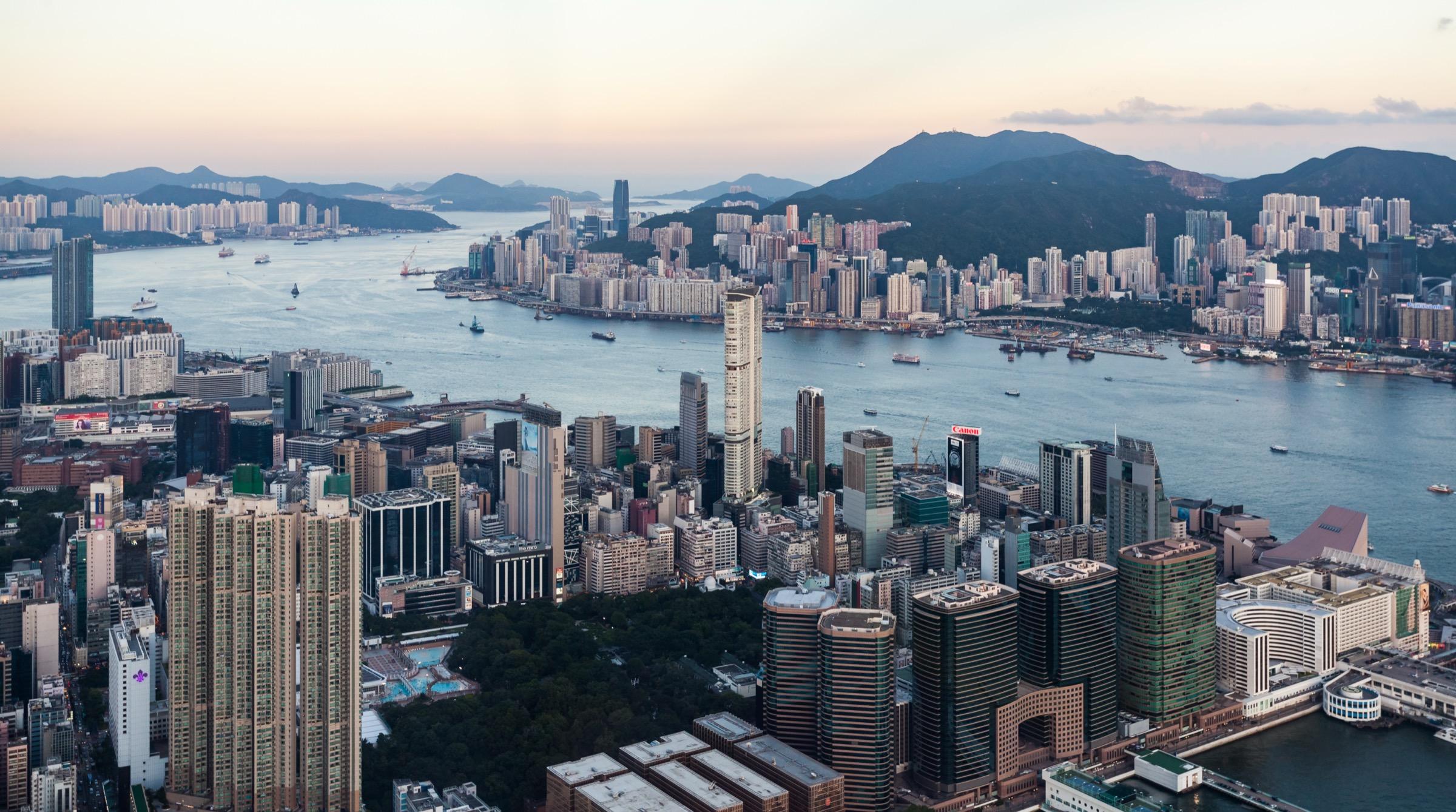
- Hong Kong Has Decoupled After a Six-Year Correction:JLL reports that Hong Kong's office and housing markets are leading a recovery following a six-year correction that began in late 2019, with mass residential values forecast to rise approximately 5% in 2026. Transaction volumes confirm the turn: roughly 51,000 residential units traded in the first ten months of 2025, a 20.3% year-on-year increase. CBRE separately forecasts 3–5% residential growth for 2026, and the SCMP reports the residential index reached 294.3 in October 2025, its highest level since July 2024, with developers releasing more than 1,600 new homes per month since April 2025. Nine months of recovery does not undo a six-year drawdown, but the direction of travel is now unambiguous and it is opposite to the mainland.
- The Hong Kong Recovery Is Bifurcated, Not Broad:Investors should resist reading the residential turn as a whole-market recovery, because the commercial picture remains split. Central Grade-A office vacancy fell to 9.9% in February 2026 — the first single-digit reading in 26 months — with rents up 3.5% year-to-date, but the gain is concentrated in premium towers running above 88% occupancy while older stock languishes below 75%. Elsewhere the correction continues: 2025 prime shopping-mall rents fell 9.1%, and warehouse vacancy hit a decade-high 10.1%. Total investment volume for 2025 was HKD 31.6 billion. The recovery is a flight to quality within Hong Kong, not a tide lifting all assets.
- Hong Kong Removed Every Foreign-Buyer Barrier — Just as Beijing Tightened Outflows:The policy asymmetry between the two markets is now stark and is the single most important structural fact for cross-border investors. Hong Kong abolished its principal foreign-buyer and resale stamp duties in early 2024, making it the most frictionless entry point into Greater China property. Simultaneously, mainland households remain bound by a USD 50,000 annual foreign-exchange conversion quota that cannot lawfully be used to purchase overseas property, and enforcement against offshore capital routing has tightened. Hong Kong opened its door precisely as the capital feeding it came under greater scrutiny.
Investment Strategy: Where the Trade Actually Sits in 2026
- Foreign Capital Cannot Deploy Into the Mainland at Scale:Even an investor who correctly calls the mainland bottom faces a practical problem: the trade is close to unexecutable at institutional size. Gross yields near 1.79% do not clear most cost-of-capital hurdles, capital controls constrain repatriation, and the developer counterparty risk demonstrated by the Evergrande liquidation and Country Garden's multi-billion-dollar restructuring has not been resolved to a standard that supports underwriting. The correct conclusion is not that Chinese residential demand has disappeared. It is that the demand and the asset have separated geographically.
- The Tradable Expression Has Moved Offshore:Chinese buyers spent USD 13.6 billion on United States residential real estate in 2025, remaining the largest foreign buyer group for the twelfth consecutive year. This is the observable, investable consequence of the domestic freeze: where the mainland market offers 1.79% yields and no exit, capital that can move does move. For allocators, exposure to Chinese property demand is now most reliably obtained in the markets that receive it — Hong Kong, Singapore, selected United States metros, and London — rather than in the mainland stock itself.
- How to Position: Separate the Two Markets Before Underwriting Either:Treat "China property" as two uncorrelated allocations with different risk drivers, because that is what the data now shows. Hong Kong is an early-cycle, policy-supported, quality-bifurcated recovery where the entry barriers were deliberately removed and the credible expression is premium residential and best-in-class Central offices, not secondary offices, malls or warehouses. The mainland is a late-stage structural repricing with a municipal-finance overhang, negative demographics, and no demonstrated bottom-calling mechanism — a market to underwrite on yield and counterparty solvency, not on recovery narrative. Investors seeking exposure to Chinese wealth formation, as distinct from Chinese property, should follow the USD 13.6 billion, not the index.
Sources
- The Real Deal — Home Price Growth in China Decimated Back to 2005 Levels
- Asia Times — China's Housing Market Free-Falls as Buyers Wait for Floor Prices
- JLL Hong Kong — 2026: Hong Kong's Office and Housing Markets Lead Recovery After a Six-Year Correction
- Stanford SCCEI — Propping Prices: Assessing the Role of Local Governments in China's Real Estate Market
- Yicai Global — Rental Yields in China's Big Cities Top Deposit Interest Rates
- South China Morning Post — Momentum Builds for Bigger Hong Kong Property Rebound Forecast in 2026
- JLL via VnExpress — Hong Kong Office Market Signals Recovery as Downtown Vacancy Slips to Two-Year Low
- Global Mortgage Group — China, Hong Kong and Greater Asia US Real Estate Guide 2026

Abhii Dabas is the Founder and CEO of INTRIC Global, the cross-border property intelligence platform for serious investors. He advises high-net-worth buyers on international real estate strategy and has evaluated residential markets across more than 40 countries. Greater China is the single most misread block in global real estate, and the gap between the mainland and Hong Kong has never been wider than it is today.
Share
Share this article with others
Introduction
China's residential market has now recorded 35 consecutive months of new-home price declines, and the real price index has fallen to 85.1 in Q1 2026 from a 2021 peak of 113 — below the base level at which the series began tracking in 2005. Property investment fell 17.2% across full-year 2025 and subtracted roughly two percentage points from GDP in each of 2024 and 2025. Yet in the same window, Hong Kong has posted nine months of recovery, with mass residential values forecast to rise 3–5% in 2026 and Central Grade-A office vacancy dropping below 10% for the first time in 26 months. The two markets sit under one name and are moving in opposite directions. This analysis separates them: what is actually breaking on the mainland, why Hong Kong decoupled, why the consensus bottom call keeps failing, and where the tradable expression of Chinese real estate demand has migrated for international capital.
The Mainland: A Repricing That Has Outlasted Every Stimulus
- Thirty-Five Months, and No Floor Yet:National Bureau of Statistics data shows new-home prices across China's 70 monitored cities fell 3.5% year-on-year in May 2026 — the 35th consecutive monthly decline. Between January and May 2026, only four of the 70 cities recorded any increase in new-home prices, and not a single city posted a gain on the secondary market. The real residential price index now sits at 85.1, against a 2021 peak of 113, meaning inflation-adjusted Chinese housing is worth less today than when the index began tracking in 2005. This is no longer a correction with a visible floor; it is a structural repricing that has outlasted every stimulus package deployed against it.
- The Secondary Market Is Where the Damage Concentrates:June 2026 secondary prices fell a further 0.42% month-on-month to RMB 12,639 per square metre, but the annualised picture is far harsher and highly uneven by tier. First-tier cities are down 6.95% and second-tier cities 8.21%, with Nanjing the worst performer at -11.45% and Shenzhen the most resilient at -5.27%. The tier-one premium that once insulated Beijing, Shanghai, Guangzhou and Shenzhen has compressed rather than protected. For investors accustomed to treating first-tier Chinese property as a defensive allocation, the last twelve months have removed that assumption entirely.
- Construction Activity Has Collapsed Faster Than Prices:The volume data is significantly worse than the price data, which is what makes the 2026 picture structural rather than cyclical. Between January and May 2026, new-home sales fell 10.8% by floor area and 13.5% by value, property investment fell 16.2%, new construction starts fell 22.6%, and completions fell 23.4%. Developers are not merely selling less; they have stopped building. Because completions lag starts by two to three years, the 22.6% collapse in starts is effectively a forward commitment to reduced supply — and reduced developer cash flow — through 2028.
Why the Freeze Persists: Yields, Land Finance, and Failed Bottom Calls
- Yields Do Not Compensate, So Buyers Wait:The mechanism keeping the mainland market frozen is behavioural, and it is rational. Gross rental yields in China's first-tier cities stand at approximately 1.79%, barely above the 1.75% offered on a three-year bank deposit. The rent-to-price ratio sits at roughly 1:590, against a 1:200 to 1:300 range generally considered healthy. An owner therefore earns almost nothing for holding, while a buyer who waits another quarter has historically been rewarded with a lower entry price. Until yields widen enough to pay investors for the risk of catching a falling market, the wait-it-out loop has no natural exit.
- Land Finance Is the Transmission Channel Into Public Balance Sheets:Research from Stanford's Center on China's Economy and Institutions shows land-sales revenue is now running roughly 65% below its 2020 peak, against local governments that derived approximately 38% of revenue from land as recently as 2019. Critically, the same research finds local government financing vehicles increased their land purchases 22.4% in 2022 versus 2019 — meaning local states were buying their own land to hold up headline prices, masking the true depth of the correction. This is why Beijing has consistently chosen support over stimulus: the property decline is simultaneously a municipal fiscal crisis, and large-scale reflation would surface losses that are currently warehoused rather than realised.
- The Consensus Bottom Call Keeps Failing:Forecasters have now mispredicted the trough repeatedly, which should inform how any 2026 entry thesis is underwritten. Current consensus expects Chinese prices to fall a further 4% across 2026 before stabilising in 2027 — but that same consensus, in successive prior years, expected stabilisation in the year then underway. Analysts have noted that apparent improvements have been flattered by favourable base effects and one-off transactions rather than genuine demand recovery. The honest position is that no reliable mechanism for calling the bottom has yet been demonstrated, and investors should price the possibility that 2027 stabilisation slips again.
Hong Kong: A Genuine, Bifurcated, Policy-Assisted Recovery
- Hong Kong Has Decoupled After a Six-Year Correction:JLL reports that Hong Kong's office and housing markets are leading a recovery following a six-year correction that began in late 2019, with mass residential values forecast to rise approximately 5% in 2026. Transaction volumes confirm the turn: roughly 51,000 residential units traded in the first ten months of 2025, a 20.3% year-on-year increase. CBRE separately forecasts 3–5% residential growth for 2026, and the SCMP reports the residential index reached 294.3 in October 2025, its highest level since July 2024, with developers releasing more than 1,600 new homes per month since April 2025. Nine months of recovery does not undo a six-year drawdown, but the direction of travel is now unambiguous and it is opposite to the mainland.
- The Hong Kong Recovery Is Bifurcated, Not Broad:Investors should resist reading the residential turn as a whole-market recovery, because the commercial picture remains split. Central Grade-A office vacancy fell to 9.9% in February 2026 — the first single-digit reading in 26 months — with rents up 3.5% year-to-date, but the gain is concentrated in premium towers running above 88% occupancy while older stock languishes below 75%. Elsewhere the correction continues: 2025 prime shopping-mall rents fell 9.1%, and warehouse vacancy hit a decade-high 10.1%. Total investment volume for 2025 was HKD 31.6 billion. The recovery is a flight to quality within Hong Kong, not a tide lifting all assets.
- Hong Kong Removed Every Foreign-Buyer Barrier — Just as Beijing Tightened Outflows:The policy asymmetry between the two markets is now stark and is the single most important structural fact for cross-border investors. Hong Kong abolished its principal foreign-buyer and resale stamp duties in early 2024, making it the most frictionless entry point into Greater China property. Simultaneously, mainland households remain bound by a USD 50,000 annual foreign-exchange conversion quota that cannot lawfully be used to purchase overseas property, and enforcement against offshore capital routing has tightened. Hong Kong opened its door precisely as the capital feeding it came under greater scrutiny.
Investment Strategy: Where the Trade Actually Sits in 2026
- Foreign Capital Cannot Deploy Into the Mainland at Scale:Even an investor who correctly calls the mainland bottom faces a practical problem: the trade is close to unexecutable at institutional size. Gross yields near 1.79% do not clear most cost-of-capital hurdles, capital controls constrain repatriation, and the developer counterparty risk demonstrated by the Evergrande liquidation and Country Garden's multi-billion-dollar restructuring has not been resolved to a standard that supports underwriting. The correct conclusion is not that Chinese residential demand has disappeared. It is that the demand and the asset have separated geographically.
- The Tradable Expression Has Moved Offshore:Chinese buyers spent USD 13.6 billion on United States residential real estate in 2025, remaining the largest foreign buyer group for the twelfth consecutive year. This is the observable, investable consequence of the domestic freeze: where the mainland market offers 1.79% yields and no exit, capital that can move does move. For allocators, exposure to Chinese property demand is now most reliably obtained in the markets that receive it — Hong Kong, Singapore, selected United States metros, and London — rather than in the mainland stock itself.
- How to Position: Separate the Two Markets Before Underwriting Either:Treat "China property" as two uncorrelated allocations with different risk drivers, because that is what the data now shows. Hong Kong is an early-cycle, policy-supported, quality-bifurcated recovery where the entry barriers were deliberately removed and the credible expression is premium residential and best-in-class Central offices, not secondary offices, malls or warehouses. The mainland is a late-stage structural repricing with a municipal-finance overhang, negative demographics, and no demonstrated bottom-calling mechanism — a market to underwrite on yield and counterparty solvency, not on recovery narrative. Investors seeking exposure to Chinese wealth formation, as distinct from Chinese property, should follow the USD 13.6 billion, not the index.
Sources
- The Real Deal — Home Price Growth in China Decimated Back to 2005 Levels
- Asia Times — China's Housing Market Free-Falls as Buyers Wait for Floor Prices
- JLL Hong Kong — 2026: Hong Kong's Office and Housing Markets Lead Recovery After a Six-Year Correction
- Stanford SCCEI — Propping Prices: Assessing the Role of Local Governments in China's Real Estate Market
- Yicai Global — Rental Yields in China's Big Cities Top Deposit Interest Rates
- South China Morning Post — Momentum Builds for Bigger Hong Kong Property Rebound Forecast in 2026
- JLL via VnExpress — Hong Kong Office Market Signals Recovery as Downtown Vacancy Slips to Two-Year Low
- Global Mortgage Group — China, Hong Kong and Greater Asia US Real Estate Guide 2026
Abhii Dabas is the Founder and CEO of INTRIC Global, the cross-border property intelligence platform for serious investors. He advises high-net-worth buyers on international real estate strategy and has evaluated residential markets across more than 40 countries. Greater China is the single most misread block in global real estate, and the gap between the mainland and Hong Kong has never been wider than it is today.
Share this article
Share this insight with others
Share
Share this article with others
Related Market Insights
View More Market Insights
Market Analysis
Japan at One Percent: The Three Conditions Behind the Tokyo Trade Are Turning Together
By Abhii Dabas · August 7, 2026

Market Analysis
The Currency Tax: Why the Same Property Returned 137% to One Investor and 42% to Another
By Abhii Dabas · July 31, 2026

Investment Guide
Education-led Property in 2026
By Abhii Dabas · August 28, 2026
Found this useful? Send it to someone who should read it.
Continue with INTRIC