Philippines Property 2026: Navigating the Infrastructure Boom and the Condominium Overhang
Introduction
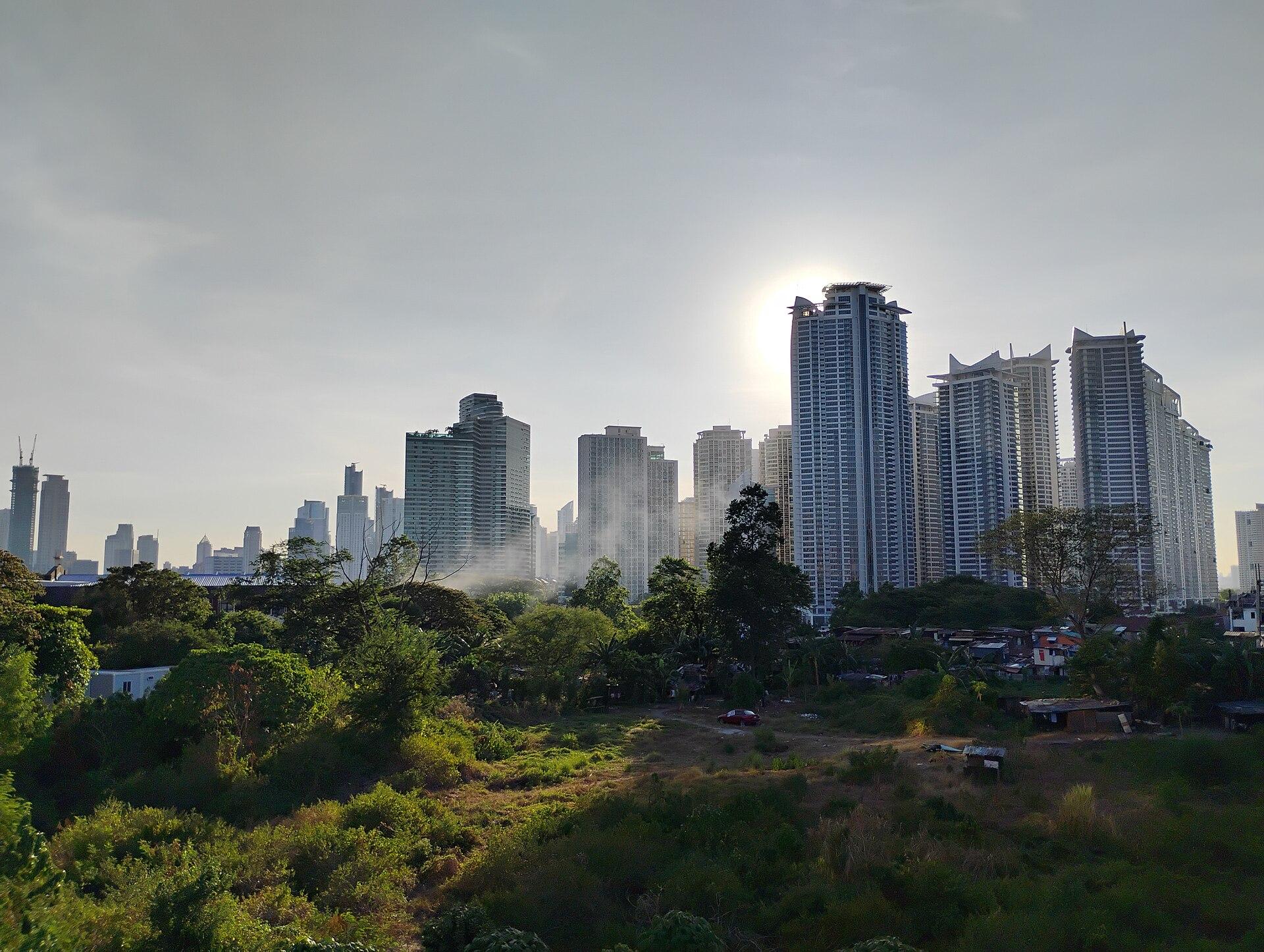
The Philippines property market in 2026 is defined by a structural tension: a record-breaking infrastructure programme that is reshaping long-term demand fundamentals sits alongside a Metro Manila condominium oversupply that is suppressing near-term yields and testing investor patience. President Marcos Jr.'s "Build Better More" programme — with a 2026 budget of ₱1.556 trillion and a total 207-project pipeline valued at US$176.7 billion — is laying connectivity corridors that will unlock land value across Central Luzon, Cebu, and secondary cities over the next decade. Meanwhile, the BPO sector, responsible for 64% of Metro Manila's office leasing demand in 2025, logged a 71.5% surge in gross leasing volume year-on-year — delivering the highest office transaction volume since 2022 and validating the Philippines' position as the world's leading customer experience outsourcing hub. For international investors, the Philippines in 2026 rewards selectivity: the right asset class, the right location, and a clear-eyed understanding of the foreign ownership framework that constrains how capital can be deployed.
Macro Foundations and the Infrastructure Catalyst
- GDP Growth — Slower Than Targeted, Structurally Sound:The Philippine economy grew 4.4% in full-year 2025, below the government's 5.5–6.5% target and down from 5.7% in 2024. Q1 2026 delivered a further softening to 2.8% — the weakest quarterly performance since the Q1 2021 pandemic contraction — driven by slowing global trade and US tariff headwinds affecting the outsourcing sector. The Bangko Sentral ng Pilipinas (BSP) responded by cutting its key policy rate to 4.50% in December 2025, with further easing anticipated through 2026. For property investors, the rate cycle is directionally supportive even if headline growth prints are disappointing: lower borrowing costs improve developer economics, widen mortgage affordability, and reduce the discount rates applied to REIT valuations.
- Build Better More — Infrastructure as a Location Multiplier:The Marcos administration's "Build Better More" (BBM) programme is the most significant infrastructure initiative since Duterte's Build Build Build. The 2026 allocation stands at a record ₱1.556 trillion — higher than the ₱1.513 trillion in 2025 and above 2024's actual ₱1.545 trillion spend — embedded within a nine-trillion-peso, 207-project master programme. Key catalysts include the Cebu Urban Mass Rapid Transit Central Line, the New Dumaguete Airport, EDSA Busway expansions serving 5.5 million monthly passengers, and the New Clark City development in Tarlac — where BCDA approved ₱53.5 billion of investment in the first seven months of 2025 alone, a 63.82% YoY increase. Infrastructure of this scale creates investable location premiums: land within 5km of transit corridors historically appreciates 15–30% faster than surrounding areas in comparable Southeast Asian markets.
- OFW Remittances — The Bedrock Demand Driver:Overseas Filipino Worker remittances hit a record USD 35.63 billion in 2025, up 3.3% from USD 34.49 billion in 2024 and equivalent to approximately 7.3% of GDP. The World Bank estimates that roughly 60% of these inflows find their way into real estate — primarily housing projects and mid-scale subdivisions in Cavite, Batangas, and Laguna. OFW housing purchase allocation as a share of remittance spending nearly doubled from 6.7% in Q3 2024 to 12.7% in Q4 2024, a trend that accelerated into 2025. This structural demand base is countercyclical: it is not dependent on domestic employment cycles, tends to be cash or near-cash transactions, and concentrates in mid-income residential — a segment distinct from the oversupplied Metro Manila condominium stack.
Metro Manila: Office Recovery vs. Residential Oversupply
- BPO-Driven Office Renaissance:Metro Manila's office market staged a notable recovery in 2025, with gross leasing volume jumping 71.5% year-on-year to approach one million square metres — the highest transactional volume since 2022. BPO and shared services companies accounted for 64% of demand, with traditional corporate occupiers taking the remaining 36%. Taguig City, anchored by Bonifacio Global City, led all submarkets in leasing activity; Makati City posted the fastest growth at 92.2% YoY. BGC ended 2025 with a tight 9% office vacancy rate and monthly rents of ₱1,167 per square metre — the most expensive office submarket in the Philippines — while Makati sat at 15% vacancy and ₱891/sqm. Looking ahead, only 350,000 sqm of new office supply is projected to enter the market across 2026–2028, well below pre-pandemic delivery levels, which should support rental recovery in the best-located CBDs.
- Condominium Oversupply — A Structural Drag, Not a Crisis:Metro Manila's residential condominium market faces a meaningful but manageable oversupply. Vacancy closed 2025 at 24.7%, rising from 23.9% in 2024, with analysts projecting a peak of approximately 25.6% by end-2026 as roughly 13,000 additional units complete construction. The inventory overhang is concentrated in the lower mid-income segment (₱3.6M–₱6.99M, representing 36% of unsold RFO stock) and affordable segment (₱2.5M–₱3.59M, 33% of RFO stock) — not in the premium and luxury tiers where BGC and Makati's finished product commands full rent. The Manila Bay Area is the most acute submarket, where vacancy exceeds 50% in some towers. By contrast, BGC and Taguig rents have already recovered above pre-pandemic levels, reflecting the bifurcation between location and quality tiers that defines every maturing condo market.
- Rental Yields and the Income Case:Metro Manila gross residential rental yields averaged 5.57% in Q3 2025, rising to approximately 5.6–5.77% in early 2026 — a range consistent with the 4–6% corridor analysts forecast for the full year. Secondary market units in well-positioned CBDs can achieve 5.5–7.2%, while BGC new-build premium product trades at the lower end of the range (4–5%) in exchange for superior capital appreciation prospects. Office REITs offer the most attractive current income: average office gross yield was 6.92% in Q4 2025, and MREIT declared an annualised dividend yield of approximately 7% in early 2026. The combination of BSP rate cuts — reducing the competition from fixed-income alternatives — and improving occupancy fundamentals makes 2026 a constructive entry point for yield-oriented property investors prepared to absorb the near-term vacancy headwind.
Industrial Zones, PEZA, and the Supply Chain Opportunity
- PEZA Record Investment and the Industrial Land Boom:The Philippine Economic Zone Authority (PEZA) approved ₱237.10 billion in investment across 307 projects in 2025 — a record annual performance — with foreign manufacturing pledges reaching ₱81.4 billion, concentrated in Central Luzon and the Calabarzon corridor. PEZA is targeting 30 new ecozones for 2026, expanding the investable industrial universe beyond the existing 400+ registered zones. Priority industries include automotive components, pharmaceuticals, electronics, and aerospace manufacturing — all high-value, stable tenants that drive premium industrial land pricing. Colliers Philippines projects nearly 1,200 hectares of new industrial space to be delivered between 2026 and 2028, with Central Luzon alone accounting for approximately 930 hectares of that pipeline — underscoring the region's emergence as the country's industrial heartland.
- New Clark City and the Luzon Economic Corridor:New Clark City in Tarlac Province represents the most ambitious single industrial development in the Philippines' history. The Bases Conversion and Development Authority (BCDA) awarded Science Park of the Philippines a 50-year lease on 100 hectares for a ₱30 billion industrial park, while the US-Philippines-Japan Luzon Economic Corridor collaboration has anchored a 1,620-hectare Pax Silica "AI-native investment acceleration hub" — the first of its kind in Southeast Asia. These are not speculative announcements: BCDA's approved investment volume in H1 2025 alone reached ₱53.5 billion, a 64% increase on the prior year. For international manufacturing investors — particularly those re-routing supply chains away from China — New Clark City offers PEZA incentives (income tax holidays, duty-free equipment import), a greenfield site unencumbered by legacy infrastructure constraints, and proximity to Clark International Airport.
Provincial Markets: Cebu, Boracay, and the Growth Corridors
- Cebu — BPO Hub and Tourism Engine:Cebu is the Philippines' most important secondary real estate market, driven by a dual engine of BPO expansion and tourism recovery. Provincial office transactions reached 210,000 sqm across the Philippines in H1 2025 — 30,000 sqm above the prior year — with Cebu accounting for the majority of that incremental demand. The Cebu Urban Mass Rapid Transit (UMRT) Central Line under Build Better More will materially improve intra-city mobility and is expected to create transit-oriented development premiums along its corridor. In the residential market, Cebu Business Park and IT Park condominiums are the fastest-moving inventory (45–60 days on market), while beachfront product on Mactan Island commands a significant tourism-driven premium. Analysts forecast 5–7% price appreciation in Cebu in 2026 — outperforming the Metro Manila condominium average.
- Boracay — Special Economic Zone and Tourism Yield:Boracay's government-mandated rehabilitation — which closed the island in 2018 — has transformed it from an overcrowded mass-market resort into a regulated, higher-value hospitality and real estate destination. The island welcomed over 2 million visitors in 2023 and has been designated a Special Economic Zone, offering foreign investors income tax holidays and — uniquely — the ability to fully own tourism-designated projects through the SEZ structure. The 3,000+ new hotel rooms scheduled for delivery across the Philippines in 2026 (the largest annual pipeline since 2018) reflects developer confidence in leisure real estate fundamentals. Short-term rental platforms in Boracay, Palawan, and Cebu are reporting strong demand growth and occupancy recovery in 2025–2026, supporting the income case for hospitality-adjacent residential investment.
REITs and Developer Landscape
- Philippines REIT Market — Yield vs. Bond Rate Competition:The Philippines REIT market offers one of the most attractive income yield profiles in Southeast Asia, with listed REITs providing access to institutional-grade commercial real estate via the PSE. AREIT (Ayala Land's REIT vehicle) posted 2025 revenues of ₱13.0 billion, EBITDA of ₱9.5 billion (up 26%), and maintained a 99% overall occupancy rate — demonstrating the defensive income quality of premium Grade A office assets. MREIT (Megaworld) delivered 18% net income growth to ₱3.7 billion in 2025 on 24% revenue growth, declared an annualised dividend yield of approximately 7%, and saw Q1 2026 distributable income surge 34% YoY following its Wave 4 portfolio acquisition. The near-term headwind is rising Philippine bond yields, which compress the relative yield spread that makes REITs attractive versus fixed-income alternatives — a risk that eases as the BSP continues its cutting cycle through 2026.
- Major Developers — Ayala Land Leads, Sector Consolidates:Ayala Land (PSE: ALI) delivered ₱39.1 billion in net income for 2025 — a 39% YoY surge, boosted by the sale of its Alabang mall — and has earmarked ₱70–80 billion in capex for 2026, with 38% directed at leasing projects and over 250,000 sqm of leasable space coming online. Megaworld continues to dominate the BGC township and is the largest single landlord in the PEZA IT zone ecosystem. SM Prime Holdings anchors the Philippines' largest retail property network and is expanding its residential arm in partnership with its mall-anchored mixed-use developments. DMCI Homes remains the dominant mid-income condominium developer in Metro Manila, with significant exposure to Quezon City and the Makati fringe — the sub-markets most exposed to the current oversupply cycle. Robinsons Land rounds out the big-five with trailing revenues of approximately $818 million.
Risks, Ownership Rules, and Investment Strategy
- Foreign Ownership Framework — Constraints and Workarounds:The Philippines imposes one of Southeast Asia's most restrictive foreign ownership frameworks on real estate. Foreign nationals cannot own land under the 1987 Constitution (Article XII, Section 7). Condominium units are the primary vehicle for direct property ownership — permitted under Republic Act 4726 — but capped at 40% of any single building's total floor area in foreign hands. In practice, this cap fills quickly in premium BGC and Makati towers, limiting the addressable supply for foreign buyers who are not first movers. The January 2026 extension of land lease terms to 99 years for qualifying investment projects meaningfully improves the economics for industrial and tourism developers, but does not change the constitutional position on freehold land title. Foreign investors must also factor in transfer taxes (1.5% DST), capital gains tax (6%), and agent fees (3–5%) that increase round-trip transaction costs to approximately 12–15% of purchase price.
- Oversupply, Trade Headwinds, and the Bay Area Lesson:The Metro Manila Bay Area — once marketed as the next BGC — is the clearest example of what happens when speculative condominium supply outpaces genuine occupier demand. Vacancy exceeding 50% in several Bay Area towers has trapped investors in negative carry positions, with resale values under pressure and rental income insufficient to service financing. The broader Metro Manila condominium vacancy of 25%+ and a projected peak at 25.6% by end-2026 means that undifferentiated condo exposure carries genuine income risk for the next 12–24 months. The secondary risk is the BPO sector: US legislative proposals targeting offshore customer service operations — if enacted — would reduce the outsourcing demand that drives both office leasing and the high-density residential demand that supports BGC and Makati condominium absorption. Prudent investors in 2026 should favour assets with demonstrated occupier demand, conservative loan-to-value ratios, and a multi-year hold horizon.
- Where to Invest: A Risk-Adjusted Framework for 2026:The highest-conviction opportunities in the Philippines in 2026 sit in three segments: BGC and Makati Grade A office REITs (AREIT, MREIT, RLC REIT) offering 6–7% annualised yields with improving occupancy fundamentals and the tailwind of further BSP rate cuts; PEZA-registered industrial land in Central Luzon — particularly within the Clark/New Clark City corridor — where the supply pipeline, foreign manufacturer demand, and US-Philippines-Japan strategic investment make a structural 10–15 year demand case; and tourism-linked residential in Cebu and Boracay, where short-term rental yields of 7–9% are achievable on well-positioned units, the SEZ framework offers foreign ownership flexibility in Boracay, and the tourism recovery is durable. What to avoid: Bay Area and lower mid-income Metro Manila condominiums where supply will not clear for at least two years, and any asset priced on speculative rather than occupier-driven assumptions.
Sources
- Philippine Statistics Authority — GDP Grows by 2.8 Percent in Q1 2026
- Manila Bulletin — Marcos Jr. Admin to Spend Record ₱1.556 Trillion on Build Better More in 2026
- BusinessWorld / Colliers — Manila Condo Oversupply Seen Keeping Vacancy High in 2026
- Manila Bulletin / Colliers — Philippine Office Market Regains Momentum Amid Stronger BPO Leasing Demand
- Manila Bulletin — MREIT 2025 Net Income Jumps 18% as Occupancy Strengthens
- BusinessWorld — Metro Manila Rental Yields May Stay Flat in 2026 — Analysts
- Inquirer Business — PEZA Aims to Open 30 New Ecozones in 2026
- GMA News — Ayala Land Earns ₱39.1B in 2025, Up 39%

Abhii Dabas is the Founder and CEO of INTRIC Global, the cross-border property intelligence platform for serious investors. He advises high-net-worth buyers on international real estate strategy and has evaluated residential markets across more than 40 countries.
Share
Share this article with others
Introduction
The Philippines property market in 2026 is defined by a structural tension: a record-breaking infrastructure programme that is reshaping long-term demand fundamentals sits alongside a Metro Manila condominium oversupply that is suppressing near-term yields and testing investor patience. President Marcos Jr.'s "Build Better More" programme — with a 2026 budget of ₱1.556 trillion and a total 207-project pipeline valued at US$176.7 billion — is laying connectivity corridors that will unlock land value across Central Luzon, Cebu, and secondary cities over the next decade. Meanwhile, the BPO sector, responsible for 64% of Metro Manila's office leasing demand in 2025, logged a 71.5% surge in gross leasing volume year-on-year — delivering the highest office transaction volume since 2022 and validating the Philippines' position as the world's leading customer experience outsourcing hub. For international investors, the Philippines in 2026 rewards selectivity: the right asset class, the right location, and a clear-eyed understanding of the foreign ownership framework that constrains how capital can be deployed.
Macro Foundations and the Infrastructure Catalyst
- GDP Growth — Slower Than Targeted, Structurally Sound:The Philippine economy grew 4.4% in full-year 2025, below the government's 5.5–6.5% target and down from 5.7% in 2024. Q1 2026 delivered a further softening to 2.8% — the weakest quarterly performance since the Q1 2021 pandemic contraction — driven by slowing global trade and US tariff headwinds affecting the outsourcing sector. The Bangko Sentral ng Pilipinas (BSP) responded by cutting its key policy rate to 4.50% in December 2025, with further easing anticipated through 2026. For property investors, the rate cycle is directionally supportive even if headline growth prints are disappointing: lower borrowing costs improve developer economics, widen mortgage affordability, and reduce the discount rates applied to REIT valuations.
- Build Better More — Infrastructure as a Location Multiplier:The Marcos administration's "Build Better More" (BBM) programme is the most significant infrastructure initiative since Duterte's Build Build Build. The 2026 allocation stands at a record ₱1.556 trillion — higher than the ₱1.513 trillion in 2025 and above 2024's actual ₱1.545 trillion spend — embedded within a nine-trillion-peso, 207-project master programme. Key catalysts include the Cebu Urban Mass Rapid Transit Central Line, the New Dumaguete Airport, EDSA Busway expansions serving 5.5 million monthly passengers, and the New Clark City development in Tarlac — where BCDA approved ₱53.5 billion of investment in the first seven months of 2025 alone, a 63.82% YoY increase. Infrastructure of this scale creates investable location premiums: land within 5km of transit corridors historically appreciates 15–30% faster than surrounding areas in comparable Southeast Asian markets.
- OFW Remittances — The Bedrock Demand Driver:Overseas Filipino Worker remittances hit a record USD 35.63 billion in 2025, up 3.3% from USD 34.49 billion in 2024 and equivalent to approximately 7.3% of GDP. The World Bank estimates that roughly 60% of these inflows find their way into real estate — primarily housing projects and mid-scale subdivisions in Cavite, Batangas, and Laguna. OFW housing purchase allocation as a share of remittance spending nearly doubled from 6.7% in Q3 2024 to 12.7% in Q4 2024, a trend that accelerated into 2025. This structural demand base is countercyclical: it is not dependent on domestic employment cycles, tends to be cash or near-cash transactions, and concentrates in mid-income residential — a segment distinct from the oversupplied Metro Manila condominium stack.
Metro Manila: Office Recovery vs. Residential Oversupply
- BPO-Driven Office Renaissance:Metro Manila's office market staged a notable recovery in 2025, with gross leasing volume jumping 71.5% year-on-year to approach one million square metres — the highest transactional volume since 2022. BPO and shared services companies accounted for 64% of demand, with traditional corporate occupiers taking the remaining 36%. Taguig City, anchored by Bonifacio Global City, led all submarkets in leasing activity; Makati City posted the fastest growth at 92.2% YoY. BGC ended 2025 with a tight 9% office vacancy rate and monthly rents of ₱1,167 per square metre — the most expensive office submarket in the Philippines — while Makati sat at 15% vacancy and ₱891/sqm. Looking ahead, only 350,000 sqm of new office supply is projected to enter the market across 2026–2028, well below pre-pandemic delivery levels, which should support rental recovery in the best-located CBDs.
- Condominium Oversupply — A Structural Drag, Not a Crisis:Metro Manila's residential condominium market faces a meaningful but manageable oversupply. Vacancy closed 2025 at 24.7%, rising from 23.9% in 2024, with analysts projecting a peak of approximately 25.6% by end-2026 as roughly 13,000 additional units complete construction. The inventory overhang is concentrated in the lower mid-income segment (₱3.6M–₱6.99M, representing 36% of unsold RFO stock) and affordable segment (₱2.5M–₱3.59M, 33% of RFO stock) — not in the premium and luxury tiers where BGC and Makati's finished product commands full rent. The Manila Bay Area is the most acute submarket, where vacancy exceeds 50% in some towers. By contrast, BGC and Taguig rents have already recovered above pre-pandemic levels, reflecting the bifurcation between location and quality tiers that defines every maturing condo market.
- Rental Yields and the Income Case:Metro Manila gross residential rental yields averaged 5.57% in Q3 2025, rising to approximately 5.6–5.77% in early 2026 — a range consistent with the 4–6% corridor analysts forecast for the full year. Secondary market units in well-positioned CBDs can achieve 5.5–7.2%, while BGC new-build premium product trades at the lower end of the range (4–5%) in exchange for superior capital appreciation prospects. Office REITs offer the most attractive current income: average office gross yield was 6.92% in Q4 2025, and MREIT declared an annualised dividend yield of approximately 7% in early 2026. The combination of BSP rate cuts — reducing the competition from fixed-income alternatives — and improving occupancy fundamentals makes 2026 a constructive entry point for yield-oriented property investors prepared to absorb the near-term vacancy headwind.
Industrial Zones, PEZA, and the Supply Chain Opportunity
- PEZA Record Investment and the Industrial Land Boom:The Philippine Economic Zone Authority (PEZA) approved ₱237.10 billion in investment across 307 projects in 2025 — a record annual performance — with foreign manufacturing pledges reaching ₱81.4 billion, concentrated in Central Luzon and the Calabarzon corridor. PEZA is targeting 30 new ecozones for 2026, expanding the investable industrial universe beyond the existing 400+ registered zones. Priority industries include automotive components, pharmaceuticals, electronics, and aerospace manufacturing — all high-value, stable tenants that drive premium industrial land pricing. Colliers Philippines projects nearly 1,200 hectares of new industrial space to be delivered between 2026 and 2028, with Central Luzon alone accounting for approximately 930 hectares of that pipeline — underscoring the region's emergence as the country's industrial heartland.
- New Clark City and the Luzon Economic Corridor:New Clark City in Tarlac Province represents the most ambitious single industrial development in the Philippines' history. The Bases Conversion and Development Authority (BCDA) awarded Science Park of the Philippines a 50-year lease on 100 hectares for a ₱30 billion industrial park, while the US-Philippines-Japan Luzon Economic Corridor collaboration has anchored a 1,620-hectare Pax Silica "AI-native investment acceleration hub" — the first of its kind in Southeast Asia. These are not speculative announcements: BCDA's approved investment volume in H1 2025 alone reached ₱53.5 billion, a 64% increase on the prior year. For international manufacturing investors — particularly those re-routing supply chains away from China — New Clark City offers PEZA incentives (income tax holidays, duty-free equipment import), a greenfield site unencumbered by legacy infrastructure constraints, and proximity to Clark International Airport.
Provincial Markets: Cebu, Boracay, and the Growth Corridors
- Cebu — BPO Hub and Tourism Engine:Cebu is the Philippines' most important secondary real estate market, driven by a dual engine of BPO expansion and tourism recovery. Provincial office transactions reached 210,000 sqm across the Philippines in H1 2025 — 30,000 sqm above the prior year — with Cebu accounting for the majority of that incremental demand. The Cebu Urban Mass Rapid Transit (UMRT) Central Line under Build Better More will materially improve intra-city mobility and is expected to create transit-oriented development premiums along its corridor. In the residential market, Cebu Business Park and IT Park condominiums are the fastest-moving inventory (45–60 days on market), while beachfront product on Mactan Island commands a significant tourism-driven premium. Analysts forecast 5–7% price appreciation in Cebu in 2026 — outperforming the Metro Manila condominium average.
- Boracay — Special Economic Zone and Tourism Yield:Boracay's government-mandated rehabilitation — which closed the island in 2018 — has transformed it from an overcrowded mass-market resort into a regulated, higher-value hospitality and real estate destination. The island welcomed over 2 million visitors in 2023 and has been designated a Special Economic Zone, offering foreign investors income tax holidays and — uniquely — the ability to fully own tourism-designated projects through the SEZ structure. The 3,000+ new hotel rooms scheduled for delivery across the Philippines in 2026 (the largest annual pipeline since 2018) reflects developer confidence in leisure real estate fundamentals. Short-term rental platforms in Boracay, Palawan, and Cebu are reporting strong demand growth and occupancy recovery in 2025–2026, supporting the income case for hospitality-adjacent residential investment.
REITs and Developer Landscape
- Philippines REIT Market — Yield vs. Bond Rate Competition:The Philippines REIT market offers one of the most attractive income yield profiles in Southeast Asia, with listed REITs providing access to institutional-grade commercial real estate via the PSE. AREIT (Ayala Land's REIT vehicle) posted 2025 revenues of ₱13.0 billion, EBITDA of ₱9.5 billion (up 26%), and maintained a 99% overall occupancy rate — demonstrating the defensive income quality of premium Grade A office assets. MREIT (Megaworld) delivered 18% net income growth to ₱3.7 billion in 2025 on 24% revenue growth, declared an annualised dividend yield of approximately 7%, and saw Q1 2026 distributable income surge 34% YoY following its Wave 4 portfolio acquisition. The near-term headwind is rising Philippine bond yields, which compress the relative yield spread that makes REITs attractive versus fixed-income alternatives — a risk that eases as the BSP continues its cutting cycle through 2026.
- Major Developers — Ayala Land Leads, Sector Consolidates:Ayala Land (PSE: ALI) delivered ₱39.1 billion in net income for 2025 — a 39% YoY surge, boosted by the sale of its Alabang mall — and has earmarked ₱70–80 billion in capex for 2026, with 38% directed at leasing projects and over 250,000 sqm of leasable space coming online. Megaworld continues to dominate the BGC township and is the largest single landlord in the PEZA IT zone ecosystem. SM Prime Holdings anchors the Philippines' largest retail property network and is expanding its residential arm in partnership with its mall-anchored mixed-use developments. DMCI Homes remains the dominant mid-income condominium developer in Metro Manila, with significant exposure to Quezon City and the Makati fringe — the sub-markets most exposed to the current oversupply cycle. Robinsons Land rounds out the big-five with trailing revenues of approximately $818 million.
Risks, Ownership Rules, and Investment Strategy
- Foreign Ownership Framework — Constraints and Workarounds:The Philippines imposes one of Southeast Asia's most restrictive foreign ownership frameworks on real estate. Foreign nationals cannot own land under the 1987 Constitution (Article XII, Section 7). Condominium units are the primary vehicle for direct property ownership — permitted under Republic Act 4726 — but capped at 40% of any single building's total floor area in foreign hands. In practice, this cap fills quickly in premium BGC and Makati towers, limiting the addressable supply for foreign buyers who are not first movers. The January 2026 extension of land lease terms to 99 years for qualifying investment projects meaningfully improves the economics for industrial and tourism developers, but does not change the constitutional position on freehold land title. Foreign investors must also factor in transfer taxes (1.5% DST), capital gains tax (6%), and agent fees (3–5%) that increase round-trip transaction costs to approximately 12–15% of purchase price.
- Oversupply, Trade Headwinds, and the Bay Area Lesson:The Metro Manila Bay Area — once marketed as the next BGC — is the clearest example of what happens when speculative condominium supply outpaces genuine occupier demand. Vacancy exceeding 50% in several Bay Area towers has trapped investors in negative carry positions, with resale values under pressure and rental income insufficient to service financing. The broader Metro Manila condominium vacancy of 25%+ and a projected peak at 25.6% by end-2026 means that undifferentiated condo exposure carries genuine income risk for the next 12–24 months. The secondary risk is the BPO sector: US legislative proposals targeting offshore customer service operations — if enacted — would reduce the outsourcing demand that drives both office leasing and the high-density residential demand that supports BGC and Makati condominium absorption. Prudent investors in 2026 should favour assets with demonstrated occupier demand, conservative loan-to-value ratios, and a multi-year hold horizon.
- Where to Invest: A Risk-Adjusted Framework for 2026:The highest-conviction opportunities in the Philippines in 2026 sit in three segments: BGC and Makati Grade A office REITs (AREIT, MREIT, RLC REIT) offering 6–7% annualised yields with improving occupancy fundamentals and the tailwind of further BSP rate cuts; PEZA-registered industrial land in Central Luzon — particularly within the Clark/New Clark City corridor — where the supply pipeline, foreign manufacturer demand, and US-Philippines-Japan strategic investment make a structural 10–15 year demand case; and tourism-linked residential in Cebu and Boracay, where short-term rental yields of 7–9% are achievable on well-positioned units, the SEZ framework offers foreign ownership flexibility in Boracay, and the tourism recovery is durable. What to avoid: Bay Area and lower mid-income Metro Manila condominiums where supply will not clear for at least two years, and any asset priced on speculative rather than occupier-driven assumptions.
Sources
- Philippine Statistics Authority — GDP Grows by 2.8 Percent in Q1 2026
- Manila Bulletin — Marcos Jr. Admin to Spend Record ₱1.556 Trillion on Build Better More in 2026
- BusinessWorld / Colliers — Manila Condo Oversupply Seen Keeping Vacancy High in 2026
- Manila Bulletin / Colliers — Philippine Office Market Regains Momentum Amid Stronger BPO Leasing Demand
- Manila Bulletin — MREIT 2025 Net Income Jumps 18% as Occupancy Strengthens
- BusinessWorld — Metro Manila Rental Yields May Stay Flat in 2026 — Analysts
- Inquirer Business — PEZA Aims to Open 30 New Ecozones in 2026
- GMA News — Ayala Land Earns ₱39.1B in 2025, Up 39%
Abhii Dabas is the Founder and CEO of INTRIC Global, the cross-border property intelligence platform for serious investors. He advises high-net-worth buyers on international real estate strategy and has evaluated residential markets across more than 40 countries.
Share this article
Share this insight with others
Share
Share this article with others
Related Market Insights
View More Market Insights
Emerging Markets
Morocco and North Africa: The Real Estate Frontier Where World Cup Infrastructure Meets Frontier-Grade Returns
By Abhii Dabas · June 25, 2026

Emerging Markets
Latin America Real Estate 2026: Brazil's Logistics Boom and Colombia's Dollar-Arbitrage Opportunity
By Abhii Dabas · June 17, 2026

TAX & RESIDENCY
Cross-Border Property Tax Guide for Singapore, UAE, and UK-Based Investors in 2026
By Abhii Dabas · July 27, 2026
Found this useful? Send it to someone who should read it.
Continue with INTRIC
