The checklist every HNW investor should run before buying abroad.
 ByAbhii Dabas
Why cross-border due diligence is a different discipline
The process goes beyond standard domestic property checks because the investor cannot rely on familiarity with the local legal system, developer ecosystem, or market norms. The risk of an undisclosed problem surfacing post-completion is materially higher in cross-border transactions than in domestic ones.
Due diligence matters because the cost of fixing problems after exchange is many times higher than the cost of catching them before. Title disputes, undisclosed liens, developer financial distress, capital control surprises, and management failures can each erase returns or destroy capital. The discipline is to verify every one of these before capital moves, not after.
Verifying title security when buying overseas
Title verification in cross-border purchases requires three layers: a search of the destination country's land registry by an independent local solicitor, not the developer's solicitor; confirmation that the title is freehold or the appropriate leasehold for foreign ownership; and verification that no undisclosed liens, easements, or third-party claims attach to the title. In markets with fragmented registry systems, additional verification through local government records may be required.
Title risk is highest in emerging markets with land registry systems that are not fully digitised, where records depend on local government cooperation, or where foreign ownership has historically required workarounds such as nominee structures or leasehold-with-renewal mechanisms. Title risk is lowest in markets with central digital registries: the UK Land Registry, the Japan Legal Affairs Bureau, Singapore SLA, and the Australian Torrens system.
Most title disputes I have seen in cross-border property were preventable. The investor used the developer's recommended solicitor. The solicitor flagged nothing because the developer was their client. Independent verification by a buyer-side solicitor with no developer relationship is non-negotiable.
On INTRIC now — Residences on INTRIC are open to enquiry straight from this page.
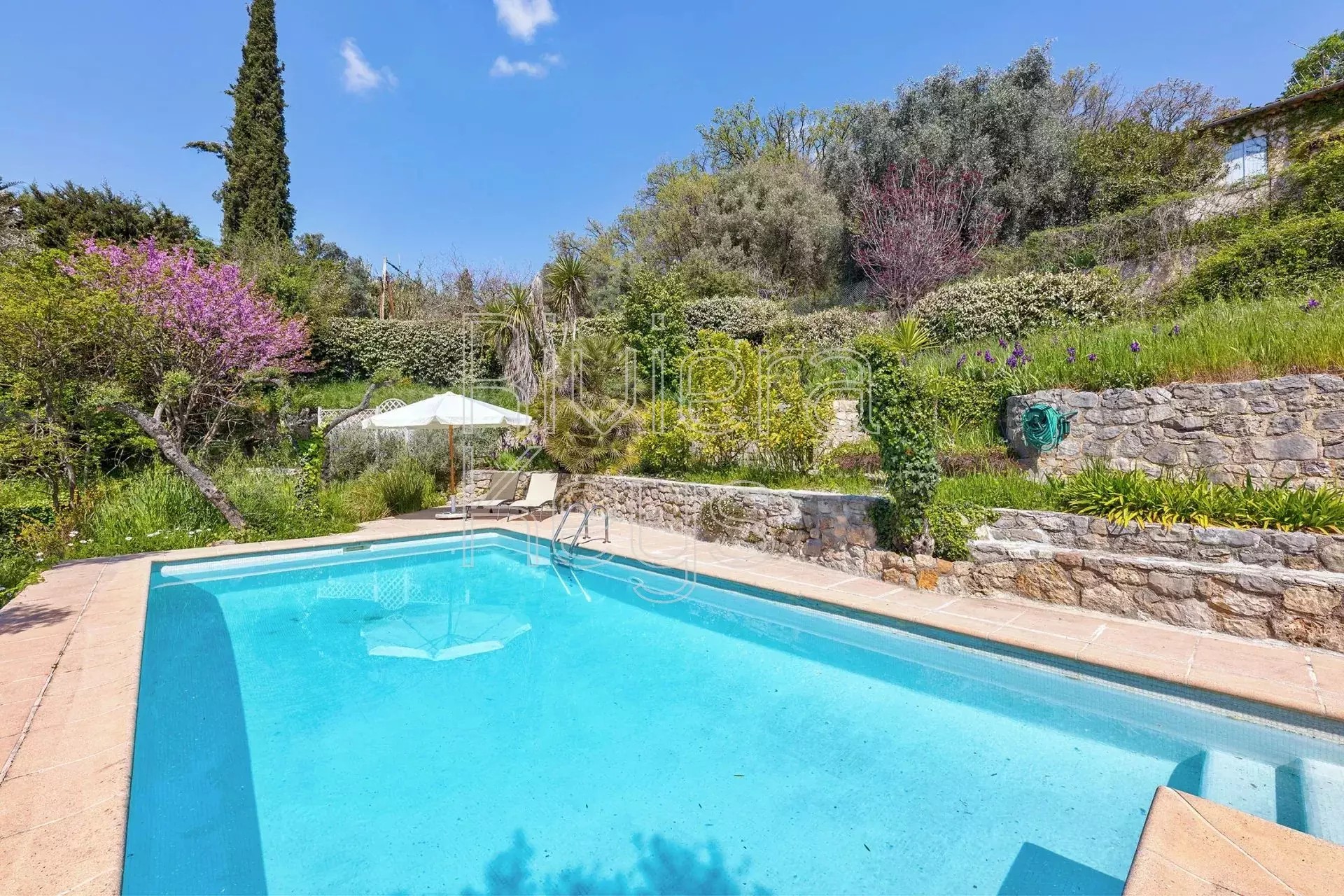
Montauroux Architect Villa
HOUSE · Montauroux, 83440, Var, Provence-Alpes-Cote d'Azur, France
EUR 950K – EUR 1.65M

Nobu Residences
APARTMENT · POA - Son Tra, Danang, Vietnam
USD 180K – USD 2.70M

Redwood Avenue
HOUSE · Dubai, Jumeirah Golf Estates, United Arab Emirates
From AED 53.99M

NEXT Address
Apartment · 11 Tbel Abuseridze Str, Batumi, 6010, Georgia
USD 50.9K – USD 191.2K
What to check about a developer's track record
Developer track record verification covers three dimensions: completion history, meaning projects delivered on time and to specification over the past five to ten years; financial standing, meaning registered company filings, debt position, and ongoing project pipeline; and reputation, meaning post-handover defect rates, owner satisfaction, and post-warranty service quality. All three should be verified independently, not accepted from the developer's marketing materials.
In off-plan purchases, developer track record is the single most important determinant of whether the asset will exist as promised. A developer with a weak past completion record carries materially higher default risk than the gross yield calculations on the brochure account for. In resale purchases, developer reputation matters less because the asset exists, but post-warranty defect rates still affect the holding period economics.
Assessing market liquidity before you invest
Market liquidity is assessed by transaction volume in the specific price tier and submarket, not the city average; days-on-market for comparable resales over the past 12 to 24 months; and the depth of the resale buyer pool at the investor's likely exit price point. Markets where the only buyers at exit are other foreign investors carry materially higher liquidity risk than markets with active domestic owner-occupier or institutional demand at the same price tier.
Liquidity is often inversely related to gross yield in cross-border markets. The yield is high precisely because local demand at that price point is thin. Foreign capital supports the price on entry. When foreign capital exits, the price floor is exposed. Investors should evaluate liquidity at the price tier they expect to exit at, which may differ from the tier they enter at if they plan to hold through capital appreciation.
On INTRIC now — Still open on INTRIC — every one of these answers enquiries directly.

Riva Residences
APARTMENT · Dubai Maritime City, Dubai, United Arab Emirates
AED 2.53M – AED 5.80M

Q Gardens Lofts 2
APARTMENT · Q Gardens Lofts 2, District 12, Jumeirah Village Circle, Dubai, United Arab Emirates
From AED 597K

Riviera Residences
Apartment · Al Reem Island, Abu Dhabi, UAE
AED 1.90M – AED 4.85M

Rukan Tower B
APARTMENT · Rukan Tower B, Rukan Tower, Dubai Land, UAE
AED 555K – AED 850K
The legal protections that separate markets
Foreign-investor legal protection varies significantly across INTRIC's corridor markets. The UK provides full legal equivalence between domestic and foreign owners, with the only differences being non-resident SDLT and IHT treatment. Japan offers comparable equivalence with minimal foreign-buyer-specific rules. Thailand restricts foreign ownership at the building level, with a 49% condominium quota, and prohibits direct land ownership. The UAE permits full freehold in designated zones, with separate rules elsewhere.
The strongest protection comes from established freehold systems with international arbitration clauses recognised under the New York Convention, transparent dispute resolution timelines, and courts with experience in foreign-investor cases. The UK, Japan, Australia, and Singapore meet all three criteria. Some emerging markets meet none of them. The investor's recourse in the event of dispute is part of the asset's value, not separate from it.
The 10-point due diligence framework INTRIC applies
INTRIC applies a 10-point framework to every developer and asset before listing on the platform. Each point can disqualify an asset on its own. The full framework is applied by INTRIC's curation team before any listing decision and shared with members.
| # | Point | What it verifies |
|---|---|---|
| 1 | Title security | Independent legal verification of freehold status, lease term where applicable, and absence of undisclosed liens. |
| 2 | Developer financial standing | Registered filings, debt position, ongoing pipeline, and 5-year completion history. |
| 3 | Comparable performance | Gross and net yield achieved on comparable completed projects by the same developer. |
| 4 | Foreign-investor legal protection | Ownership structure permitted, dispute resolution pathway, arbitration recognition. |
| 5 | Currency and macro exposure | 10-year volatility of the local currency against major reference currencies (USD, EUR, SGD). |
| 6 | Regulatory trajectory | Direction of foreign ownership rules, capital controls, and tax treatment over the past 5 years. |
| 7 | Management infrastructure | Presence and audit standard of professional property management at international service quality. |
| 8 | Repatriation pathway | Documented funding channel and ability to repatriate sale proceeds without administrative friction. |
| 9 | Exit liquidity | Transaction volume and days-on-market for comparable resales over the past 24 months at the expected exit price tier. |
| 10 | Stress-test scenarios | Realistic downside modelling under a 20% market correction, a 15% currency move, and a management failure. |
How INTRIC applies the framework across its markets
INTRIC runs all ten points against every developer and asset in its coverage, spanning 70+ markets, before anything reaches the platform. The framework is applied at the curation stage so that the member's own verification work is reduced, not replaced. Members then conduct their own member-side due diligence on the specific asset, with access to INTRIC's curated legal and tax advisor network in each destination market. The two layers are complementary, not substitutes.
Frequently asked questions
What is the most common due diligence failure in cross-border property? Using the developer's recommended solicitor instead of an independent buyer-side solicitor. The developer's solicitor represents the developer's interests, not the buyer's, and will not flag issues that affect the buyer but not the developer.
How long does proper cross-border due diligence take? Two to six weeks for a resale purchase, depending on market and complexity. Four to twelve weeks for an off-plan purchase, depending on the depth of developer financial verification required. Investors pressured to close faster than this should treat the pressure itself as a due diligence red flag.
Does INTRIC handle due diligence for members, or do members handle it themselves? INTRIC applies the 10-point framework before listing any property on the platform. Members then conduct their own member-side due diligence on the specific asset, supported by INTRIC's curated legal and tax advisor network. The two layers are complementary, not substitutes.
Which markets are highest risk for foreign-investor due diligence? Markets with fragmented title registry systems, with foreign ownership structured through nominee or workaround arrangements, with limited transparency on developer financial standing, or with limited professional property management infrastructure. The risk is not the country itself but the verification difficulty within it.
Can investors apply this framework without an institutional platform? Yes. The 10-point framework is informational, not proprietary. Investors with the time and access to local advisors in each destination market can apply it directly. The framework's value to an INTRIC member is the platform having already applied it at the curation stage, reducing the investor's own verification work.
Sources and further reading
- UK Land Registry title verification - UK official title search
- Japan Legal Affairs Bureau property registry - Japanese property title system
- JLL Asia Pacific Capital Tracker - Market liquidity and transaction volume data
- Knight Frank Global Residential Cities Index - Comparable market data
Abhii Dabas is the Founder and CEO of INTRIC Global, the cross-border property intelligence platform for serious investors. He advises high-net-worth buyers on international real estate strategy and has evaluated residential markets across more than 40 countries.