Properties for Sale in Cyprus
Nothing in Cyprus matches these filters today. Show every listing, or set an alert below for the week one is published.
Weekly alert
New properties for sale in Cyprus straight to your inbox
Set your budget once and we'll send you the week's best new homes for sale in Cyprus, hand-picked to match. Short, selective, and only when there's something worth seeing.
Properties for sale in Cyprus, reserved for the most discerning investors
A villa above Limassol's marina gives your family a base inside the EU, residency that comes with the deed, and nothing to pay on it year after year.
The finest homes in Cyprus rarely reach the open market, and the people who hold them tend to prefer a quiet introduction over a public listing. INTRIC is where those introductions happen, developer to buyer, with the details already on the table. The buyers who made that call last year are already in; what will the same villa cost by the time you ask?
By property type & budget
- Apartments for sale in Cyprus
- Villas for sale in Cyprus
- Houses for sale in Cyprus
- Condominiums for sale in Cyprus
- Studios for sale in Cyprus
- Land and plots for sale in Cyprus
- Golf resort property in Cyprus
- Sea-view homes in Cyprus
- Island homes in Cyprus
- Off-plan property in Cyprus
- Completed, ready-to-move homes in Cyprus
By place
- Properties for sale in Limassol, Cyprus
- Properties for sale in Pissouri, Cyprus
- Properties for sale in Paphos, Cyprus
- Properties for sale in Peyia, Cyprus
- Properties for sale in Ayia Napa, Cyprus
- Properties for sale in Gazimağusa, Cyprus
- Properties for sale in Girne, Cyprus
- Properties for sale in İskele, Cyprus
- Properties for sale in Larnaca, Cyprus
- Properties for sale in Nicosia, Cyprus
- Properties for sale in Cyprus: Famagusta district
- Properties for sale in Cyprus: Paralimni & Protaras
By neighbourhood
By goal
- Family-friendly property in Cyprus
- High rental yield property in Cyprus
- Property with a sea or water view in Cyprus
- Property under USD 250,000 in Cyprus
- Property that qualifies for residency in Cyprus
- Property with a private pool in Cyprus
- Property near international schools in Cyprus
- Property near the beach in Cyprus
Also in the region: Property for sale in Portugal, Property for sale in Spain, Property for sale in France, Property for sale in Italy, Property for sale in Germany, Property for sale in the UK, Property for sale in Greece, Property for sale in Croatia, Property for sale in Montenegro, Property for sale in Albania, Property for sale in Switzerland, Property for sale in Poland, Property for sale in Czechia, Property for sale in Romania, Property for sale in Bulgaria
Why invest in Cyprus
Is Cyprus a good place to buy property? The numbers say yes, and so do the buyers
Cyprus never had to reinvent itself when the golden-visa era ended elsewhere in Europe; its advantages were built in long before. Demand is now coming from more directions than it ever has, and the supply of new homes has not caught up. The buyers who move now get this year's prices on next year's demand. The four numbers on the right show why.
- +8.5%Prices rising in every district, led by the coastThe Central Bank of Cyprus index rose 8.5% year on year in Q2 2026, up from 5% in the third quarter of 2025, with apartments up 8.9%. Famagusta led at 10%, Larnaca 9.8%, Paphos 9.6% and Limassol 7.8%, and sale contracts were up 15.4%, driven mainly by foreign buyers.
- 4.5MRecord tourism, a third of it BritishCyprus welcomed 4,534,073 visitors in 2025, up 12.2%, and tourism revenue rose 15.2% to €3.7B. The UK alone supplied 31.8% of arrivals, Israel 13%, Poland 8.2%: the same nationalities that then buy, which is what keeps a licensed holiday let full from April to November.
- €300KEU permanent residency from one new-build homeBuy a new property from a developer for €300,000 plus VAT, show €50,000 of secured annual income from abroad (plus €15,000 for a spouse and €10,000 per child), and you and your family receive permanent residency. No minimum stay beyond one visit every two years, and the permit does not expire.
- 0%No annual property tax, no inheritance taxImmovable property tax was abolished in 2017, inheritance tax in 2000, and stamp duty on property contracts from 1 January 2026. Transfer fees run 3% to 8% and are halved on any purchase that carries VAT exemption; a qualifying new-build primary residence pays 5% VAT on its first 130 m² instead of 19%.
Frequently asked questions
Properties for sale in Cyprus: FAQs
Straight answers to the questions overseas buyers ask us most. Still unsure? Ask an INTRIC concierge, free.

Can foreigners buy property in Cyprus?
Yes. EU and EEA citizens buy on the same terms as Cypriots, with no permit and no limit. Non-EU citizens, which since Brexit includes British buyers, need a permit under the Immovable Property Acquisition (Aliens) Law, now granted by the District Administration rather than the Council of Ministers. It is routine for a residence and usually takes about a month; the permit covers up to two units, for example two homes, or a home and a shop or office, or a plot of up to 4,000 m² for a private house. You can sign the contract and lodge it at the Land Registry before the permit arrives; you register the title once it is granted. INTRIC lists homes on both sides of the island, and the rules differ. In the Republic, title is registered at the Land Registry under EU law. In North Cyprus (TRNC), every foreign buyer needs Permission to Purchase from the TRNC Council of Ministers, the number of units a foreigner may hold is capped, and the deed type matters: pre-1974 Turkish or foreign title is the most secure, while exchange and allocation titles rest on land that the Republic and the European courts still treat as its displaced Greek Cypriot owners', and the EU Court of Justice allowed a Republic judgment against buyers of such land to be enforced elsewhere in the EU (Apostolides v Orams, 2009). Our Girne, İskele and Gazimağusa guides and the Cyprus Investor Guide set out what to check before you reserve there.
Can I buy a property in Cyprus after Brexit?
Yes. Brexit changed the paperwork, not the welcome. British citizens are now treated as third-country nationals, so you apply for the same District Administration permit as any other non-EU buyer, which is a formality for a residence and typically takes about a month. Everything else is unchanged: English-language contracts, a legal system rooted in English common law, driving on the left, and the UK still supplies almost a third of all visitors and the largest group of foreign buyers in Paphos and Famagusta. The permanent residency route is open to British buyers on the same terms as everyone else.
Is it safe to buy property in Cyprus?
In the Republic, yes, with two checks that no serious buyer skips. First, the title deed: many Cyprus homes were sold for years before their separate deeds were issued, so your lawyer confirms either that a deed exists in the seller's name or that the development is deed-ready and the contract is lodged at the Land Registry to protect you. Second, the jurisdiction: North Cyprus is a separate legal system that only Turkey recognises, EU law is suspended there, and a purchase rests on TRNC law and the title type behind the deed. Pre-1974 Turkish or foreign title is the most secure; exchange and allocation titles carry the risk that the land's pre-1974 owner pursues a claim in Republic and EU courts, as the Orams case showed. If you buy in the north, use an independent TRNC lawyer, apply for Permission to Purchase, register the contract at the TRNC Land Registry within 21 days and have the title type checked before you pay a deposit. With an independent lawyer (not the developer's), a lodged contract and a clean deed, the Republic is one of the more straightforward markets in Europe: EU member, euro currency, English-language transactions and no annual property tax. The harder part is usually knowing which developers to trust before you get that far, which is where INTRIC earns its place: every developer and agency listing here is vetted before their first property goes live, and our concierge can introduce you to independent local lawyers to run the title and deed checks.
Is Cyprus a good place to buy property?
Yes, for most overseas buyers it is, and the data backs that up. The Central Bank of Cyprus index rose 8.5% year on year in Q2 2026, up from 5% in the third quarter of 2025, and every district grew, from 5.7% in Nicosia to 10% in Famagusta. Sale contracts were up 15.4%, mostly on foreign demand, and tourism set a record of 4.5 million visitors with revenue up 15.2%. Gross yields run around 5.3% in Limassol and 4.7% in Nicosia and Paphos, with apartments stronger than houses. The caveats are real but manageable: the market has grown fast since 2019, coastal lets depend on the tourist season, and every purchase needs proper title-deed diligence. Buy a new build with an independent lawyer and the title checks above, and the case is strong. Capital at risk.
How much does property in Cyprus cost?
It depends on the district and the view. INTRIC's Republic of Cyprus listings currently open with Limassol Greens at EUR 550K to EUR 5.50M; new Paphos, Larnaca and Famagusta launches are being published and the alert below sends them by budget. In North Cyprus, apartments in Girne, İskele and Gazimağusa start under GBP 100K and are priced in sterling. Prices are the sellers' own, in the listing's currency, with a live USD equivalent on every listing. For a sense of the market: Limassol commands the highest prices on the island, Paphos and Larnaca sit well below it, Nicosia is the most affordable of the five districts for a house, and the Central Bank index shows all five rising between 5.7% and 10% a year.
How does Cyprus permanent residency through property work?
Buy a new residential property from a developer for at least €300,000 plus VAT, paid in full from funds transferred from abroad, and show a secured annual income from outside Cyprus of at least €50,000, plus €15,000 for a spouse and €10,000 for each dependent child. Resales do not qualify. The permit is permanent, covers your spouse and children, requires only one visit to Cyprus every two years, and the official review target is two to three months, though allow longer for the card. You confirm each year that the property, income and health insurance are still in place. It does not lead to citizenship by itself; naturalisation takes years of actual residence.
What taxes does an overseas buyer pay in Cyprus?
On a new build: VAT at 19%, or 5% on the first 130 m² if it will be your primary residence and the price is under €475,000 (reduced-rate portion capped at €350,000, total area under 190 m²), under conditions tightened from 1 September 2026, so confirm eligibility before you reserve. No transfer fees apply where VAT is paid. On a resale: no VAT, and Land Registry transfer fees of 3% up to €85,000, 5% to €170,000 and 8% above, halved because the purchase is VAT-exempt. Stamp duty on property contracts was abolished from 1 January 2026. Each year: nothing; immovable property tax was abolished in 2017, and local council fees are small. On rent: income tax by band after allowances. On death: no inheritance tax in Cyprus. These are the Republic's taxes; North Cyprus levies its own under TRNC law, which your lawyer there will set out.
Buying in Cyprus
Know the market before you commit
The best Cyprus deals go to buyers who understand the title-deed question, the north-south line, the non-EU permit and the 5% VAT rule before the agent brings them up. These guides give you that edge, caveats included, so the only surprises are good ones.
 Country guide · 27 minCyprus Investor GuideEU permanent residency from EUR 300K, Mediterranean lifestyle, and one of Europe's most tax-efficient property regimes
 Market insight · 9 minTax-Led Property Buying in 2026Zero-tax, territorial and special regimes: the three models of 2026, who runs them, and why the home comes last. Capital at risk.
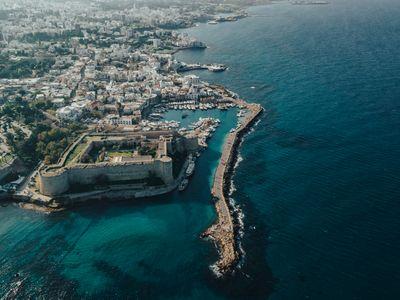 City guide · 9 minFamagusta (Gazimağusa)Famagusta (Gazimağusa) is North Cyprus' historic eastern port city — a medieval walled town of Lusignan and Venetian monuments on the island's east coast, and home to Eastern Mediterranean University (EMU), one of the TRNC's largest universities with close to 20,000 students from more than 100 countries. That student body underpins a deep, year-round rental market that sets Famagusta apart from the lifestyle-led north coast. The wider Famagusta District had a population of roughly 95,000 at the 2024 census. Famagusta is the most affordable of North Cyprus' three main markets. The average listed property price sits around €117,000 (roughly €1,150/m²), with one- and two-bedroom apartments broadly in the £105,000–£115,000 range and three-bedroom villas from around £485,000. Investor interest concentrates on the walled city and university quarter for student lets, and on the coastal villages north of the city — Yeni Boğaziçi and Tatlısu — for sea-view new-builds and holiday homes. Note this is the Turkish-administered city of Famagusta; the Republic of Cyprus' 'Ayia Napa / Famagusta District' guide covers the EU-controlled southern part of the same historic district (Ayia Napa, Protaras, Paralimni) and does not overlap. Every foreign purchase requires TRNC Permission to Purchase and title-deed due diligence — see the Important considerations below.
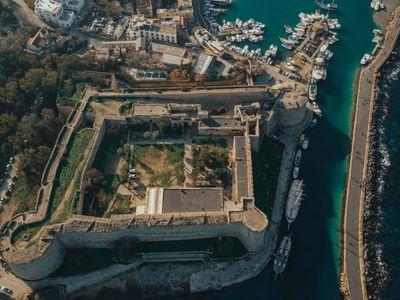 City guide · 9 minKyrenia (Girne)Kyrenia (Girne in Turkish) is North Cyprus' most-established and most-liquid property market — a Mediterranean harbour town backed by the Beşparmak (Pentadactylos) mountains on the island's north coast. Its horseshoe Venetian harbour, castle, and the Korineum and other golf resorts have made it the default choice for lifestyle buyers and conservative investors in the TRNC. The wider Kyrenia District had a population of roughly 99,000 at the 2024 census, the largest concentration of foreign residents in the north. Buyer demand clusters along the coastal villages east and west of the town — Esentepe, Çatalköy, Ozanköy, Bellapais, Lapta, Alsancak and Karşıyaka — most offering sea-and-mountain views. Pricing is the highest in North Cyprus but remains a fraction of the Republic's south: apartments average roughly £1,400–£1,600/m² and villas around £2,000/m², versus roughly €3,500/m² across the Green Line. One-bedroom apartments typically run €80,000–€120,000, two-beds €110,000–€150,000, and villas start near €300,000, with prime seafront villas from around £400,000. Gross rental yields sit around 6–8%, supported by year-round lifestyle tenants and seasonal holiday demand. Every foreign purchase in the TRNC requires Council of Ministers' Permission to Purchase (PTP) and careful title-deed due diligence — see the Important considerations below and the Cyprus Investor Guide. Note this guide covers the Turkish-administered north; the Republic of Cyprus' own guides (Limassol, Paphos, Larnaca, Nicosia, Ayia Napa) cover the south.