City guides
City guides (458)
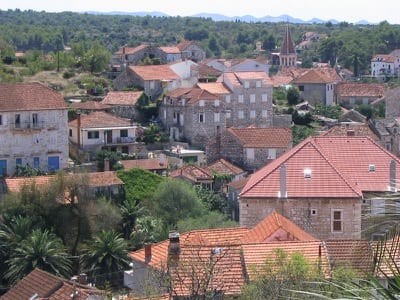

Milna City Guide
Croatia
Milna sits on the western tip of the island of Brac in a deep, sheltered bay that Venetian sailors called the bay of a thousand ships. There are two other Milnas on nearby Croatian islands, on Hvar and on Vis, and their coordinates differ by fractions of a degree, so any address must be confirmed against the land registry rather than a map search. This is the safest natural harbour on Brac and a genuine sailing address: it sits at the mouth of the Split Channel, making it a common first or last stop for Central Dalmatian charter traffic, and it holds two marinas. The buyer profile follows the boats, predominantly German, Austrian, Italian and Slovenian sailors buying a stone house within walking distance of a berth, in a village quieter and less commercial than Supetar. No settlement-level price index exists; the only reliable figures are island-wide, and ferry service to Split collapses from up to five sailings a day in summer to as few as one in winter, which is a genuine practical constraint for anyone planning year-round use.
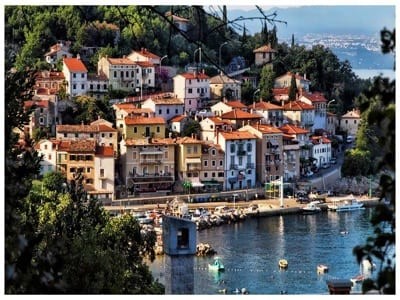
Moscenicka Draga City Guide
Croatia
Moscenicka Draga is a seaside settlement in Primorje-Gorski Kotar County, on the Opatija riviera under Mount Ucka, despite sitting geographically on the Istrian peninsula, which leads many feeds to mislabel it as part of Istria County. It is the seaside port below Moscenice, a separate medieval hilltop village 173 metres above it, connected by road and by 750 stone steps; a listing in Moscenice is a hillside stone-village property with no beach frontage, while a listing in Moscenicka Draga itself is waterfront, and the two are materially different products despite sharing a postcode. The draw here is Opatija-riviera prestige at a discount: nearby Opatija and Lovran transact well above this settlement's asking price, and the buyer base is the same Austrian, German, Slovenian and northern-Italian second-home cohort with a two-century Habsburg-era holiday tradition behind it. This is a very thin market, only 120 listings across a municipality of under 1,300 people, and the honest read is that most published price movement here is statistical noise rather than a real trend.
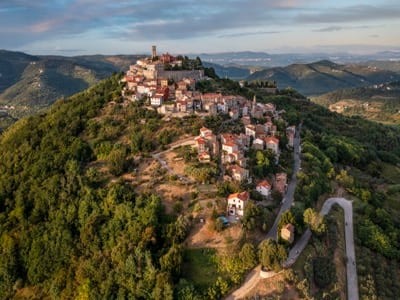
Motovun City Guide
Croatia
Motovun is an inland walled hilltop town in Istria, set 270 metres above the Mirna valley and known historically as Montona. It is a classic stone-house renovation market, Venetian and Istrian stone in the walled core and the surrounding hamlets of Brkac and Kaldir, bought as second homes and boutique rentals against a backdrop of truffles, Teran wine and Malvazija. Buyers follow the county pattern, Slovenian, German, Austrian, Czech, Hungarian and Italian. Asking prices reached 3,757 euros per square metre, up 3.2 percent year on year, across a thin market of only 115 properties for sale, where a single sale can move the average. One correction matters more than any price figure: the Motovun Film Festival, long the town's headline claim, relocated after 2023 to Petehovac in Gorski Kotar and now runs as a separate event called Cinehill. A great deal of travel and agency copy still sells Motovun on a festival that no longer happens there.
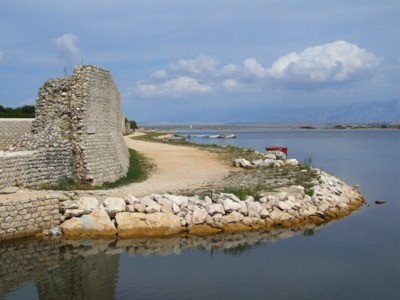
Nin City Guide
Croatia
Nin is a small town on the northern Dalmatian sand coast whose historic core sits on a 500-metre islet in a shallow lagoon, joined to the mainland by two sixteenth-century stone bridges. It was Roman Aenona and later Croatia's first royal town, and it remains the heritage and amenity anchor of the coast between Zadar and Vir. The town proper counts 2,705 residents across six settlements, of which the historic core holds only 1,101; Zaton, its neighbour within the same municipality, carries most of the tourism capacity, so listings advertised as Nin are frequently in Zaton. Buyers pay a premium over neighbouring Privlaka, Vir and Vrsi for the old town, the saltworks and Queen's Beach, and the official transaction average of 2,656 euros per square metre reflects that. The buyer base is the same Slovenian, German, Austrian and Czech drive-in second-home market as the rest of the sand coast, with an additional draw from the lagoon's therapeutic peloid mud.
Novalja City Guide
Croatia
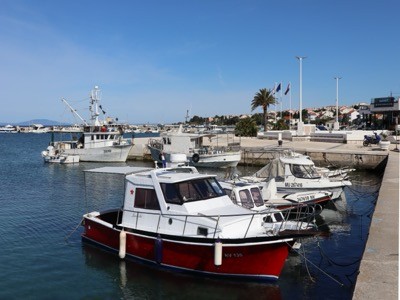
Novalja is a town on the northern part of the island of Pag, in Lika-Senj County rather than Zadar County, despite many booking and portal feeds mislabelling it as Dalmatian. Pag is the only Croatian island administratively split between two counties, with Novalja and the island's north under Lika-Senj and the town of Pag itself under Zadar. Novalja carries two almost disjoint markets stacked on top of each other. Zrce beach, around two kilometres away, is Croatia's leading party-tourism destination, home to several major beach clubs and driving a young, high-density, extremely short rental window. Stara Novalja, Lun and Metajna on the quieter north of the island are family and second-home territory, a completely different buyer. Asking prices reached 3,587 euros per square metre, but this is the most seasonally concentrated market in the whole Croatian set, with a genuine revenue window of roughly six to eight weeks in July and August and very little demand outside it.
Novi Vinodolski City Guide
Croatia
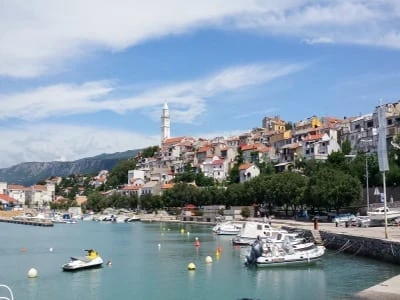
Novi Vinodolski is a mainland coastal town on the Adriatic Highway between Crikvenica and Senj, with the Vinodol valley rising behind it. It is the value proposition of the Kvarner coast: motorway-connected, with no bridge toll, no ferry timetable and no island premium, which makes it the natural target for Austrian, German, Slovenian and Hungarian buyers who drive rather than fly. Asking prices rose 11.85 percent in the year to July 2026, the strongest move among the Kvarner localities, from a base well below the island and Opatija-riviera comparables. The hinterland gives the town something most of the coast lacks, a working agricultural valley producing Zlahtina wine, and the marina brings private and charter boat owners into the buyer mix. Against that, the town carries a great deal of standing inventory, and the Adriatic Highway runs straight through the coastal strip, so sea view and through traffic are frequently the same aspect.
Novigrad City Guide
Croatia
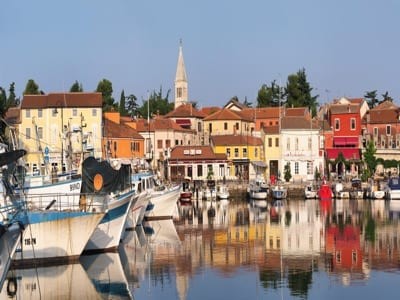
Novigrad, known historically by its Italian name Cittanova, is a medieval walled coastal town on a small peninsula in Istria County. It should not be confused with the Novigrad on Croatia's Dalmatian coast in Zadar County, a separate and cheaper market, or with Novigrad Podravski inland; any search or import should carry the county to disambiguate. This is the strongest boating town in this set of Istrian localities: Marina Nautica offers 365 wet berths plus 50 dry, takes vessels to around 50 metres, and operates year round with an 80 tonne travel lift, drawing charter-boat owners and yacht second-home buyers. A serious gastronomy reputation and Venetian-Gothic old town add Slovenian, German, Austrian and Italian buyers, the latter drawn by the town's bilingual Croatian-Italian character. Asking prices sit at 4,108 euros per square metre, but the year was flat to slightly negative, the only locality in this set with that profile, worth stating plainly rather than smoothing over.
Omis City Guide
Croatia
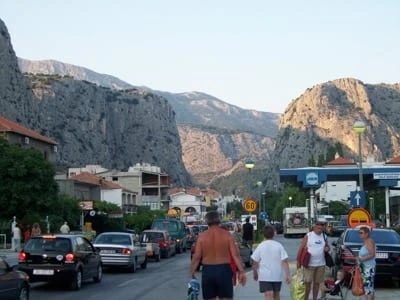
Omis is a mainland port town where the Cetina river exits its gorge into the Adriatic, roughly thirty to forty minutes south-east of Split on the coastal D8 road. There is a second, unrelated Omis on the island of Dugi otok in Zadar County, so any land-registry check must confirm postcode 21310 in Split-Dalmatia specifically. This is the only genuinely year-round town among the southern Dalmatian localities in this set, with 14,139 residents, working schools, shops and a hospital catchment, which makes it a real alternative to a summer-only shell for buyers who want a usable second home rather than a July-only villa. It sells on two distinct strengths: it is the cheapest way to be coastal within commuting distance of Split, and it is Croatia's adventure-sport centre, with whitewater rafting, canyoning and rock climbing on the Cetina gorge walls extending demand into the shoulder months either side of summer. The D8 runs directly through the town centre between the cliff and the sea, and it is a well-known summer bottleneck for the whole southern coastal route.
Opatija
Croatia
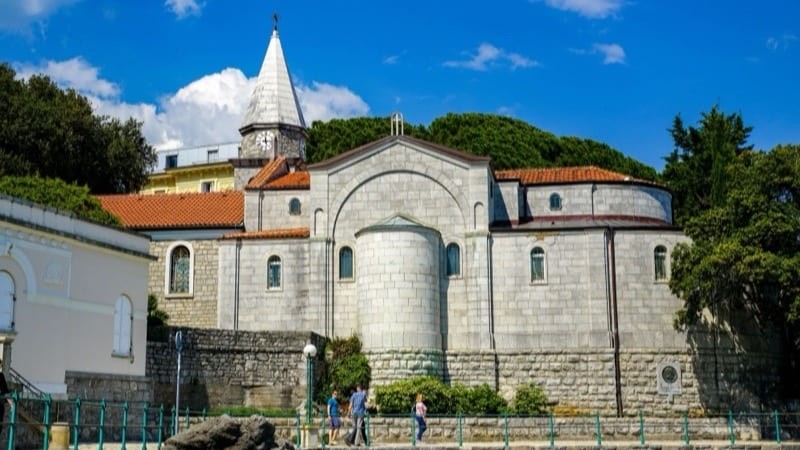
Opatija is Croatia's grande-dame Riviera resort on Kvarner Bay, a Habsburg-era spa town of Belle Époque villas, manicured parks and the famous 12 km Lungomare coastal promenade, 15 minutes from Rijeka and its airport links. It is the single most expensive residential market in Croatia, averaging roughly €5,340/m² in 2025, with premium and luxury stock typically €4,000-7,000/m² and trophy villas far higher. The luxury segment is deep: villa and penthouse listings routinely run €1.5m-11m. Gross rental yields are modest at around 3-4%, reflecting high capital values and a more year-round, wellness-and-conference clientele rather than pure beach seasonality. Some 2026 forecasts flag possible consolidation in the Lovran/Opatija premium band after strong recent gains, while nationally prices are seen rising 4-7%. Major investment continues, including a five-star Marriott-branded Riva's Hotel under construction at nearby Ičići. EU, EEA and Swiss buyers purchase freely; non-EU buyers acquire via reciprocity with Ministry of Justice consent (1-6 months), with OECD parity approaching. Opatija suits buyers prioritising prestige, year-round amenity and capital preservation over high yield. Its blend of heritage, healthcare and luxury hospitality makes it Croatia's premier blue-chip coastal address.
Orasac City Guide
Croatia
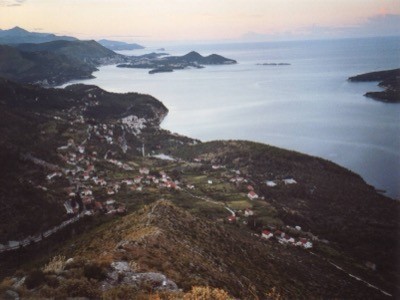
Orasac is a small coastal village on the Dubrovnik Riviera between Trsteno and Zaton, administratively part of the City of Dubrovnik and roughly twelve kilometres, fifteen to twenty minutes, from the old town. It is the answer to wanting Dubrovnik without Dubrovnik's crowds or old-town prices: close enough for dinner in the walled city, far enough out to have a bay, gardens and parking, while carrying Dubrovnik-adjacent brand value without old-town building restrictions. It carries the highest budget profile of the southern Dalmatian localities in this set, drawing British, Irish, Scandinavian, German and American buyers, a mix shaped substantially by the Sun Gardens Dubrovnik resort, which added more than two hundred residential units in a 2008-2009 rebuild and effectively created a managed-ownership sub-market within the village. No settlement-level price index exists for a village this size; Grad Dubrovnik's own official transaction figures are the closest defensible reference, and Orasac trades below the city median but above the rest of the county.
Poreč
Croatia
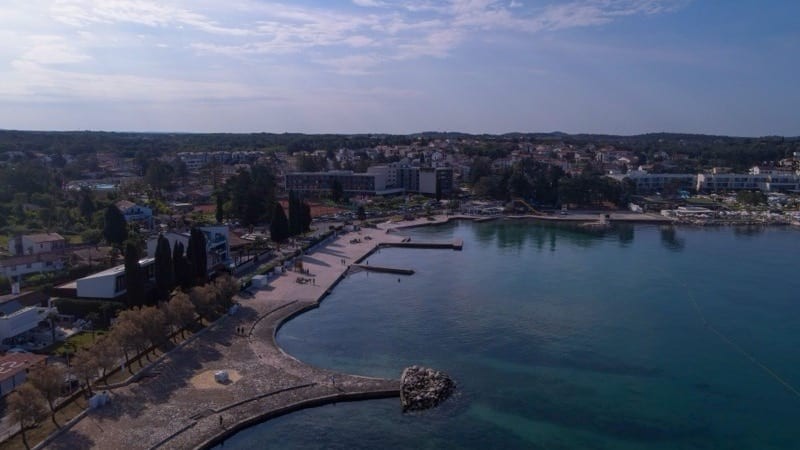
Poreč is western Istria's flagship tourist town, a peninsula old town crowned by the UNESCO-listed Euphrasian Basilica and ringed by the vast Plava Laguna and Zelena Laguna resort zones. Its blend of heritage, mass-tourism infrastructure and proximity to Italy and Central Europe makes it one of Croatia's strongest second-home and rental markets. Poreč apartment prices run roughly €3,350-4,000/m², with the wider Istria average about €3,744/m² in January 2026, up around 3.8% year on year; as an Istrian tourism hotspot, Poreč has seen some of the fastest local growth, with annual gains reported in the high single digits to mid-teens. Gross rental yields are attractive at around 5%, supported by record 2025 visitor numbers and strong German, Austrian and UK second-home demand; foreigners account for roughly 37.5% of Croatian transactions. National prices are forecast to rise 4-7% in 2026, Istria at the firmer end. EU, EEA and Swiss buyers purchase on equal terms; non-EU buyers acquire via reciprocity with Ministry of Justice consent (1-6 months), with OECD parity approaching. Poreč suits investors wanting a proven holiday-let market with heritage appeal, deep tourism infrastructure and a short reach to Western European feeder markets.
Privlaka City Guide
Croatia
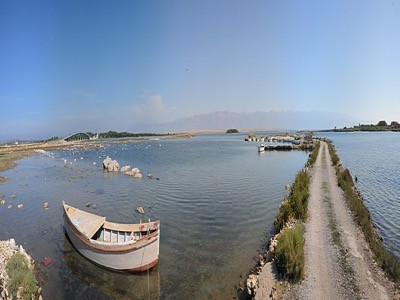
Privlaka is a low-lying coastal municipality on the peninsula between Nin's lagoon and the island of Vir, about 25 kilometres north-west of Zadar and half an hour from Zadar Airport. It sits on the one stretch of Croatian coast that is genuinely sandy at scale, a belt running from Nin through Sabunike, where the shallow water runs two to three degrees warmer than elsewhere in the country and is swimmable from May to October. That, rather than any old town or marina, is what sells it: this is a family second-home market, bought overwhelmingly by Slovenian, German, Austrian, Czech and Polish buyers within a day's drive. The scale of that market is unusual. Against 2,128 permanent residents the municipality carries roughly 12,300 tourist beds, close to six beds per resident, and it is structurally a holiday-home estate with a village inside it. Buyers should read the municipality's own tourism data before underwriting rental income, because capacity has been growing faster than demand for several years.
Pula City Guide
Croatia
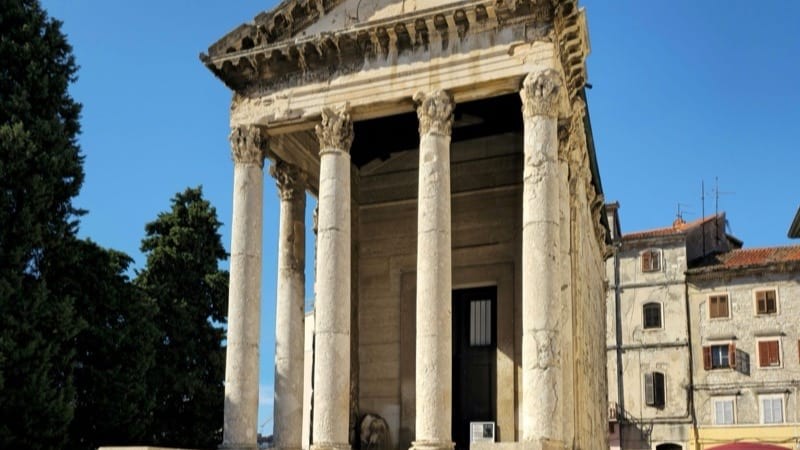
Pula is the largest city on the Istrian peninsula and Croatia's most underrated coastal-investor market, a Roman city with one of the world's best-preserved 1st-century amphitheatres (the Pula Arena), an Adriatic coastline of pine-shaded coves, and property prices that remain materially below Rovinj and South Dalmatia for comparable coastal lifestyle. Croatia's January 2023 Eurozone accession eliminated currency-conversion friction for EU buyers, and Pula's strong cultural identity, university (University of Pula / Sveučilište Jurja Dobrile), and shipbuilding-engineering economic base differentiate it from purely tourist-driven Croatian markets. The city's identity is shaped by overlapping waves of history, Roman, Venetian, Austro-Hungarian, Italian, and Yugoslav, and a diaspora-returning buyer base from Italy, Slovenia, Germany, and Croatian-descent second-generation Europeans is materially driving the current market. The 2026 annual property tax (replacing the prior holiday-home levy) sets the new operating cost baseline for non-residents and STR investors.
Rovinj
Croatia
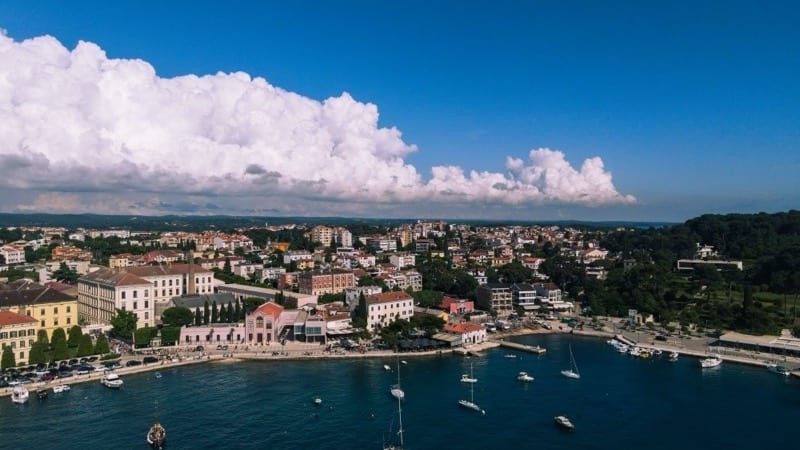
Rovinj is Istria's blue-chip address and one of Croatia's most internationally sought coastal towns, where a romantic Venetian old town crowned by St Euphemia's basilica meets a cluster of five-star resorts and marinas. In 2025-2026, apartment prices average roughly 3,500-5,000 EUR per m2, with prime renovated sea-view and old-town stock and new luxury developments reaching 4,000-7,000 EUR per m2, putting Rovinj alongside Split, Dubrovnik and Opatija at the top of the national price table. Supply is structurally tight, especially inside the protected old town, so values have ridden the national 10-13% 2025 surge and are expected to keep firming even as growth normalises to mid-single digits in 2026. Gross rental yields are modest at around 3-3.5%, reflecting high capital values, but Rovinj's brand strength delivers exceptional occupancy and premium nightly rates across a long Istrian season. EU, EEA and Swiss buyers purchase freely; non-EU nationals (UK, US, Australia, Argentina, Brazil and others) buy under Croatia's reciprocity regime with ministry approval. German and Austrian buyers dominate foreign demand. A 2025 annual property tax of 0.60-8 EUR per m2 now applies.
Savudrija City Guide
Croatia
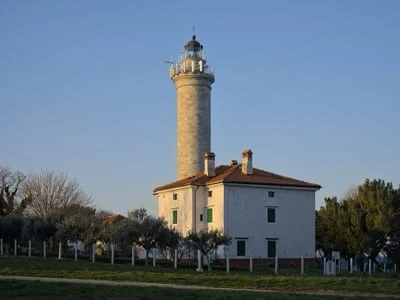
Savudrija sits on Croatia's northwesternmost cape, part of the town of Umag, and is Istria's golf-and-luxury pocket, anchored by the Kempinski Hotel Adriatic and PGA National Croatia, Istria's first championship eighteen-hole course. Trieste is around fifty-six kilometres away, which draws a heavily Austrian, German and northern-Italian second-home and golf-led buyer base, alongside windsurfers who come for three converging local winds. The nekretnine.hr sub-zone covering Savudrija asks 5,040 euros per square metre, up 13.4 percent year on year, the most expensive zone in Umag municipality and the highest entry point in this Istrian set. That price already embeds the Kempinski and golf premium. The defining constraint is scale: the settlement has 195 permanent residents and is falling, effectively a seasonal address whose year-round services sit in Umag proper.
Split City Guide
Croatia
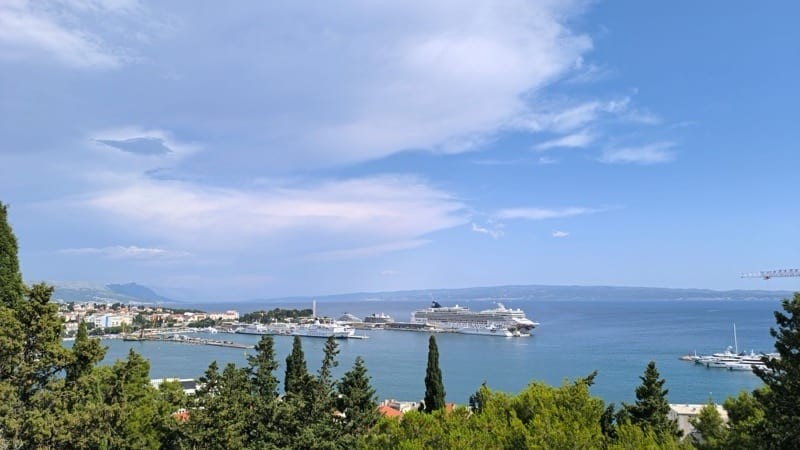
Split is Croatia's second-largest city and the cultural capital of Dalmatia — population 161K (city) / 346K (county). The Old Town centres on the 4th-century Diocletian's Palace (UNESCO 1979, one of the world's largest Roman palaces still in continuous use — ~3,000 people live within the former palace walls today). Split combines this heritage with the Adriatic ferry terminus (gateway to Hvar, Brač, Vis, Korčula), the Marjan Hill peninsula, the Bačvice Beach, and a rapidly-growing foreign-buyer property market dominated by UK, German, US, Italian, and Northern European buyers. Average property prices reached €5,183-€5,258/m² in September 2025 (+13.85-14.16% YoY) — among Croatia's strongest appreciations. Prime neighbourhoods (Old Town, Bačvice, Zenta, Meje under Marjan) reach €4,000-€5,000+/m² for quality properties.
Starigrad City Guide
Croatia
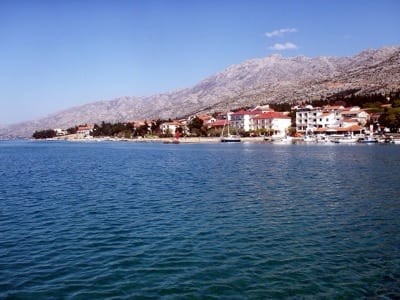
Starigrad, formally Starigrad-Paklenica, is a mainland municipality on the Velebit Channel where the Velebit massif rises directly behind a thin coastal ribbon. It is not to be confused with Stari Grad, a UNESCO-listed town on the island of Hvar in Split-Dalmatia County; the two names are routinely interleaved on the same portal searches, and any address must be verified against the land-registry cadastral municipality, never the advertisement alone. The buying case here is activity rather than resort: Paklenica National Park sits inside the municipality, Anica kuk is Croatia's most famous big wall for climbers, and the Zrmanja canyon is a short drive away. Buyers are Central European drive-in second-home owners and outdoor-sport purchasers rather than the beach-resort crowd that defines most of this coast, and the market does not appear on lists of Croatia's most popular foreign-buyer locations. The Velebit Channel is also one of the windiest inhabited stretches in Europe, and that bura is a genuine specification issue for any building here, not a footnote.
Sukosan City Guide
Croatia
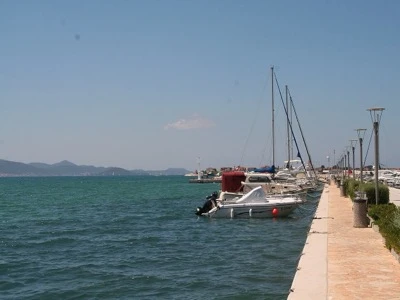
Sukosan sits midway between Zadar and Biograd na Moru on the northern Dalmatian coast, and it is defined by the largest marina on the Croatian Adriatic. D-Marin Dalmacija in Zlatna luka bay holds 1,076 sea berths and 300 dry-dock places, takes vessels to 70 metres and six metres of draft, and operates travel lifts to 80 tonnes with a 250-tonne lift due in 2026. That single facility gives the town a buyer profile unlike its neighbours: berth holders and charter operators, disproportionately German, Austrian, Slovenian, Italian and Czech, buying within walking distance of a boat. Zadar Airport is nine to eleven kilometres away, the closest of any coastal resort of consequence, and Zadar old town is fifteen minutes by road, which supports genuine year-round resident demand rather than a summer shell. Sukosan also sits in Croatia's most concentrated new-build belt, and the resulting supply of near-identical two-bedroom sea-view apartments is the main thing a buyer should price for.
Supetar City Guide
Croatia
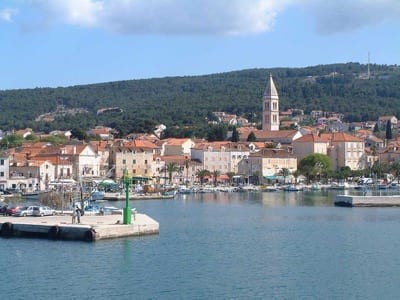
Supetar is the largest town and main ferry port on the island of Brac, on its north coast facing Split, and the administrative centre of the island since 1827. There are two other places called Supetar in Dubrovnik-Neretva County, so any address should be confirmed by postcode 21400 rather than name. Fourteen car-ferry sailings a day each way in high season, and nine to twelve in low season, make this close to a commuter service, and it is the single biggest practical difference between Supetar and the smaller villages on the same island: a Split job, hospital or airport are all realistically reachable, which supports year-round living in a way the island's villages do not. That widens the buyer pool beyond holiday-home owners to relocators and remote workers, alongside the usual German, Austrian, Czech, Slovak, Polish and British second-home buyers. The stock is also different from the villages, with more modern apartments and purpose-built letting units, which suits a buyer who wants a turnkey rental rather than a restoration project.
Sveti Filip i Jakov City Guide
Croatia
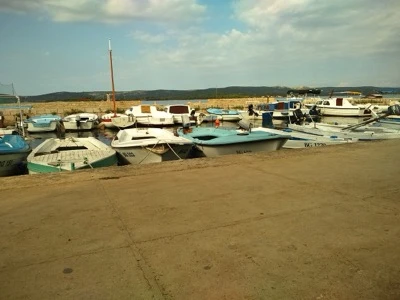
Sveti Filip i Jakov is a mainland coastal municipality on the sheltered Pasman channel, three kilometres from Biograd na Moru, which functions as its real town centre for shops, schools and marina services. The official transaction average of 1,850 euros per square metre is the lowest of the northern Dalmatian coastal municipalities, roughly 35 percent below neighbouring Sukosan. A three-kilometre promenade links the settlement through Turanj to Sveti Petar na Moru along sheltered, shallow water, which is the defining family draw: this channel is materially calmer than the open Zadar channel that Sukosan and Nin face. There is no marina economy here and no commuter base, so the letting season is almost purely summer. The single fact every buyer needs before pricing a purchase is that the municipality's 2025 property tax sits at 8 euros per square metre, the national statutory ceiling, on a property that the official measure prices well below its neighbours.