Complete Investor Guide to Japanese Property

Foreign-friendly ownership, ultra-low rates, and weak yen create a compelling entry point into Asia's most stable property market

Updated February 14, 2026Advanced25 min read

Rental yield
4.5%
Gross, indicative
Price growth
9.3%
Year on year · Sep 2026
Transfer tax
3.0%
Currency
JPY

Key takeaways

  • Language barrier -- most legal documents, contracts, and government procedures are in Japanese; professional translation and bilingual advisors are essential
  • Building depreciation -- Japanese wooden buildings depreciate to zero value over 22 years for tax purposes (RC structures: 47 years), affecting resale dynamics
  • Natural disaster risk -- earthquake, typhoon, and flood risk require careful building inspection and adequate insurance coverage

Market Overview

Japan's economy is experiencing a structural shift with the Bank of Japan cautiously normalising monetary policy after decades of ultra-low rates. GDP growth remains modest at 1-2%, but the weak yen has supercharged tourism and made Japanese assets attractive to foreign investors. Tokyo condominium prices have reached all-time highs, while regional cities offer higher yields. The market presents a rare combination of a stable, developed economy with currency-driven entry opportunities.

Country
Japan
Currency
JPY
Population
124.5 million (declining ~500K/year, highly urbanised)
GDP growth
1.2-1.8% (2024-2025, modest but stable)
Inflation
2.5-3.0% (above BOJ 2% target for the first time in decades)

Key industries

  • Technology & Semiconductors
  • Automotive Manufacturing
  • Tourism & Hospitality
  • Financial Services
  • Electronics & Robotics

Restrictions

Foreign Ownership Rights

Open

Japan is one of the most foreign-friendly property markets in Asia. Foreign nationals have exactly the same property ownership rights as Japanese citizens. There are no restrictions on the type, number, or value of properties a foreigner can purchase. Full freehold ownership is available. No government approval is required. No reciprocity requirements exist. Property ownership does not require Japanese residency or a visa.

  • No restrictions whatsoever on foreign ownership of residential, commercial, or industrial property
  • Full freehold ownership available -- identical rights to Japanese nationals
  • No government approval or permits required for foreign buyers
  • No residency, visa, or reciprocity requirements for property ownership
  • No limit on number of properties or total value owned
  • Foreign Investment in Land Act (FEFTA) requires post-acquisition notification for certain property types (not approval, merely reporting)
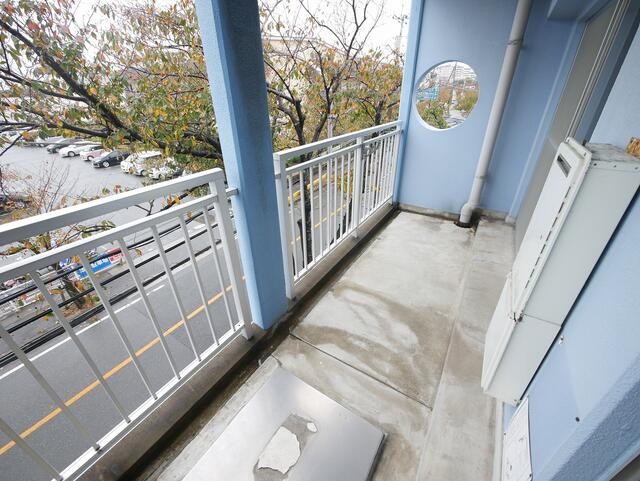
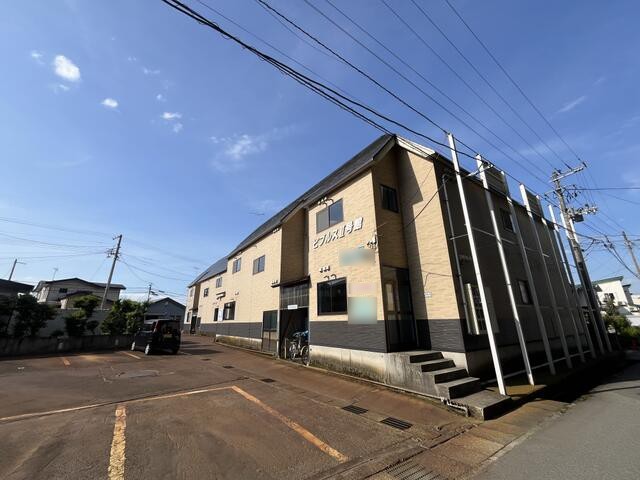
On INTRIC now — Residences in Japan are open to enquiry straight from this page.

Taxes & Fees

Real Estate Acquisition Tax (Fudousan Shutoku Zei)

3-4% of assessed value (effectively 1.5-2.5% of market price)

One-time tax levied by the prefectural government when acquiring real estate. Calculated on the fixed assets tax assessed value (not the market price), which is typically significantly lower than the purchase price.

Additional information

  • Standard rate: 4% of assessed value (fixed assets tax assessment, not market price)
  • Reduced rate: 3% for residential land and buildings (until March 2027)
  • Assessed value is typically 50-70% of market value
  • Payable once, within 6 months of acquisition

Exemptions

  • Reduced rate for residential land purchases
  • New-build residential dwellings may qualify for further reductions

Registration Tax & Stamp Duty

0.3-2% (registration) + JPY 10,000-480,000 (stamps)

Registration and License Tax is paid when registering property ownership at the Legal Affairs Bureau. Stamp Duty (separate from Registration Tax) is paid via revenue stamps on legal documents including purchase contracts.

Additional information

  • Registration Tax (Touroku Menkyozei): 2% standard, reduced to 0.3% for residential
  • Stamp Duty (Inshi Zei): JPY 10,000-480,000 depending on contract value
  • Revenue stamps must be affixed to contracts
  • Reduced rates available for specific property types until March 2027

Exemptions

  • Reduced registration tax rate for residential property
  • First-time buyers of certain property types may qualify for further reduction

Rental Income Tax

5-45% progressive (plus 2.1% reconstruction surtax)

Net rental income is taxed at progressive rates from 5% to 45% (plus 2.1% reconstruction surtax). Extensive deductions are available including building depreciation (a major tax advantage for property investors), property management fees, repairs, insurance, and mortgage interest.

Additional information

  • Progressive rates: 5% (up to JPY 1.95M) to 45% (over JPY 40M)
  • Deductible expenses: depreciation, repairs, management fees, insurance, interest, property tax
  • Non-residents taxed at same rates but file through Tax Representative
  • Withholding tax of 20.42% applied at source for non-resident landlords (credited against final tax)

Exemptions

  • Generous depreciation allowances (wooden: 22yr, RC: 47yr straight-line)
  • Blue return filing allows additional JPY 650,000 deduction

Capital Gains Tax

20.3% (long-term, held >5 years) or 39.6% (short-term, held 5 years or less)

Capital gains on property sales are taxed at different rates depending on holding period. The distinction between short-term (5 years or less) and long-term (over 5 years) is significant. Holding period is calculated from January 1 of the year of acquisition, not the actual purchase date.

Additional information

  • Short-term (5 years or less): 39.63% (30% income + 9% resident + 0.63% surtax)
  • Long-term (over 5 years): 20.315% (15% income + 5% resident + 0.315% surtax)
  • Holding period calculated from January 1 of acquisition year
  • Non-residents exempt from resident tax component (30% short / 15% long)

Exemptions

  • Primary residence exclusion of JPY 30M (for residents)
  • Rollover relief for certain property exchanges

Fixed Asset Tax & City Planning Tax (Annual)

1.4% (Fixed Asset Tax) + up to 0.3% (City Planning Tax) of assessed value

Annual tax levied by municipal governments on land and buildings. Calculated on the fixed assets tax assessed value, which is typically 50-70% of market value. Residential land benefits from significant reductions.

Additional information

  • Fixed Asset Tax: 1.4% of assessed value (standard rate)
  • City Planning Tax: up to 0.3% of assessed value (additional, in urban areas)
  • Assessed value reviewed every 3 years
  • Residential land reduced to 1/6 of assessed value for small plots (up to 200sqm)

Exemptions

  • Small residential land: assessment reduced to 1/6 (up to 200sqm)
  • New residential buildings: 50% reduction for 3-5 years

Requirements

Physical Visit

Optional

Japan does not require physical presence for property purchase -- transactions can be completed remotely with proper documentation and power of attorney. However, visiting is strongly recommended for due diligence, building inspections, and neighbourhood assessment.

Process

  1. Engage a licensed real estate agent (Takkenshi) for property search and viewings
  2. Conduct building inspections (especially earthquake resilience for older buildings)
  3. Assess neighbourhood, transport links, and tenant demand
  4. Meet with legal and tax advisors in person

Alternatives

  • Remote purchase via licensed agent with power of attorney is possible
  • Video property inspections and virtual tours

Company Incorporation

Optional

Not required for individual property purchases. However, establishing a GK (Godo Kaisha -- similar to LLC) or KK (Kabushiki Kaisha -- joint stock company) can provide tax benefits for larger portfolios, particularly around depreciation deductions and income structuring.

Process

  1. Determine if corporate structure provides tax advantage (consult tax advisor)
  2. Register company with Legal Affairs Bureau
  3. Obtain corporate seal (Hojin In)
  4. Open corporate bank account (requires registered office address)

Alternatives

  • Direct personal ownership (most common for individual investors)
  • GK (Godo Kaisha) structure for portfolio investors and tax optimisation
  • Trust structure for estate planning

Japanese Bank Account

Optional

Recommended for ongoing property management, rent collection, and expense payments. Opening a bank account in Japan is challenging for non-residents -- most major banks require a Japanese address and residence card. Property management companies can serve as intermediaries for rent collection.

Process

  1. Visit bank branch in person (required by most banks)
  2. Provide passport, residence card (if applicable), and proof of address
  3. Some banks accept non-residents with property ownership documentation
  4. Allow 2-4 weeks for account approval

Alternatives

  • Use property management company account for rent collection
  • International bank with Japanese operations (e.g., Prestia by SMBC Trust)

Tax Representative (Nozei Kanrinin)

Required

Non-resident property owners who earn rental income or sell property in Japan must appoint a Tax Representative (Nozei Kanrinin) -- a person resident in Japan who handles tax notifications and filings on the owner's behalf. This is a legal requirement, not optional.

Process

  1. Select a tax representative (can be your property manager, accountant, or lawyer)
  2. Submit Nozei Kanrinin notification to the local tax office
  3. Tax representative handles annual tax filings and correspondence
  4. Must be appointed before first tax obligation arises

Alternatives

  • Self-filing if you have a Japanese address and Japanese language ability

On INTRIC now — Still open in Japan — every one of these answers enquiries directly.

Purchase Steps

  1. Purchase Application (Kaitsuke Moushikomi)

    Duration
    1-4 weeks
    Cost
    Agent fees and translation costs

    Submit a Purchase Application (Kaitsuke Moushikomi) to express formal intent. This is typically not legally binding but shows serious interest. Work with a licensed real estate agent (Takkenshi) to identify properties and prepare your offer.

    Requirements

    • Valid passport for identification
    • Proof of funds or financing pre-approval
    • Licensed real estate agent (Takkenshi) engaged
    • Japanese translator or bilingual agent

    Tips

    • Always use a licensed agent (check Takken license number)
    • Request building inspection reports and earthquake resistance certification
    • Verify building management status and reserve fund adequacy for condos
  2. Important Matters Explanation (Juuyou Jikkou Setsumeisho)

    Duration
    1-2 weeks
    Cost
    No direct cost (included in agent commission)

    The seller's licensed agent is legally required to provide the Important Matters Explanation (Juuyou Jikkou Setsumeisho) -- a comprehensive property disclosure document covering land rights, building structure, restrictions, infrastructure, hazard zones, and other material facts. This must be delivered and explained before contract signing.

    Requirements

    • Licensed agent must conduct the explanation
    • Document must be in writing
    • Buyer must acknowledge receipt and understanding
    • Professional translation recommended for non-Japanese speakers

    Tips

    • Have an independent bilingual lawyer review this document carefully
    • Pay special attention to land use restrictions and building regulations
    • Check for any pending construction or infrastructure projects nearby
  3. Contract Signing (Baibai Keiyaku)

    Duration
    1 day (signing ceremony)
    Cost
    Earnest money deposit: typically 5-10% of purchase price

    Sign the formal Sale and Purchase Agreement (Baibai Keiyakusho) and pay the earnest money deposit. The contract is legally binding. If the buyer cancels, they forfeit the earnest money. If the seller cancels, they must return double the earnest money.

    Requirements

    • Hanko (personal seal) or signature -- foreigners may use signature
    • Earnest money deposit (typically 5-10%)
    • Identification documents (passport)
    • Seal registration certificate (Inkan Shomeisho) if using hanko

    Tips

    • Foreigners can use a signature instead of hanko at most transactions
    • Ensure contract includes provisions for discovered defects (kashitanpo)
    • Understand the earnest money forfeiture/doubling mechanism before signing
  4. Settlement and Registration (Kessai & Touki)

    Duration
    2-4 weeks after contract signing
    Cost
    Balance of purchase price, plus registration fees, agent commission (3% + JPY 66,000 + tax), and judicial scrivener fees

    Pay the remaining balance and complete property registration (Touki) at the Legal Affairs Bureau (Houmukyoku). A judicial scrivener (Shihou Shoshi) handles the registration process, which transfers legal ownership. Title insurance does not exist in Japan -- the government registration system serves as the title guarantee.

    Requirements

    • Full payment of remaining purchase price
    • Judicial scrivener (Shihou Shoshi) engaged for registration
    • Tax payment for Real Estate Acquisition Tax and Registration Tax
    • Non-resident tax representative (Nozei Kanrinin) appointed if applicable

    Tips

    • The judicial scrivener is essential -- do not attempt registration without one
    • Appoint a tax representative before settlement if you are a non-resident
    • Keep copies of all registration documents for future tax filings

Property Types

Completed Properties (Manshon & Houses)

Existing apartments (manshon) and houses ready for occupation or rental. Japan's resale market offers strong value, particularly for RC (reinforced concrete) condominiums in central locations.

Advantages

  • Immediate rental income from day one
  • Proven rental track record and tenant in place
  • Known building condition and management quality
  • Earthquake resilience verified (post-1981 or post-2000 building codes)

Disadvantages

  • Tax depreciation reduces over building age (wooden 22yr, RC 47yr lifecycle)
  • Older buildings may not meet current earthquake standards (pre-1981)
  • Renovation costs for older properties can be significant
  • Japanese market stigma around older properties affects resale to domestic buyers
Typical timeline
4-8 weeks from contract signing to property registration
Financing options
Cash purchase (most common for non-residents), Resident foreign buyer mortgage, Corporate structure loans

Off-Plan Properties (Shinchiku)

New-build condominiums and houses purchased before or during construction, common in Tokyo's luxury market and resort developments.

Advantages

  • Latest earthquake-resistant construction technology
  • Modern amenities and energy efficiency
  • Potential capital appreciation during construction
  • Developer warranty coverage

Disadvantages

  • Construction delays (typically 6-12 months for large projects)
  • No immediate rental income during construction
  • Developer pricing premium over resale market
  • Limited negotiation room on price
Typical timeline
12-36 months from reservation to completion and handover
Financing options
Staged payment plans from developers, Cash purchase, Mortgage arranged at completion (residents only)

Secondary Market (Resale)

Resale properties in the secondary market, including both individual apartments and entire apartment buildings (ichitto manshon) for portfolio investors.

Advantages

  • Proven rental history and tenant quality
  • Negotiable pricing (especially for older buildings)
  • Immediate income stream
  • Lower entry price for value investors

Disadvantages

  • Potential maintenance and renovation requirements
  • Older earthquake standards (verify post-1981 compliance)
  • Limited remaining depreciation benefit for tax purposes
  • Strong tenant protection laws complicate vacancy management
Typical timeline
4-8 weeks from offer acceptance to registration
Financing options
Cash purchase, Specialist foreign buyer loans, Renovation loans (residents only)

Investment Drivers

Weak Yen Creates Buying Opportunity

PositiveMedium termHigh confidence

The Japanese yen has weakened significantly against major currencies since 2022, falling from ~110 JPY/USD to 140-160 JPY/USD range. For USD, EUR, GBP, and SGD investors, this effectively creates a 25-40% discount on Japanese property compared to five years ago. While the yen may recover, current exchange rates represent a compelling entry point.

Tourism Boom and Record Visitor Numbers

PositiveLong termHigh confidence

Japan welcomed a record 31.9 million foreign visitors in 2024, surpassing its pre-pandemic peak. Tourism infrastructure investment, visa relaxations for multiple nationalities, and the global appeal of Japanese culture, cuisine, and natural beauty continue to drive demand for hospitality and vacation properties, particularly in Niseko (ski), Kyoto (cultural), and Okinawa (beach).

Unrestricted Foreign Ownership Rights

PositiveLong termHigh confidence

Japan offers one of the most foreign-friendly property ownership regimes in Asia. Foreigners have identical property rights to Japanese nationals -- full freehold ownership, no approval required, no reciprocity requirements, no restriction on number of properties. This legal clarity provides strong protection for international investors.

Safe-Haven Economy and Institutional Stability

PositiveLong termHigh confidence

Japan is the world's fourth-largest economy with world-class infrastructure, rule of law, low crime, and institutional stability. The property registration system is highly reliable, and legal protections for property owners are robust. For investors seeking capital preservation in a safe-haven jurisdiction, Japan ranks among the best globally.

Osaka IR Casino and Infrastructure Development

PositiveMedium termMedium confidence

Osaka's Integrated Resort (IR) casino project, awarded to MGM/Orix consortium for Yumeshima island, is expected to open by 2030. The project is projected to attract 20+ million annual visitors and drive substantial property demand in southern Osaka. Additionally, the 2025 Osaka World Expo is boosting regional infrastructure investment.

Demographic Shifts Creating Dual Market

NeutralLong termHigh confidence

Japan's population is declining at approximately 500,000 per year, creating structural oversupply in regional areas. While this depresses prices in rural Japan, it creates affordable entry points for investors. In contrast, Tokyo and Osaka continue to see population inflows and price appreciation, creating a two-speed market that rewards careful location selection.

Visa & Residency

Property purchase in Japan does NOT grant any visa or residency rights. Japan does not have an investor visa or golden visa programme tied to property ownership. However, several visa categories may be relevant to property investors who wish to reside in Japan and manage their investments directly.

Business Manager Visa (Keiei Kanri)

The Business Manager visa is for individuals who establish and manage a business in Japan. Property investors who manage a meaningful rental portfolio as a business -- typically 3 or more rental properties generating substantial income -- may qualify. Requires a registered office address, minimum JPY 5 million in capitalisation or hiring 2+ full-time Japanese employees, and a viable business plan.

Minimum investment
JPY 5,000,000 (~USD 33,000) minimum capitalisation or 2+ full-time employees
Duration
1 year initially, renewable to 3 or 5 years based on business performance
Processing time
1-3 months from application submission

Benefits

  • Permission to reside and work in Japan managing your business
  • Renewable visa (initially 1 year, extendable to 3 or 5 years)
  • Can bring spouse and children on dependent visas
  • Path to permanent residency after 10 years of continuous residence (or 1 year with points system)

Requirements

  • Registered office address in Japan (not residential address)
  • Business plan demonstrating viability
  • JPY 5M capitalisation or 2+ full-time Japanese employees
  • No criminal record
  • Sufficient funds to support yourself

Highly Skilled Professional Visa (Kodo Senmonshoku)

Japan's Highly Skilled Professional (HSP) visa uses a points-based system (academic background, work experience, income) to fast-track residency for qualified professionals. While not directly property-related, high-net-worth property investors who also engage in business or professional activities in Japan may qualify. Scoring 80+ points allows permanent residency application after just 1 year.

Minimum investment
No minimum investment; qualification based on points system (salary, age, education, experience)
Duration
5 years (indefinite period for 80+ points achievers)
Processing time
2-4 weeks (expedited processing)

Benefits

  • Permission to reside in Japan
  • Renewable visa
  • Access to Japanese social services
  • Path to permanent residency via points system (potentially in 1 year)

Requirements

  • Score 70+ points on the HSP points table
  • Valid employment contract or business plan in Japan
  • Passport valid for duration of stay
  • No criminal record

Immigration requirements change frequently. This information is for general guidance only and does not constitute legal or immigration advice. Consult a licensed immigration lawyer (Gyousei Shoshi) or the Immigration Services Agency of Japan for current requirements specific to your nationality and circumstances.

Financing

Japan has extremely low interest rates by global standards, a legacy of decades of monetary easing by the Bank of Japan. However, accessing this cheap financing as a foreign buyer is challenging. Most major Japanese banks -- Mitsubishi UFJ, Sumitomo Mitsui, Mizuho -- require Japanese residency and employment history. Non-resident foreigners overwhelmingly purchase Japanese property in cash. For resident foreigners with stable visa status and employment, mortgage access improves significantly, though documentation requirements are extensive.

Mortgage availability

Closed to foreign buyers

Japanese banks strongly prefer lending to residents with stable visa status and employment in Japan. Non-resident foreign buyers will find it very difficult to obtain a Japanese mortgage -- most non-residents purchase in cash. A small number of specialised lenders and regional banks serve foreign buyers, but terms are restrictive and approval is not guaranteed.

Typical LTV
50-70% for resident foreigners; non-residents typically must purchase in cash or secure 30-50% LTV from specialist lenders
Interest rates
1-3% (among the lowest globally, reflecting Bank of Japan monetary policy; typically 1.5-2.5% variable, 2-3% fixed)
Term length
Up to 35 years for residents; shorter terms (10-20 years) for non-standard applicants

Requirements

  • Valid residence status (visa) for most lenders
  • Stable employment in Japan (minimum 1-3 years for most banks)
  • Japanese bank account with transaction history
  • Property appraisal by bank-approved assessor
  • Personal guarantee (guarantor company may be accepted)
  • Life insurance assignment on the loan

Alternative financing

International Bank Loans (Resident Foreigners)Available through select international banks and specialized Japan-focused lenders
Some international banks with Japanese branches (e.g., Prestia by SMBC Trust, Shinsei Bank) offer mortgage products to foreign nationals with residence status. Terms are generally more favourable than for non-residents.
Developer Payment PlansCommon for new developments, offered by some major developers
Some Japanese developers offer instalment payment plans for new-build properties, particularly condominiums. These are not true mortgages but structured payment schedules during the construction period.
Home Country Equity ReleaseDepends on home country banking relationship
Many foreign investors use equity from properties in their home country to fund Japanese purchases outright. This avoids the difficulty of obtaining Japanese bank financing as a non-resident.
Corporate Structure FinancingVia Japanese subsidiaries of global banks for corporate clients
Setting up a Japanese Godo Kaisha (GK) or Kabushiki Kaisha (KK) to hold property can sometimes unlock corporate lending options. This approach is common for larger portfolio investors.

Mortgage terms and availability vary significantly based on residency status, visa type, property location, and individual financial circumstances. Consult a licensed mortgage broker or bank in Japan for current options.

Figures are indicative and subject to change. Regulations, taxes and market conditions vary by jurisdiction. Do your own due diligence and seek independent legal and financial advice.

Follow INTRIC for market data and new listings.