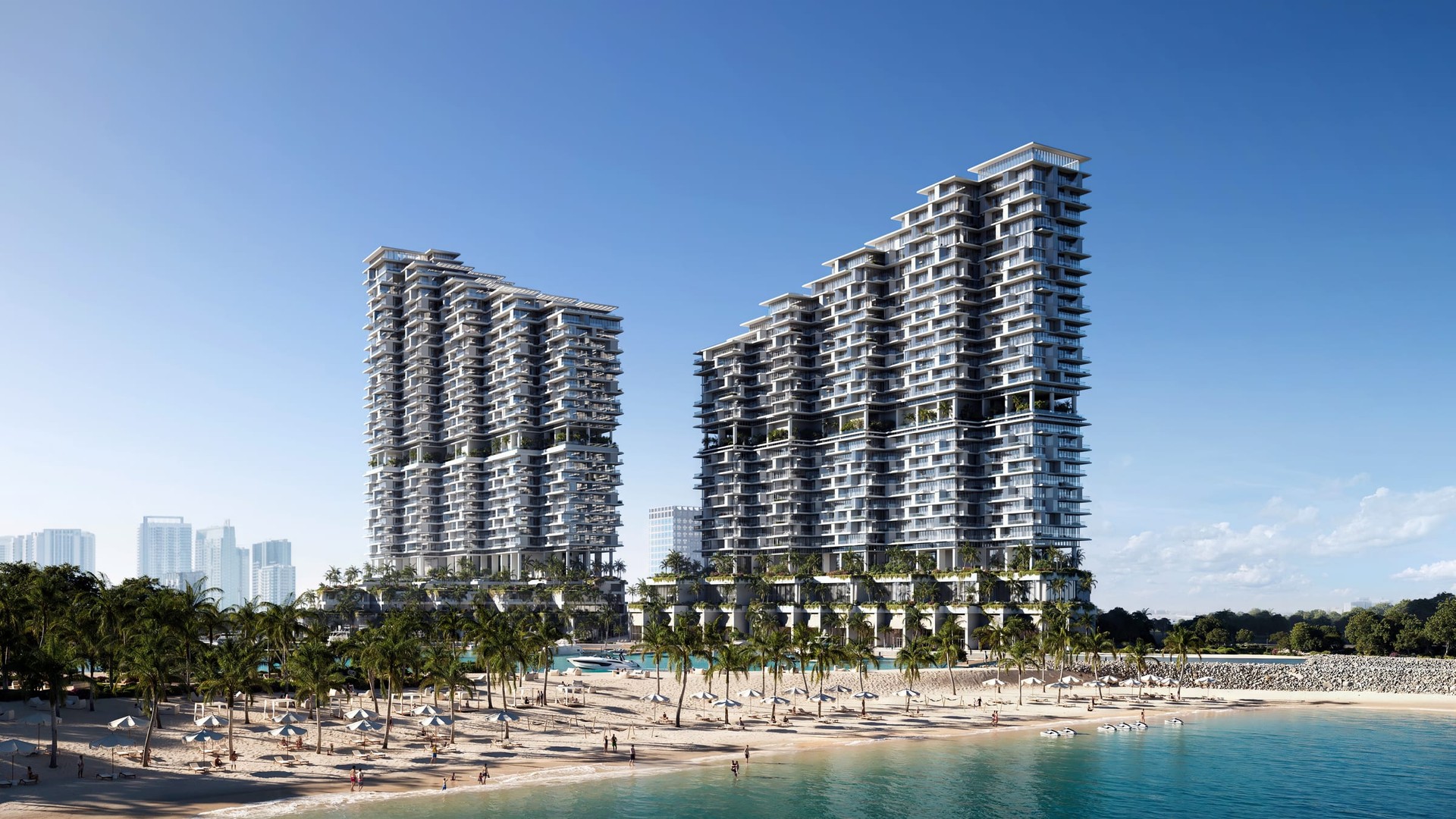
Wealth preservation is the dominant intent behind UHNW property purchases in 2026. A record wealth-creation cycle is meeting an uncertain macro backdrop, and prime property in stable jurisdictions is where a lot of that capital goes to sit. Around 22% of UHNWIs plan to add luxury residential property this year, mostly to hold value across currencies and jurisdictions rather than to chase yield. Tax change is the trigger: the UK’s abolition of its non-dom regime produced the world’s largest millionaire outflow, and property is how the departing capital lands. Capital at risk.
A record wealth-creation year meeting an uncertain macro backdrop.
Because prime property is functioning as a store of value, not a yield play. Knight Frank puts the global UHNWI population at 713,626 in 2026, up roughly 32% in five years, which is around 89 new UHNWIs every day, and reports that around 22% of them plan to add luxury residential property this year, largely to hold value across currencies and jurisdictions rather than to chase yield.
The allocation data supports the same read. Capgemini’s 2026 survey of more than 6,500 HNW investors puts total HNWI wealth at around US$98.3 trillion, with capital rotating back into public equities as markets rallied, and real estate holding its place as a core preservation asset alongside cash. For UHNW families, a prime home in a stable jurisdiction is a currency hedge, an estate-planning tool, and a place to live, in one line item.
London makes the logic explicit. Prime London runs at roughly 3 to 4.5% gross yields on Knight Frank data, numbers no yield-driven investor would cross a border for. Investors hold it anyway, for sterling safety, deep liquidity, proximity to UK education, and clean structures for passing wealth on. The yield is the price of admission to the preservation characteristics, not the reason for the ticket.
Prime price movements from the Knight Frank Prime International Residential Index (PIRI 100), 2026.
The big moves were currency stories and tax stories. The PIRI 100 average of around +3.2% hides a very wide spread, and the top of the table is where the preservation logic is most visible.
| Market | 2026 prime move | Why it drew preservation capital |
|---|---|---|
| Tokyo | around +58.5% | A weak yen made luxury new-builds a value play for dollar-denominated buyers. |
| Dubai | around +25.1% | No personal income tax and the deepest liquidity globally for transactions above US$10m. |
| Middle East (region) | around +9.4% | The top-performing prime region in the PIRI 100. |
| Global prime (average) | around +3.2% | The PIRI 100 average across 100 markets, a modest headline over a wide spread. |
| Prime central London | around –7.0% (year to Q1 2026) | The correction is both the risk and the opportunity for sterling-denominated preservation buyers. |
Prime price movements from the Knight Frank Prime International Residential Index (PIRI 100) and Knight Frank prime central London data, 2026. Figures rounded. Past performance is not a guide to future performance. Capital at risk.
The clearest 2026 example is the United Kingdom.
Tax change is the trigger, and preservation is the response. The UK’s non-dom regime was abolished from April 2025 and replaced with a four-year foreign income and gains regime that HMRC estimates only around 14,800 people will qualify for, against roughly 73,700 who claimed non-dom status. Inheritance tax now follows residence.
The result was the world’s largest millionaire outflow, on the order of 9,500 to 10,800 departures depending on the source. Departing capital is moving to jurisdictions that tax mobile wealth more lightly. PwC records no personal income tax in the UAE, which is the single feature putting Dubai on most relocation shortlists, alongside Singapore, Switzerland, and Italy’s flat-tax regime, now €300,000 per year since January 2026.
In each case the property purchase is downstream of the tax decision. The family chooses the regime first, then buys the home that anchors it. Reading 2026 prime demand without reading 2026 tax policy is reading the effect without the cause.
The UK example, because it is the one most buyers underestimate.
Materially more than the received wisdom assumes. Three numbers every preservation buyer should hold before wiring a deposit:
– Stamp duty. A non-resident buying a GBP 3 million flat as an additional dwelling pays about GBP 483,750 in stamp duty, an effective 16.13%, because the additional dwellings surcharge rose to 5% in October 2024 and the 2% non-resident surcharge stacks on top.
– Structure. Offshore company ownership stopped sheltering UK residential property from inheritance tax in 2017 but still triggers ATED, the annual tax on enveloped dwellings. The structure that once protected the estate now costs money without protecting it.
– Entry timing. Prime central London fell around 7.0% in the year to Q1 2026, which is both the risk and the opportunity. A correction discounts the entry price of the preservation characteristics, but only for buyers who have priced the first two numbers honestly.
One thing worth saying early. Buying UK property gives you no residency or visa rights. They are separate decisions, and if residency is part of the plan it should be handled properly rather than assumed into the purchase.
Preservation is only real once it is net of all three.
Three that are routinely missed: currency drag, exit liquidity, and regulatory trajectory.
– Currency drag. Over a five-year hold, currency moves can outweigh the yield differential between two markets entirely. Tokyo’s +58.5% year is the same phenomenon running in the buyer’s favour; it runs the other way just as easily.
– Exit liquidity. In some foreign-investor markets, exit liquidity is thinner than entry liquidity, so the sale may require another foreign buyer. Dubai’s depth above US$10m is the exception that proves how rare genuine two-way liquidity is.
– Regulatory trajectory. A rule that is stable today can change, as UK non-doms discovered in April 2025. Trajectory matters more than the current rule, which is why the diligence question is not what the regime is, but where it is heading.
One transaction, three jobs.
It stacks. A family leaving the UK might buy in Dubai to hold capital outside a tightening tax regime, secure long-term residency through the UAE Golden Visa, and place children in a British-curriculum school, all in one move. The preservation decision sets the currency, the tax base, and the hold period. The other two intents decide where it lands.
Intric maps preservation characteristics, residency implications, and education access across more than 70 markets on a comparable basis, so a family can see where a single purchase satisfies the most of what it is actually trying to do. The intelligence layer surfaces the comparison and the trade-offs. The judgment, and the decision, stay with the investor and their advisers.
Tax change is the main trigger. The non-dom regime was abolished from April 2025, inheritance tax now follows residence, and the replacement four-year regime covers far fewer people, around 14,800 against roughly 73,700 former non-dom claimants on HMRC estimates. Departing capital is moving to the UAE, Singapore, Switzerland, and Italy, among others.
It is being used as one. Around 22% of UHNWIs plan to add luxury residential property in 2026, mostly to hold value across currencies and jurisdictions rather than to chase yield, per Knight Frank. Values can fall as well as rise, and preservation is only real net of currency, liquidity, and regulatory risk.
Tokyo led at around +58.5% on a weak yen, Dubai rose around +25.1%, and the Middle East was the top-performing region at around +9.4%, against a PIRI 100 global average of around +3.2%.
About GBP 483,750 when bought as an additional dwelling, an effective 16.13%, because the additional dwellings surcharge rose to 5% in October 2024 and the 2% non-resident surcharge stacks on top.
No. That protection ended in 2017, and enveloped structures still trigger ATED, the annual tax on enveloped dwellings. Structures should be reviewed with qualified UK tax advice.

Abhii Dabas is the Founder and CEO of INTRIC Global, the cross-border property intelligence platform for serious investors. He advises high-net-worth buyers on international real estate strategy and has evaluated residential markets across more than 40 countries.

Share this article with others
Wealth preservation is the dominant intent behind UHNW property purchases in 2026. A record wealth-creation cycle is meeting an uncertain macro backdrop, and prime property in stable jurisdictions is where a lot of that capital goes to sit. Around 22% of UHNWIs plan to add luxury residential property this year, mostly to hold value across currencies and jurisdictions rather than to chase yield. Tax change is the trigger: the UK’s abolition of its non-dom regime produced the world’s largest millionaire outflow, and property is how the departing capital lands. Capital at risk.
A record wealth-creation year meeting an uncertain macro backdrop.
Because prime property is functioning as a store of value, not a yield play. Knight Frank puts the global UHNWI population at 713,626 in 2026, up roughly 32% in five years, which is around 89 new UHNWIs every day, and reports that around 22% of them plan to add luxury residential property this year, largely to hold value across currencies and jurisdictions rather than to chase yield.
The allocation data supports the same read. Capgemini’s 2026 survey of more than 6,500 HNW investors puts total HNWI wealth at around US$98.3 trillion, with capital rotating back into public equities as markets rallied, and real estate holding its place as a core preservation asset alongside cash. For UHNW families, a prime home in a stable jurisdiction is a currency hedge, an estate-planning tool, and a place to live, in one line item.
London makes the logic explicit. Prime London runs at roughly 3 to 4.5% gross yields on Knight Frank data, numbers no yield-driven investor would cross a border for. Investors hold it anyway, for sterling safety, deep liquidity, proximity to UK education, and clean structures for passing wealth on. The yield is the price of admission to the preservation characteristics, not the reason for the ticket.
Prime price movements from the Knight Frank Prime International Residential Index (PIRI 100), 2026.
The big moves were currency stories and tax stories. The PIRI 100 average of around +3.2% hides a very wide spread, and the top of the table is where the preservation logic is most visible.
| Market | 2026 prime move | Why it drew preservation capital |
|---|---|---|
| Tokyo | around +58.5% | A weak yen made luxury new-builds a value play for dollar-denominated buyers. |
| Dubai | around +25.1% | No personal income tax and the deepest liquidity globally for transactions above US$10m. |
| Middle East (region) | around +9.4% | The top-performing prime region in the PIRI 100. |
| Global prime (average) | around +3.2% | The PIRI 100 average across 100 markets, a modest headline over a wide spread. |
| Prime central London | around –7.0% (year to Q1 2026) | The correction is both the risk and the opportunity for sterling-denominated preservation buyers. |
Prime price movements from the Knight Frank Prime International Residential Index (PIRI 100) and Knight Frank prime central London data, 2026. Figures rounded. Past performance is not a guide to future performance. Capital at risk.
The clearest 2026 example is the United Kingdom.
Tax change is the trigger, and preservation is the response. The UK’s non-dom regime was abolished from April 2025 and replaced with a four-year foreign income and gains regime that HMRC estimates only around 14,800 people will qualify for, against roughly 73,700 who claimed non-dom status. Inheritance tax now follows residence.
The result was the world’s largest millionaire outflow, on the order of 9,500 to 10,800 departures depending on the source. Departing capital is moving to jurisdictions that tax mobile wealth more lightly. PwC records no personal income tax in the UAE, which is the single feature putting Dubai on most relocation shortlists, alongside Singapore, Switzerland, and Italy’s flat-tax regime, now €300,000 per year since January 2026.
In each case the property purchase is downstream of the tax decision. The family chooses the regime first, then buys the home that anchors it. Reading 2026 prime demand without reading 2026 tax policy is reading the effect without the cause.
The UK example, because it is the one most buyers underestimate.
Materially more than the received wisdom assumes. Three numbers every preservation buyer should hold before wiring a deposit:
– Stamp duty. A non-resident buying a GBP 3 million flat as an additional dwelling pays about GBP 483,750 in stamp duty, an effective 16.13%, because the additional dwellings surcharge rose to 5% in October 2024 and the 2% non-resident surcharge stacks on top.
– Structure. Offshore company ownership stopped sheltering UK residential property from inheritance tax in 2017 but still triggers ATED, the annual tax on enveloped dwellings. The structure that once protected the estate now costs money without protecting it.
– Entry timing. Prime central London fell around 7.0% in the year to Q1 2026, which is both the risk and the opportunity. A correction discounts the entry price of the preservation characteristics, but only for buyers who have priced the first two numbers honestly.
One thing worth saying early. Buying UK property gives you no residency or visa rights. They are separate decisions, and if residency is part of the plan it should be handled properly rather than assumed into the purchase.
Preservation is only real once it is net of all three.
Three that are routinely missed: currency drag, exit liquidity, and regulatory trajectory.
– Currency drag. Over a five-year hold, currency moves can outweigh the yield differential between two markets entirely. Tokyo’s +58.5% year is the same phenomenon running in the buyer’s favour; it runs the other way just as easily.
– Exit liquidity. In some foreign-investor markets, exit liquidity is thinner than entry liquidity, so the sale may require another foreign buyer. Dubai’s depth above US$10m is the exception that proves how rare genuine two-way liquidity is.
– Regulatory trajectory. A rule that is stable today can change, as UK non-doms discovered in April 2025. Trajectory matters more than the current rule, which is why the diligence question is not what the regime is, but where it is heading.
One transaction, three jobs.
It stacks. A family leaving the UK might buy in Dubai to hold capital outside a tightening tax regime, secure long-term residency through the UAE Golden Visa, and place children in a British-curriculum school, all in one move. The preservation decision sets the currency, the tax base, and the hold period. The other two intents decide where it lands.
Intric maps preservation characteristics, residency implications, and education access across more than 70 markets on a comparable basis, so a family can see where a single purchase satisfies the most of what it is actually trying to do. The intelligence layer surfaces the comparison and the trade-offs. The judgment, and the decision, stay with the investor and their advisers.
Tax change is the main trigger. The non-dom regime was abolished from April 2025, inheritance tax now follows residence, and the replacement four-year regime covers far fewer people, around 14,800 against roughly 73,700 former non-dom claimants on HMRC estimates. Departing capital is moving to the UAE, Singapore, Switzerland, and Italy, among others.
It is being used as one. Around 22% of UHNWIs plan to add luxury residential property in 2026, mostly to hold value across currencies and jurisdictions rather than to chase yield, per Knight Frank. Values can fall as well as rise, and preservation is only real net of currency, liquidity, and regulatory risk.
Tokyo led at around +58.5% on a weak yen, Dubai rose around +25.1%, and the Middle East was the top-performing region at around +9.4%, against a PIRI 100 global average of around +3.2%.
About GBP 483,750 when bought as an additional dwelling, an effective 16.13%, because the additional dwellings surcharge rose to 5% in October 2024 and the 2% non-resident surcharge stacks on top.
No. That protection ended in 2017, and enveloped structures still trigger ATED, the annual tax on enveloped dwellings. Structures should be reviewed with qualified UK tax advice.
Sources

Abhii Dabas is the Founder and CEO of INTRIC Global, the cross-border property intelligence platform for serious investors. He advises high-net-worth buyers on international real estate strategy and has evaluated residential markets across more than 40 countries.

Share this insight with others
Share this article with others

Cross-Border Property
Cross-Border Property Management: Owning Overseas Without It Becoming Another Job
By Abhii Dabas · August 13, 2026

Cross-Border Property
What Happens If the Property Market Falls 20%? A Scenario Guide for Cross-Border Investors
By Abhii Dabas · August 12, 2026

Cross-Border Property
The Cross-Border Property Due Diligence Framework: A 10-Point Standard for HNW Investors
By Abhii Dabas · August 7, 2026
Found this useful? Send it to someone who should read it.
Continue with INTRIC